Thai Green Curry: The Complete Guide
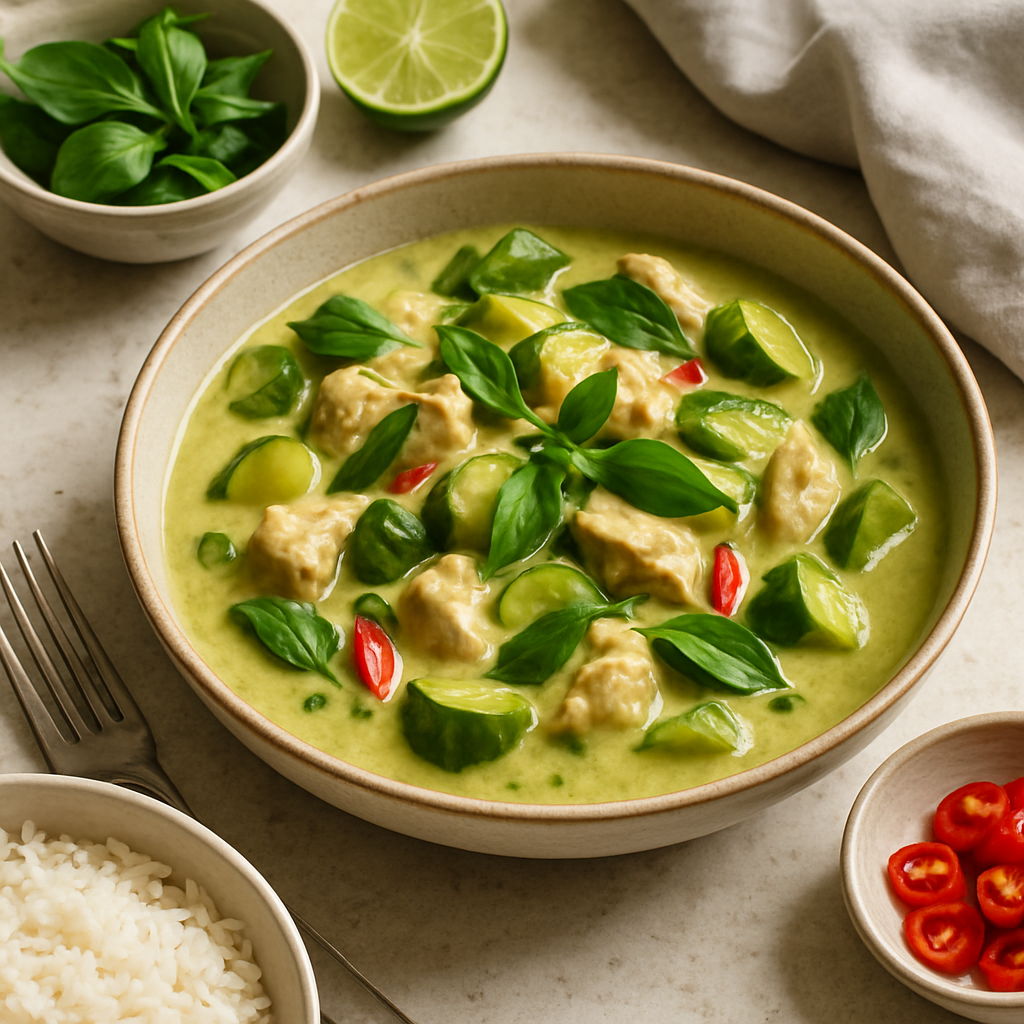
Few dishes manage to be simultaneously vibrant, warming, and deeply satisfying in the way a good Thai green curry does. Whether you're cooking it for the first time or trying to nail it consistently, this guide covers everything — from building the paste to balancing the macros.
What Goes Into a Proper Thai Green Curry
The backbone of any green curry is the paste, and the difference between a homemade or quality shop-bought paste and the cheap stuff is enormous. A proper green curry paste contains fresh green chillies, lemongrass, galangal (or ginger), garlic, shallots, kaffir lime zest, coriander root, and shrimp paste. That fragrant complexity is what makes the dish.
For the base, coconut milk is non-negotiable — but it's worth knowing that full-fat and light versions behave quite differently. Full-fat gives you that rich, silky sauce that coats everything properly. Light coconut milk works fine if you're watching calories or fat intake, but the sauce will be thinner and slightly less flavourful.
Your protein choices are flexible. Chicken thighs are the classic option — they stay tender even if the curry simmers a little longer than planned. Prawns cook in minutes and add a natural sweetness. Tofu or chickpeas work brilliantly for a plant-based version, absorbing the sauce as they cook.
Building the Curry Step by Step
Start by heating a small amount of oil in a wide pan or wok over a medium-high heat. Add two to three tablespoons of green curry paste and fry it for 60 to 90 seconds, stirring constantly. This step — blooming the paste — is often skipped, but it's where the raw edge disappears and the aromatics really open up.
Pour in roughly half your coconut milk first, stir to combine with the paste, then add the rest. This gradual approach helps emulsify the sauce rather than splitting it. Add your protein, a splash of fish sauce (or soy sauce if keeping it plant-based), and a teaspoon of palm sugar or brown sugar.
Vegetables go in based on cooking time: aubergine and courgette need around 10 minutes, mangetout, baby corn, and spinach need just the last two or three minutes. Overcooking is the most common mistake — this dish wants vegetables with a little bite, not mush.
Finish with a generous handful of fresh Thai basil, a squeeze of lime, and taste for seasoning. It should be salty, slightly sweet, a little sour, and warming with heat.
What Makes This Work Nutritionally
Thai green curry gets an unfair reputation as a heavy dish, but it's actually well-balanced when built thoughtfully. Here's what's going on nutritionally:
- Protein from chicken, prawns, or tofu supports muscle maintenance and keeps you full
- Coconut milk provides medium-chain triglycerides (MCTs), a form of fat that's rapidly used for energy rather than stored
- Fresh vegetables add fibre, vitamins, and volume without significantly affecting the calorie count
- Green curry paste ingredients — galangal, lemongrass, chilli — have genuine anti-inflammatory properties backed by research
A typical serving with chicken and jasmine rice lands around 500–650 kcal, with roughly 35g protein, 20–25g fat, and 50–55g carbohydrate depending on your portions and which coconut milk you use. Swapping jasmine rice for cauliflower rice drops the carbs significantly if that suits your goals.
The main variable is coconut milk — full-fat adds around 150–200 kcal per serving compared to light, so that's worth knowing if you're tracking.
Practical Takeaways
- Use Mae Ploy or Maesri paste if you're not making it from scratch — both are widely available in Asian supermarkets and significantly better than supermarket own-brand
- Bloom the paste in oil before adding any liquid — non-negotiable for flavour
- Season at the end, not the beginning — fish sauce and soy are both salty, and the sauce reduces as it cooks
- Freeze leftover curry without the fresh herbs and vegetables added at the end — they go in fresh when you reheat
- Serve with jasmine rice, roti, or rice noodles depending on your macro targets for the day
---
If you want a Thai green curry that fits your exact macro targets — whether that's higher protein, lower fat, or a specific calorie window — Macrology generates macro-perfect meal plans in seconds — https://macrology.app/signin
> Macrology tip: Log your Thai green curry once and Macrology saves the full macro breakdown for every future cook. Adjust portions, swap the protein, or change the rice — and your numbers update automatically.
Want meals like this planned to your exact macros?
Macrology generates a personalised meal plan in seconds — breakfast, lunch, dinner and snacks, all hitting your daily targets.
Start your free 14-day trial