Crispy Skin Sea Bass with Warm Puy Lentils and Salsa Verde
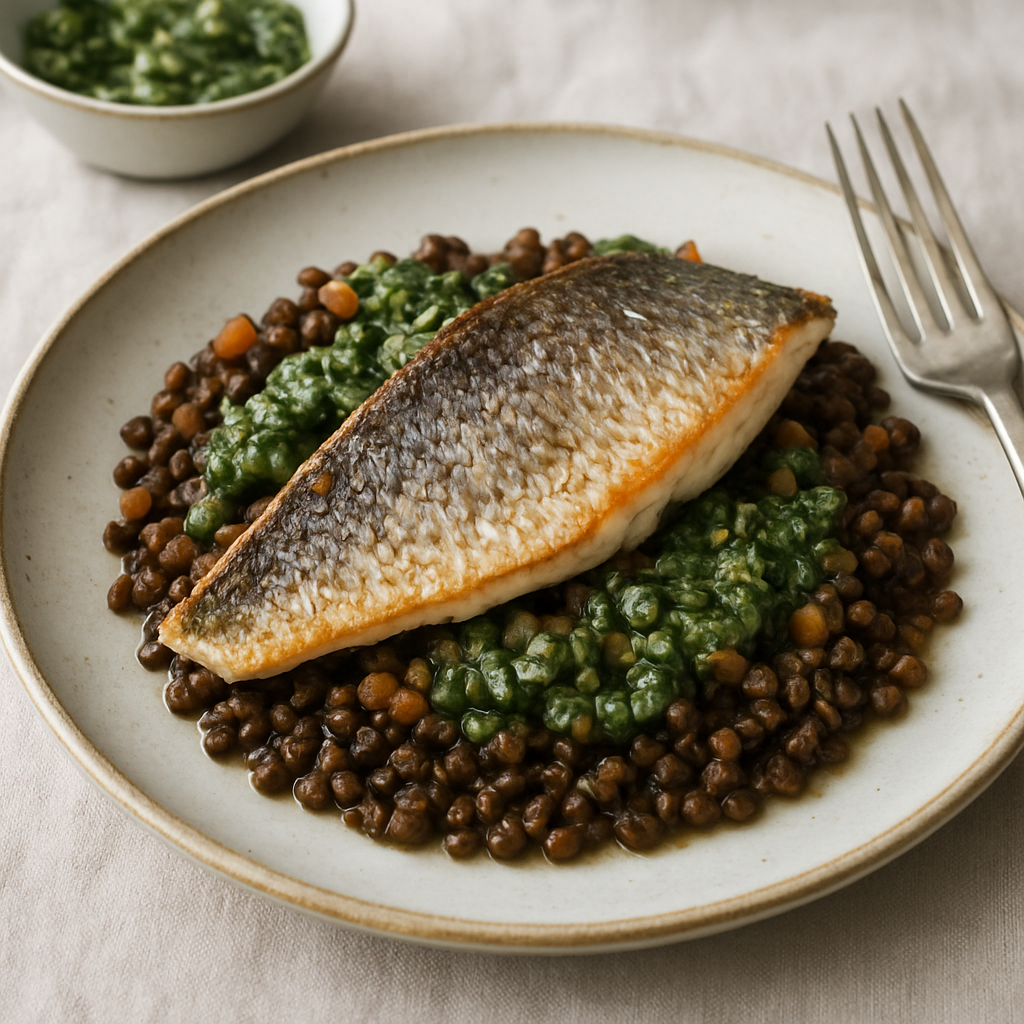
# Crispy Skin Sea Bass with Warm Puy Lentils and Salsa Verde
There's a particular kind of satisfaction that comes from getting fish skin genuinely crispy at home — that clean, audible crackle when you press a fork through it. Most people assume it's a restaurant-only skill, but it comes down to a few simple techniques that make all the difference.
This dish pairs pan-fried sea bass with earthy Puy lentils and a sharp, herbaceous salsa verde. It's the kind of meal that feels impressive on the plate but comes together in under 40 minutes on a weeknight.
---
Why sea bass deserves a regular spot in your rotation
Sea bass — specifically European sea bass (Dicentrarchus labrax), often labelled as branzino or loup de mer — is one of the most versatile white fish available in the UK. Its flesh is delicate but holds together well in a pan, and the skin, when cooked correctly, becomes something genuinely worth eating rather than something you push to the side.
It's widely available at supermarket fish counters and fishmongers, and while it sits at a slightly higher price point than something like cod or pollock, a fillet goes a long way on the plate — especially when paired with a substantial base like lentils.
---
What makes this work nutritionally
Sea bass is a lean source of high-quality protein, providing roughly 20g of protein per 100g of cooked fish with minimal saturated fat. It also contributes omega-3 fatty acids — not at the same level as oily fish like mackerel or salmon, but a meaningful amount nonetheless, particularly DHA and EPA, which support heart and brain health.
Puy lentils bring a different nutritional profile to the table entirely. They're one of the best plant-based sources of protein available, and they're exceptionally high in dietary fibre — both soluble and insoluble. A 100g cooked serving provides around 8g of fibre and 9g of protein, while also delivering iron, folate, and magnesium.
The combination here is genuinely well-balanced: you've got complete protein across the fish and lentils, slow-digesting carbohydrates from the legumes to support sustained energy, and healthy fats from the olive oil in the salsa verde. It's a meal that covers a lot of nutritional ground without being complicated.
---
What the evidence shows
The Mediterranean dietary pattern — characterised by fish, legumes, olive oil, and fresh herbs — has one of the strongest evidence bases of any dietary approach in nutritional science. A landmark study published in the New England Journal of Medicine (the PREDIMED trial) found that a Mediterranean-style diet supplemented with olive oil or nuts significantly reduced the risk of major cardiovascular events compared with a low-fat diet.
Lentils specifically have been studied for their role in blood sugar regulation. Their low glycaemic index means they produce a slower, more gradual rise in blood glucose compared to refined carbohydrates — a finding supported by multiple systematic reviews. For anyone managing energy levels through the day, that steady release matters.
The omega-3s in sea bass, while modest, contribute to the body's overall intake of long-chain fatty acids. Combined with the polyphenols in the salsa verde's olive oil and the antioxidant compounds in the herbs and garlic, this dish sits very comfortably within the kind of eating pattern associated with long-term health outcomes.
---
The key to genuinely crispy skin
This is worth its own section because it's where most home cooks trip up. The enemy of crispy fish skin is moisture. Pat the fillets thoroughly dry with kitchen paper — more thoroughly than you think necessary. Any surface water on the skin will steam rather than sear, and you'll end up with soft, slightly rubbery skin no matter how hot the pan is.
A few other things that help:
- Score the skin lightly with a sharp knife to prevent the fillet from curling as it hits the heat
- Use a heavy-based pan — stainless steel or cast iron work well; non-stick is fine but won't give quite as deep a colour
- Press the fillet flat for the first 30 seconds using a fish slice or your hand through a cloth — this keeps the skin in contact with the pan
- Start skin-side down and mostly stay there — cook the fillet 80–90% of the way through on the skin side before flipping briefly to finish
Resist the urge to move the fish around. Leave it alone, and it will release naturally when the skin is ready.
---
Building the warm Puy lentils
Puy lentils — the small, dark green variety from Le Puy in France — hold their shape better than red or yellow lentils when cooked, which makes them ideal for a warm salad or side dish like this. They have a peppery, earthy flavour that pairs particularly well with fish.
If you're using dried lentils, there's no soaking required. Rinse them, then simmer in unsalted stock (vegetable or chicken both work) for around 20–25 minutes until just tender but still with a little bite. Season generously at the end — lentils absorb a lot of salt and can taste flat if under-seasoned.
For this recipe, the cooked lentils are warmed through with a little olive oil, a splash of red wine vinegar, finely chopped shallots, and some fresh thyme. That acidity is important — it lifts the earthiness of the lentils and bridges the gap to the salsa verde.
---
Making the salsa verde
Salsa verde is one of those sauces that rewards improvisation. The base is always fresh herbs, olive oil, something sharp, and something pungent — from there, you can adjust to what you have.
For this version:
- A large handful each of flat-leaf parsley and basil
- A smaller handful of mint
- 1–2 anchovy fillets (these dissolve into the sauce and add depth rather than fishiness — leave out if you prefer)
- 1 small garlic clove
- 1 tbsp capers, drained
- 1 tsp Dijon mustard
- 2–3 tbsp good extra virgin olive oil
- A squeeze of lemon juice
- Salt to taste
Blitz briefly in a small food processor or chop finely by hand for a more rustic texture. It should be thick enough to spoon rather than pour. Taste and adjust — more lemon if it needs brightness, more oil if it's too intense.
The salsa verde keeps in the fridge for a couple of days and is excellent on grilled chicken, roasted vegetables, or stirred through pasta.
---
Bringing the dish together
The timing here is straightforward. Get the lentils on first — they take the longest. While they're simmering, make the salsa verde. Then pat your fish dry and let it sit at room temperature for about 10 minutes before cooking.
When everything is ready, warm the lentils through with the shallots and vinegar, season well, and spoon onto warmed plates. Cook the sea bass skin-side down in a hot pan with a little neutral oil, finish briefly on the flesh side, and lay it directly on top of the lentils, skin-side up to preserve the crispiness. Spoon the salsa verde generously alongside.
A few flakes of sea salt on the skin just before serving, a wedge of lemon on the side, and you're done.
---
Practical takeaways
- Dry the skin aggressively — this single step makes the biggest difference to the final result
- Puy lentils are worth keeping in the cupboard as a dried staple; they're inexpensive, long-lasting, and genuinely filling
- Salsa verde can be made in advance and keeps for 2–3 days in the fridge under a thin layer of olive oil
- The lentil base works as a standalone lunch the next day — just add a poached egg or some crumbled feta
- If sea bass isn't available, this recipe works equally well with sea bream, red mullet, or trout
---
If you want meals like this planned out across your whole week with macros already calculated, Macrology generates macro-perfect meal plans in seconds — https://macrology.app/signin
---
> Macrology tip: Log this meal in Macrology and you'll see exactly how it fits your daily protein, fibre, and fat targets — then let the app build the rest of your week around it.
Want meals like this planned to your exact macros?
Macrology generates a personalised meal plan in seconds — breakfast, lunch, dinner and snacks, all hitting your daily targets.
Start your free 14-day trial