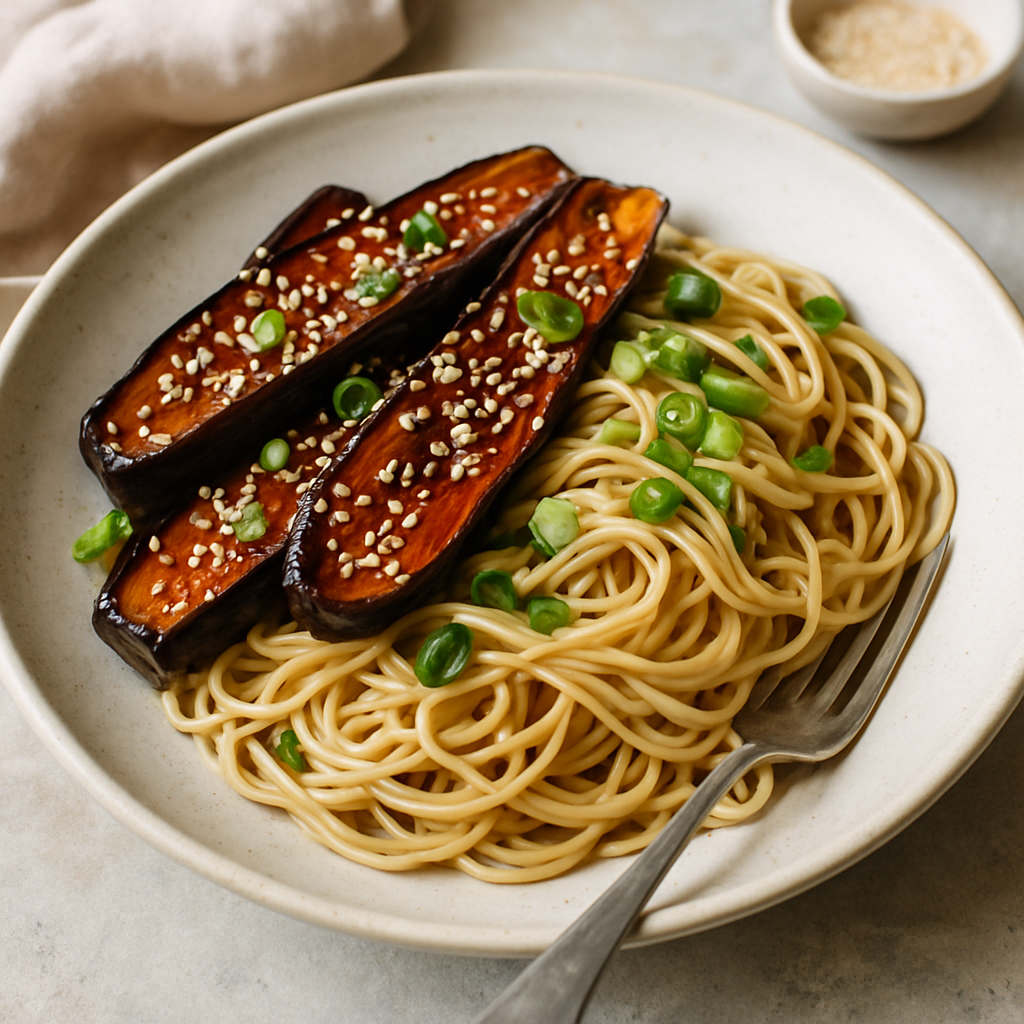
Soy-Glazed Aubergine with Sesame Noodles and Spring Onions
# Soy-Glazed Aubergine with Sesame Noodles and Spring Onions
There's something almost magical about what happens to aubergine under high heat with a sticky, salty glaze — it transforms from a spongy, slightly bitter vegetable into something deeply savoury, almost meaty in texture. This bowl hits that sweet spot between effort and reward: it looks impressive, tastes complex, and comes together faster than you'd expect.
What Makes This Dish Work
This is the kind of meal that earns a permanent spot in your weeknight rotation. The aubergine takes on a caramelised, lacquered finish from the soy glaze, the noodles bring substance and a nutty sesame backbone, and the spring onions cut through everything with a fresh, sharp bite.
It works equally well as a solo dinner or scaled up for a group. It's naturally plant-based without making a fuss about it, and the ingredient list leans heavily on storecupboard staples — soy sauce, sesame oil, rice vinegar — things you likely already have sitting in a cupboard somewhere.
Ingredients (serves 2)
For the aubergine: - 1 large aubergine, cut into 2cm cubes - 3 tbsp soy sauce (or tamari for gluten-free) - 1 tbsp maple syrup or honey - 1 tbsp rice vinegar - 1 tsp sesame oil - 1 tsp garlic, finely grated - 1 tsp fresh ginger, finely grated - 1 tbsp neutral oil (such as sunflower or vegetable)
For the sesame noodles: - 150g dried noodles (soba, udon, or egg noodles all work well) - 1 tbsp tahini - 1 tbsp soy sauce - 1 tsp sesame oil - 1 tsp rice vinegar - 1 tsp maple syrup or honey - 2–3 tbsp warm water, to loosen
To serve: - 4 spring onions, thinly sliced - 1 tbsp toasted sesame seeds - Optional: sliced red chilli, fresh coriander, a squeeze of lime
Method
Step 1 — Salt the aubergine (optional but worthwhile) If you have 20 minutes to spare, toss the aubergine cubes in a generous pinch of salt and leave them in a colander. This draws out excess moisture, which helps the aubergine brown rather than steam. Pat dry with kitchen paper before cooking.
Step 2 — Make the glaze Mix together the soy sauce, maple syrup, rice vinegar, sesame oil, garlic, and ginger in a small bowl. Set aside.
Step 3 — Cook the aubergine Heat a large frying pan or wok over a high heat and add the neutral oil. Once hot, add the aubergine in a single layer (cook in two batches if needed — crowding the pan causes steaming, not browning). Cook for 5–6 minutes, turning occasionally, until golden on most sides.
Pour the glaze over the aubergine and toss to coat. Cook for a further 2–3 minutes until the glaze thickens and clings to the pieces. The edges should look sticky and slightly caramelised.
Step 4 — Cook the noodles Cook your noodles according to packet instructions. While they drain, whisk together the tahini, soy sauce, sesame oil, rice vinegar, and maple syrup. Add warm water a tablespoon at a time until you get a smooth, pourable consistency. Toss the warm noodles through the sauce immediately.
Step 5 — Assemble Divide the sesame noodles between two bowls. Top with the glazed aubergine, scatter over the spring onions and sesame seeds, and add any optional toppings you fancy.
What Makes This Work Nutritionally
Aubergine doesn't arrive with an impressive protein or calorie count, but that's not really the point here — it brings something else to the table.
Aubergine is rich in nasunin, an anthocyanin found in the skin that has shown antioxidant properties in research, including potential protection of cell membranes. It's also a good source of fibre and contributes to the overall volume of the meal, which matters for satiety.
The tahini in the sesame noodle sauce is quietly doing a lot of work. Made from ground sesame seeds, it delivers healthy unsaturated fats, a small but meaningful amount of plant-based protein, and calcium — particularly useful in a meal with no dairy. One tablespoon of tahini contains roughly 2–3g of protein and contributes to the dish's overall fat profile in a way that keeps you full.
Soba noodles, if you choose them, are made partly or wholly from buckwheat — a gluten-free grain (despite the name) that provides more fibre and protein than standard wheat noodles, along with a lower glycaemic index. This means slower energy release and better blood sugar stability after eating.
The sesame seeds on top aren't just textural decoration. They contain lignans, which are plant compounds linked to anti-inflammatory effects, plus zinc, iron, and calcium in small but cumulative amounts.
What the Evidence Shows
Plant-heavy meals built around vegetables, wholegrains, and legumes are consistently associated with better long-term health outcomes in the research literature. A 2019 review published in The Lancet found that diets with high plant food diversity were linked to reduced risk of cardiovascular disease, type 2 diabetes, and certain cancers.
This dish doesn't claim to be a cure for anything — but it does demonstrate that plant-based eating doesn't require sacrifice. The combination of complex carbohydrates from noodles, healthy fats from tahini and sesame oil, and fibre from aubergine creates a meal with genuine staying power.
It's also worth noting the role of fermented and umami-rich ingredients like soy sauce. While soy sauce is high in sodium and should be used mindfully if you're watching salt intake, it provides glutamates — compounds that activate the brain's reward pathways in a similar way to meat-based flavours. This is partly why the dish feels so satisfying despite containing no animal protein.
Tips for Getting the Best Result
Don't skip the high heat. Aubergine needs a properly hot pan to brown. A medium heat will just sweat it out and you'll end up with a soggy result.
Batch cooking the glaze is easy and worthwhile — make double and keep it in a jar in the fridge for up to a week. It works well on tofu, salmon, or roasted broccoli.
Noodle choice matters less than you'd think. Soba brings an earthy, nutty note that pairs beautifully with the sesame sauce, but udon gives you a chewier, more substantial bowl, and egg noodles are faster if you're short on time. Use what you have.
Rest the noodles in the sauce for a minute or two before serving. This allows the tahini dressing to absorb properly rather than sitting on the surface.
Practical Takeaways
- Salt your aubergine if time allows — 20 minutes makes a real difference to texture
- Cook the aubergine in a hot, uncrowded pan for proper caramelisation
- The tahini sauce works best when the noodles are still warm — cold noodles make it clump
- Toasted sesame seeds (rather than raw) bring significantly more flavour — a dry pan on medium heat for 2–3 minutes is all it takes
- This dish keeps well in the fridge for up to two days; store the noodles and aubergine separately and combine when reheating
---
If you want to hit your macros while eating meals like this one, Macrology generates macro-perfect meal plans in seconds — [https://macrology.app/signin](https://macrology.app/signin)
---
> Macrology tip: Add this bowl to your weekly plan and Macrology will automatically balance it against your other meals — adjusting portions so your protein, carb, and fat targets line up across the full day without any manual maths.
Want meals like this planned to your exact macros?
Macrology generates a personalised meal plan in seconds — breakfast, lunch, dinner and snacks, all hitting your daily targets.
Start your free 14-day trial