Gochujang Beef Rice Bowl with Pickled Cucumber and Sesame
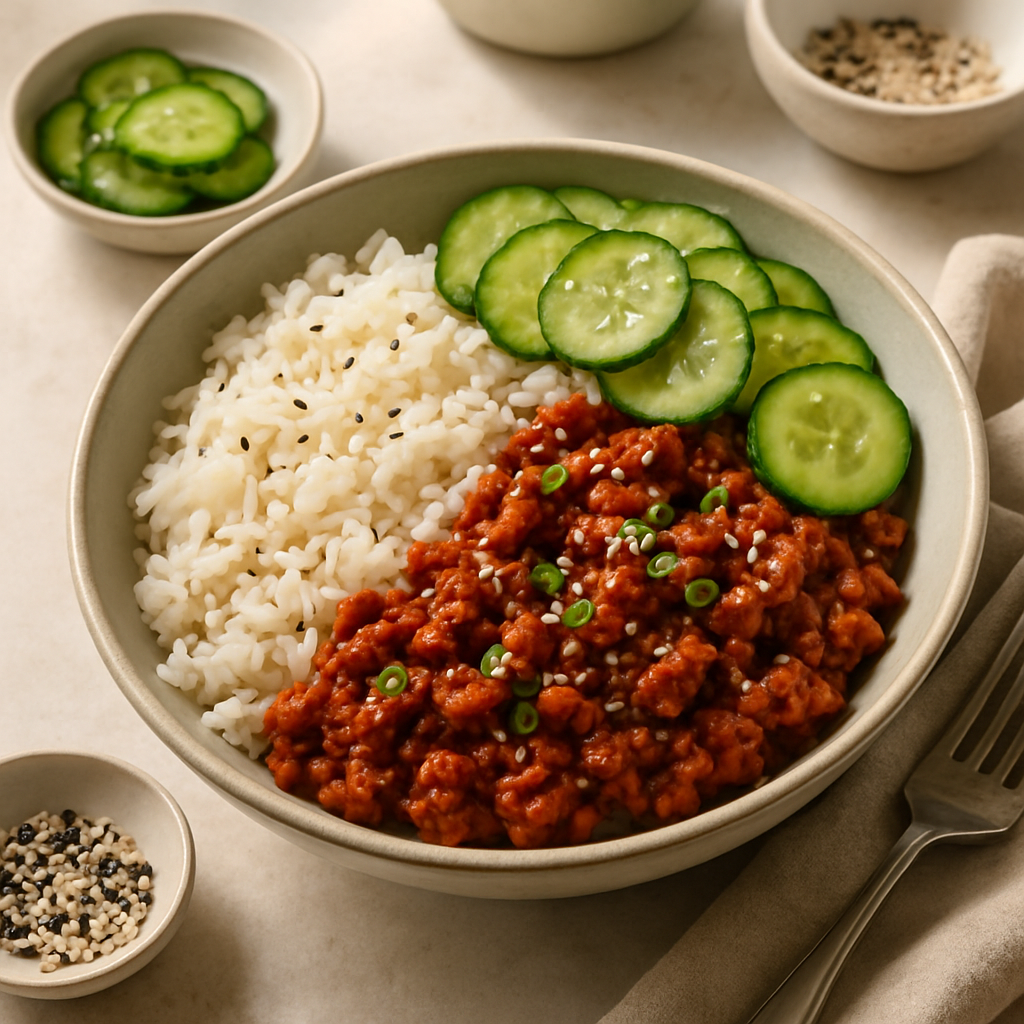
# Gochujang Beef Rice Bowl with Pickled Cucumber and Sesame
There's a reason Korean-inspired food has taken over home kitchens — bold flavour, fast cooking, and that deeply satisfying combination of spicy, sweet, and savoury that keeps you coming back for more. This gochujang beef rice bowl delivers all of that in about 25 minutes, with ingredients that are increasingly easy to find in most UK supermarkets.
What Is Gochujang and Why Does It Work So Well?
Gochujang is a Korean fermented chilli paste made from red chilli peppers, glutinous rice, fermented soybean, and salt. It's thick, deeply red, and has a flavour profile unlike almost anything else in a typical Western kitchen — simultaneously smoky, spicy, slightly sweet, and umami-rich.
What makes it so useful as a cooking ingredient is that fermentation adds complexity you'd otherwise need several separate ingredients to achieve. One tablespoon can transform a simple beef stir-fry into something that tastes like it took hours.
You'll find gochujang in most large Tesco, Sainsbury's, and Waitrose stores, as well as any Asian supermarket. It keeps in the fridge for months, so it's well worth having a tub to hand.
The Ingredients
Serves 2
For the beef:
- 300g beef mince (or thinly sliced sirloin/flank steak)
- 2 tbsp gochujang paste
- 1 tbsp soy sauce (low-sodium works well)
- 1 tbsp sesame oil
- 1 tsp honey or maple syrup
- 2 garlic cloves, minced
- 1 tsp fresh ginger, grated
- 1 tsp rice vinegar
For the pickled cucumber:
- 1 cucumber, thinly sliced
- 2 tbsp rice vinegar
- 1 tsp caster sugar
- ½ tsp salt
- ½ tsp sesame oil
- Pinch of chilli flakes (optional)
For the bowl:
- 300g cooked jasmine or short-grain rice (roughly 150g dry weight)
- 2 spring onions, sliced
- 1 tbsp sesame seeds (toasted)
- 1 tsp gochujang, thinned with water (optional drizzle)
- Fresh coriander or shredded nori, to serve
How to Make It
Step 1 — Quick-pickle the cucumber
Start with the cucumber because it benefits from even 10–15 minutes of resting time. Combine the rice vinegar, sugar, salt, sesame oil, and chilli flakes in a bowl. Add the sliced cucumber, toss well, and set aside while you cook everything else. The cucumber will soften slightly and absorb the sharp, tangy dressing — a perfect counterpoint to the rich beef.
Step 2 — Cook the beef
In a small bowl, mix the gochujang, soy sauce, sesame oil, honey, garlic, ginger, and rice vinegar into a smooth sauce.
Heat a large frying pan or wok over high heat. Add a small drizzle of neutral oil (vegetable or sunflower) and once it's shimmering, add the beef. If using mince, break it up as it cooks. If using sliced steak, cook in a single layer for 1–2 minutes per side.
Once the beef is mostly cooked through, pour over the gochujang sauce and toss to coat. Cook for another 1–2 minutes until the sauce reduces slightly and caramelises around the edges. This caramelisation is where the deep, sticky flavour comes from — don't rush it by keeping the heat too low.
Step 3 — Assemble the bowls
Divide the rice between two bowls. Spoon the beef over one side, and pile the pickled cucumber alongside. Scatter with spring onions, sesame seeds, and fresh coriander if using. Finish with a small drizzle of thinned gochujang if you want extra heat.
What Makes This Work Nutritionally
This bowl is built around a solid macronutrient balance, which is part of why it feels genuinely satisfying rather than leaving you hungry an hour later.
Protein comes primarily from the beef. A 150g cooked portion of lean beef mince provides roughly 30–35g of protein, supporting muscle repair and keeping you fuller for longer. Using lean mince (5% fat) keeps the overall calorie count moderate without sacrificing flavour, because the gochujang sauce does most of the heavy lifting.
Carbohydrates from the rice provide the energy base for the meal. Rice often gets an unfair reputation, but it's a straightforward, easily digestible source of fuel — and when paired with protein and vegetables, the overall glycaemic response is far more moderate than eating it alone.
The pickled cucumber isn't just a garnish. It adds volume, hydration, and a small amount of fibre, while the acidity from the vinegar helps balance the richness of the beef. There's also some early-stage research suggesting vinegar-based components in a meal may help moderate blood glucose responses, though more work is needed before drawing firm conclusions.
Sesame oil and sesame seeds contribute healthy unsaturated fats, and sesame seeds in particular are a surprisingly good source of calcium — worth knowing if you don't eat much dairy.
What the Evidence Shows
Fermented foods like gochujang have attracted genuine scientific interest in recent years. A 2021 study published in Cell found that a diet rich in fermented foods increased microbiome diversity and reduced markers of inflammation in healthy adults. While gochujang is used in relatively small quantities here, it's part of a broader case for including fermented ingredients in your regular cooking.
Beef is often painted as a nutritional villain, but the picture is more nuanced. Lean red meat is one of the most bioavailable sources of iron and zinc — two nutrients that are genuinely difficult to get in adequate amounts from plant sources alone. UK data from the National Diet and Nutrition Survey consistently shows that iron deficiency is one of the most common nutrient shortfalls, particularly in women of childbearing age.
The key with red meat isn't avoidance — it's context and quantity. A 150g portion of lean beef mince a few times a week sits well within the ranges associated with good health outcomes in the research.
Common Mistakes to Avoid
Using too little heat. This is probably the most common issue with beef stir-fry dishes at home. A hot pan is essential for getting that slightly caramelised, sticky coating on the beef. If the pan isn't hot enough, the sauce steams rather than reduces, and you lose all that depth of flavour.
Skipping the pickle. It can seem like an optional extra, but the pickled cucumber is doing real work here — cutting through the richness of the beef and adding textural contrast. A bowl of just rice and spiced beef is good; a bowl with all three components is noticeably better.
Over-salting. Gochujang already contains salt, and soy sauce is naturally high in sodium. Taste before adding any extra salt — most of the time, you won't need it.
Practical Takeaways
- Make the pickle first — even 10 minutes in the vinegar mix makes a real difference to the flavour and texture of the cucumber.
- Use high heat throughout the beef cooking stage for caramelisation and flavour.
- Prep the sauce in advance — the gochujang mixture keeps in the fridge for up to a week and works just as well with chicken, tofu, or salmon.
- Batch cook the rice — jasmine rice keeps well in the fridge for 3 days and makes this bowl a realistic weeknight option with almost no effort.
- Adjust heat to taste — gochujang varies in spice level by brand. Start with 1.5 tbsp if you're new to it and build from there.
- Swap the protein freely — this sauce is genuinely versatile. Firm tofu, king prawns, or leftover roast chicken all work well with the same gochujang base.
---
> Macrology tip: If you want meal plans that hit your exact macro targets — including high-protein bowls like this one — Macrology generates macro-perfect meal plans in seconds — https://macrology.app/signin
Want meals like this planned to your exact macros?
Macrology generates a personalised meal plan in seconds — breakfast, lunch, dinner and snacks, all hitting your daily targets.
Start your free 14-day trial