Crispy Duck Leg with Roasted Plums and Wilted Greens
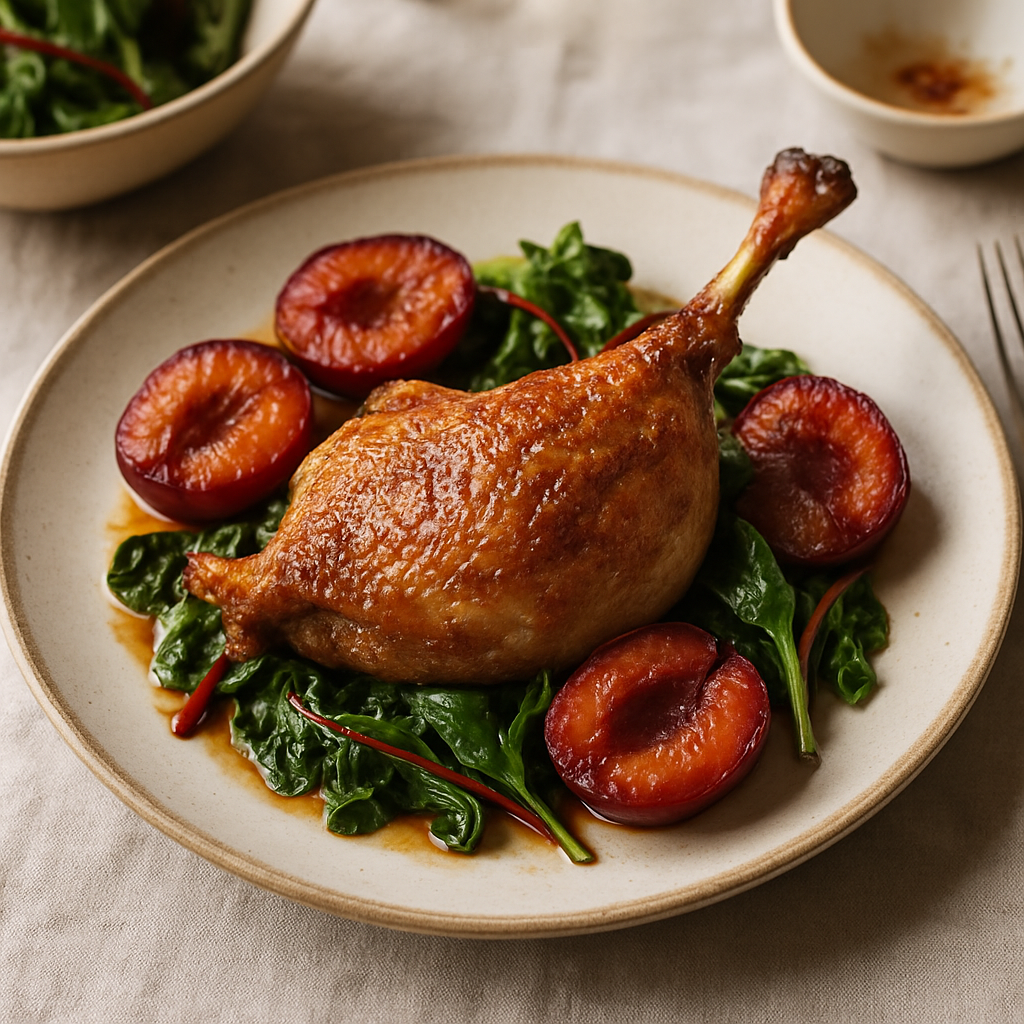
# Crispy Duck Leg with Roasted Plums and Wilted Greens
There's something almost theatrical about a properly cooked duck leg — the skin shattering under a fork, the meat pulling away from the bone without any effort. It feels like restaurant food, but it's genuinely one of the more forgiving things you can cook at home.
This recipe pairs that crispy, rendered duck leg with sweet-sharp roasted plums and a pile of wilted greens to cut through the richness. It's a proper meal — balanced, satisfying, and impressive enough to put in front of guests without breaking a sweat.
---
Why Duck Leg Deserves a Place in Your Weekly Rotation
Duck leg has a bit of an undeserved reputation as a "special occasion only" ingredient. In reality, it's one of the most practical cuts of meat you can buy — it's inexpensive compared to breast, it's nearly impossible to overcook, and the fat that renders out during cooking is genuinely useful in the kitchen.
The slow-rendered fat is what makes the skin go properly crispy. Unlike chicken, duck has a thick layer of subcutaneous fat that needs time and heat to break down. Give it that time, and the skin transforms into something extraordinary. Rush it, and you end up with something flabby and disappointing.
From a nutritional standpoint, duck leg is a strong source of complete protein, providing all essential amino acids. It also delivers meaningful amounts of iron, zinc, and B vitamins — particularly B12 and niacin, which support energy metabolism.
---
The Role of the Plums
Roasting plums alongside duck isn't just about aesthetics — though the deep burgundy colour against crispy skin does look stunning. The natural sugars in the plums caramelise in the oven heat, and their acidity does the work of balancing the fat in the duck.
This principle — pairing fatty proteins with acidic or fruity elements — appears across food cultures for good reason. Think duck à l'orange, pork with apple, lamb with redcurrant. The acidity stimulates saliva production and genuinely makes the food feel less heavy on the palate.
Plums are also worth noting for their fibre content and natural polyphenols, particularly anthocyanins, which give them their deep colour. These compounds have been associated with anti-inflammatory effects in a number of studies, though eating a couple of roasted plums isn't a substitute for dietary variety overall.
If plums aren't in season, damsons, halved figs, or even quartered pears work well here. The principle is the same — you want something with enough sugar to caramelise and enough acidity to contrast.
---
What Makes This Work Nutritionally
This dish is built around a high-protein main, a fibre-rich fruit component, and nutrient-dense greens — which makes it naturally well-rounded without any real effort.
Duck leg (roughly 200–250g cooked) typically provides around 28–35g of protein and a meaningful amount of fat — predominantly oleic acid, the same monounsaturated fat found in olive oil. It's worth noting that duck fat has a more favourable fatty acid profile than its reputation suggests.
The wilted greens — cavolo nero, chard, or spinach all work well — add magnesium, folate, and vitamin K, as well as additional fibre. These are nutrients that tend to be under-consumed in typical UK diets, so getting them through a genuinely enjoyable meal is a practical win.
The overall macronutrient balance of this dish skews higher in protein and fat, with moderate carbohydrates from the plums. If you want to increase the carb content, a small serving of roasted new potatoes or a grain like pearl barley fits well alongside it.
---
The Recipe
Serves: 2 Prep time: 10 minutes Cook time: 1 hour 20 minutes
Ingredients
- 2 duck legs
- 4 ripe plums, halved and stoned
- 1 tbsp honey
- 1 tsp red wine vinegar
- A few sprigs of fresh thyme
- 200g cavolo nero (or kale, chard, or spinach)
- 2 garlic cloves, thinly sliced
- Salt and black pepper
- Optional: 1 tsp five spice or a pinch of cinnamon, rubbed into the duck skin before cooking
Method
1. Prepare the duck. Pat the duck legs completely dry with kitchen paper — this is non-negotiable for crispy skin. Score the skin lightly with a sharp knife in a crosshatch pattern, then season generously with salt and black pepper (plus five spice or cinnamon if using). Leave them at room temperature for 20–30 minutes if you have time.
2. Start skin-side down. Place the duck legs skin-side down in a cold, dry, oven-safe frying pan. Set the heat to medium-low. You're not searing — you're slowly rendering the fat out over about 15 minutes. You'll see the fat pooling in the pan. This is what you want.
3. Transfer to the oven. Once the skin is deeply golden and a lot of fat has rendered, flip the legs and transfer the pan to an oven preheated to 180°C (fan 160°C). Cook for 45–50 minutes.
4. Roast the plums. About 25 minutes before the duck is done, place the plum halves cut-side up in a small roasting tray. Drizzle with honey and red wine vinegar, tuck in the thyme sprigs, and season lightly. Roast at the same temperature for 20–25 minutes until soft and jammy at the edges.
5. Wilt the greens. Remove a tablespoon of the rendered duck fat from the pan and add it to a wide frying pan over medium heat. Add the garlic and cook for 60 seconds until just golden. Add the greens and toss to coat, cooking for 2–4 minutes until wilted. Season well.
6. Rest the duck. Take the duck legs out of the oven and rest them on a wire rack or plate for 5 minutes before serving. This lets the juices redistribute and keeps the skin crispy.
7. Plate up. Pile the greens onto warm plates, sit a duck leg on top, and arrange the roasted plums alongside. Spoon any juices from the plum tray over the top.
---
Common Mistakes — and How to Avoid Them
Starting in a hot pan is the most common error. Duck skin needs a gradual render, not a fierce sear. High heat seals the skin before the fat has a chance to escape, leaving you with thick, chewy skin rather than the crispy result you're after.
Not drying the skin is the other big one. Moisture is the enemy of crispiness. Pat those legs completely dry before they go anywhere near heat — some cooks even leave them uncovered in the fridge overnight to dry out further, which produces exceptional results.
Overcrowding the roasting pan with the plums can cause them to steam rather than caramelise. Give them space, and make sure the tray is hot before they go in.
---
What the Evidence Shows
Duck often gets lumped in with "red meat" in popular nutritional discourse, but the picture is more nuanced than that. Duck is technically classified as poultry, and while its fat content is higher than chicken breast, the composition of that fat is notably different from, say, fatty beef.
Research into dietary fats increasingly suggests that the source and type of fat matters as much as the quantity. Duck fat is relatively high in monounsaturated fats and lower in saturated fat than butter or lard, which may explain why traditional duck-eating regions — parts of France's Gascony, for example — don't show the cardiovascular risk patterns you might expect.
That said, no single food exists in isolation, and this dish isn't making any health claims. What it does offer is a genuinely nutrient-dense meal built around whole, minimally processed ingredients — which is broadly what the evidence supports as the foundation of a healthy diet.
---
Practical Takeaways
- Dry the skin thoroughly — ideally overnight in the fridge, uncovered. This single step has the biggest impact on the final result.
- Start the duck in a cold pan over medium-low heat to render the fat slowly before it goes into the oven.
- Use the rendered duck fat for the greens — don't tip it away. It adds depth of flavour and means nothing goes to waste.
- Swap the greens based on what's in the fridge. Spinach wilts fastest, cavolo nero takes a little longer, chard sits somewhere in between.
- Plums out of season? Halved figs, sliced pears, or even a simple red onion chutney work as substitutes.
---
If you want meal plans built around recipes like this — balanced macros, no faff, food that actually tastes good — Macrology generates macro-perfect meal plans in seconds — https://macrology.app/signin
> Macrology tip: Log this meal in Macrology to see exactly how it fits your daily protein and fat targets. You can adjust portion sizes or add a side of new potatoes if you need to hit higher carbohydrate goals for the day.
Want meals like this planned to your exact macros?
Macrology generates a personalised meal plan in seconds — breakfast, lunch, dinner and snacks, all hitting your daily targets.
Start your free 14-day trial