Seared Pork Chops with Apple, Fennel and Cider Pan Sauce
# Seared Pork Chops with Apple, Fennel and Cider Pan Sauce
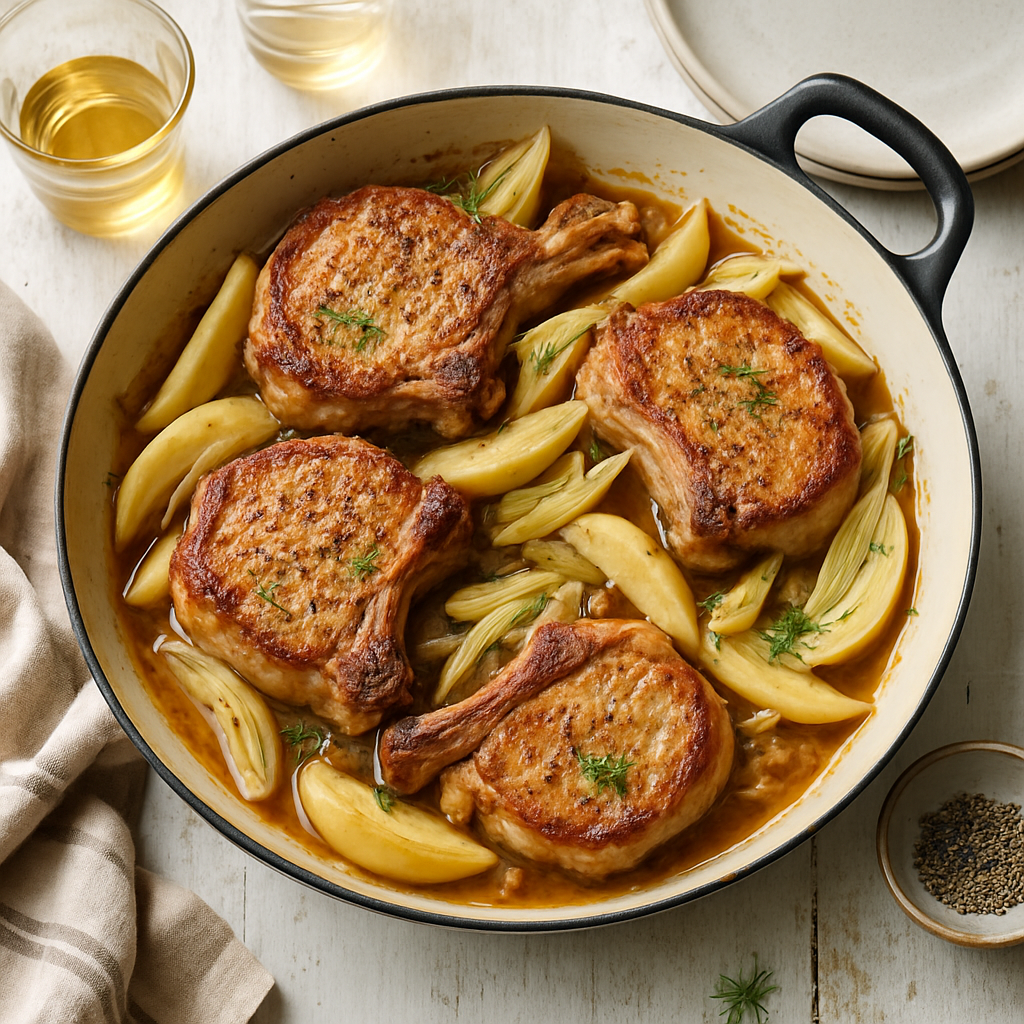
There's a particular kind of satisfaction that comes from a properly seared pork chop — that deep, caramelised crust giving way to juicy meat inside. Pair it with sweet apple, aniseed fennel, and a glossy cider pan sauce, and you've got a plate that tastes like it took far more effort than it actually did.
Why Pork Chops Deserve More Attention
Pork chops have a bit of an image problem. Too many people have been burned (metaphorically) by dry, tough chops — the kind that bounce off the plate and take about twenty minutes of chewing to get through.
The thing is, that's almost always a cooking technique issue, not a pork problem. A well-sourced, properly cooked chop is genuinely one of the most flavourful cuts of meat you can put on a weeknight table.
Bone-in chops are particularly worth seeking out. The bone helps regulate heat during cooking, meaning the meat around it stays more consistently juicy. They also tend to have a bit more flavour than boneless equivalents, partly from the bone itself and partly because bone-in cuts often retain a little more fat.
The Flavour Logic Behind This Dish
This recipe isn't just a random combination of ingredients — there's real culinary reasoning behind each pairing.
Pork and apple is one of the classic combinations in British cooking, and for good reason. The natural acidity and sweetness of apple cuts through the richness of the pork, balancing the fat and adding brightness to every bite.
Fennel brings an aniseed quality that might sound bold, but mellows considerably when cooked. As it softens in the pan, it becomes sweeter and more delicate — more of a background note than a leading flavour. It also adds a subtle crunch in the early stages of cooking that gives the dish some textural interest.
The dry cider pulls everything together in the pan sauce. It picks up all the sticky, caramelised bits left from searing — the fond — which is where a huge amount of flavour lives. The acidity in the cider also helps tenderise the meat slightly and keeps the sauce from feeling heavy.
What Makes This Work Nutritionally
Pork loin chops are a solid source of lean protein — a typical 200g bone-in chop provides around 35–40g of protein with a relatively modest fat content, particularly if you trim the visible fat after cooking (or leave it on, if you prefer — no rules here).
Pork is also a meaningful source of B vitamins, particularly B1 (thiamine), B3 (niacin), and B6. These play key roles in energy metabolism, so they're genuinely useful rather than just nutritional box-ticking.
The apple adds a small amount of fibre, and the fennel contributes vitamin C, potassium, and a little folate. Neither is a nutritional powerhouse on its own, but they add variety to what's on your plate alongside the protein anchor.
From a macro perspective, this dish sits comfortably in a high-protein, moderate-fat profile. Serve it with something starchy — mashed potato, crusty bread, or a simple grain — and you've got a balanced, filling plate without having to overthink it.
What the Evidence Shows
The long-standing advice to cook pork to well-done came from concerns about trichinosis — a parasitic infection that was once a genuine risk. In 2011, the USDA updated its guidance, recommending pork loin cuts be cooked to an internal temperature of 63°C (145°F), followed by a three-minute rest.
This means your chops are safe with a slight blush of pink in the centre — something many home cooks still feel nervous about. The science is clear: that light pink colour at the correct internal temperature is not a safety concern.
Research into the role of pork as part of a balanced diet is broadly positive. A 2020 review published in Nutrients found that lean pork fits well within dietary patterns associated with cardiovascular health, particularly when it replaces more processed meat sources. Context and overall diet pattern matter far more than any single food.
How to Get the Sear Right
This is the step most people rush, and it's the one that matters most.
Start with chops that are as close to room temperature as possible — pull them from the fridge at least 20 minutes before cooking. Cold meat hits the pan and the temperature drops immediately, which means you get steaming rather than searing.
Dry the surface of the chops thoroughly with kitchen paper. Moisture is the enemy of a good crust. Any surface water will convert to steam before browning can happen, and you'll end up with grey, sad-looking meat.
Use a heavy-based pan — cast iron or stainless steel both work brilliantly. Get it hot before the oil goes in, and get the oil shimmering before the chops go in. You're looking for a confident sizzle the moment the meat makes contact. Don't move the chops once they're down — leave them alone for 3–4 minutes until they release naturally from the pan.
Flip once, sear the other side, then rest. That's really it.
The Recipe
Serves: 2 Prep time: 10 minutes Cook time: 25 minutes
Ingredients
- 2 bone-in pork loin chops (approx. 250g each)
- 1 small fennel bulb, thinly sliced (fronds reserved)
- 1 eating apple (Cox or Braeburn work well), cored and cut into wedges
- 1 small shallot, finely sliced
- 150ml dry cider
- 100ml chicken stock
- 1 tsp Dijon mustard
- 1 tbsp olive oil
- 1 tbsp butter
- Salt and black pepper
Method
1. Pat the chops dry with kitchen paper and season generously on both sides with salt and pepper.
2. Heat the olive oil in a heavy-based frying pan over a high heat until shimmering. Add the chops and sear without moving for 3–4 minutes until a deep golden crust forms. Flip and cook for another 3 minutes. Remove to a warm plate and rest loosely covered with foil.
3. Reduce the heat to medium. Add the butter to the same pan, then add the fennel and shallot. Cook, stirring occasionally, for 5–6 minutes until softened and starting to colour.
4. Add the apple wedges and cook for 2–3 minutes until they start to caramelise at the edges.
5. Pour in the cider, scraping up any sticky bits from the base of the pan. Let it bubble and reduce by half — about 3 minutes.
6. Add the stock and mustard, stir to combine, and simmer for another 3–4 minutes until the sauce is slightly thickened and glossy.
7. Return the chops to the pan, spoon the sauce over them, and warm through for a minute. Scatter over the reserved fennel fronds and serve immediately.
Serve with: Creamy mashed potato or crusty bread to catch the sauce.
Practical Takeaways
- Dry the meat before searing — this single step makes more difference to the crust than almost anything else.
- Use a meat thermometer if you have one: 63°C at the thickest point means the chop is done and safe, even with a slight pink blush.
- Bone-in chops are worth the small extra effort to find — better flavour, more forgiving to cook.
- Cox or Braeburn apples hold their shape when cooked. Avoid anything too soft or floury, or it'll dissolve into the sauce (which isn't necessarily a disaster, but you lose the texture).
- The sauce is where all the flavour lives — don't rush the reduction.
- This dish reheats well the next day; keep the chop and sauce stored together so the meat doesn't dry out.
---
> Macrology tip: If you want to hit your protein targets without spending hours planning meals, Macrology generates macro-perfect meal plans in seconds — [https://macrology.app/signin](https://macrology.app/signin)
Want meals like this planned to your exact macros?
Macrology generates a personalised meal plan in seconds — breakfast, lunch, dinner and snacks, all hitting your daily targets.
Start your free 14-day trial