Creamy White Wine Chicken with Tarragon and Roasted New Potatoes
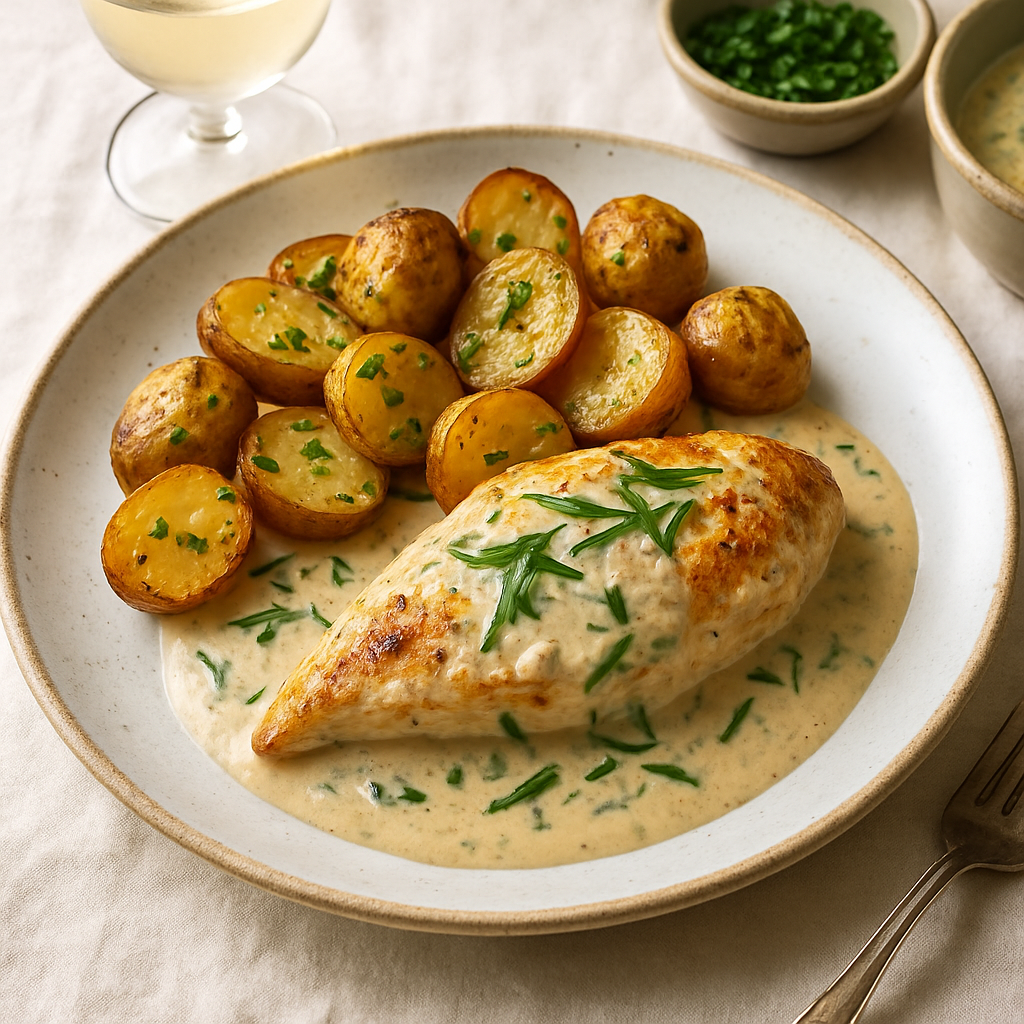
# Creamy White Wine Chicken with Tarragon and Roasted New Potatoes
There's a particular kind of dinner that feels like a proper treat without actually requiring a culinary degree or a pantry full of obscure ingredients. This is one of those dinners — a rich, aromatic chicken dish that looks and tastes like something from a French bistro, built almost entirely from things you probably already have at home.
What Makes This Dish Worth Making
Tarragon is one of those herbs that doesn't get nearly enough attention in British home cooking. It has a subtle anise flavour that's warm rather than sharp, and it pairs with chicken in a way that feels almost engineered — the two just belong together.
The white wine and cream base brings everything into a silky, glossy sauce that clings to the chicken and pools around the potatoes. It's indulgent without being heavy, and the whole thing comes together in one pan plus one roasting tray, which means less washing up and more time sitting down.
This is a weeknight dinner that eats like a weekend one.
The Ingredients
Serves 4
For the chicken:
- 4 bone-in, skin-on chicken thighs
- 1 tbsp olive oil
- 1 medium onion, finely diced
- 3 cloves of garlic, minced
- 150ml dry white wine (something you'd actually drink)
- 200ml chicken stock
- 150ml double cream
- 2 tsp Dijon mustard
- 1 tbsp fresh tarragon leaves, roughly chopped (or 1 tsp dried)
- Salt and black pepper
For the roasted new potatoes:
- 600g new potatoes, halved
- 1½ tbsp olive oil
- 1 tsp garlic granules
- ½ tsp flaky sea salt
- A few sprigs of fresh thyme (optional)
How to Make It
Step 1 — Get the potatoes going first. Preheat your oven to 200°C (180°C fan). Toss the halved new potatoes with olive oil, garlic granules, salt, and thyme if using. Spread them cut-side down on a baking tray and roast for 35–40 minutes until golden and crisp at the edges. They don't need much attention — just leave them to do their thing.
Step 2 — Sear the chicken. Season the chicken thighs well on both sides. Heat the olive oil in a wide, heavy-bottomed pan (a cast iron skillet or a good non-stick frying pan works well) over a medium-high heat. Place the chicken skin-side down and leave it — resist the urge to move it — for around 6–7 minutes until the skin is deep golden and releases easily from the pan. Flip and cook for another 3 minutes. Remove and set aside. You're not cooking it through at this point, just building colour and flavour.
Step 3 — Build the sauce. Reduce the heat to medium. In the same pan, with all those lovely chicken juices still in it, add the diced onion and cook for 5 minutes until softened. Add the garlic and cook for another minute. Pour in the white wine and let it bubble for 2–3 minutes, scraping up any bits from the bottom of the pan — that's where a lot of the flavour lives.
Step 4 — Bring it together. Add the chicken stock and Dijon mustard, stir to combine, then nestle the chicken thighs back into the pan skin-side up. Reduce the heat to a gentle simmer, partially cover, and cook for 20–25 minutes until the chicken is cooked through (internal temperature of 75°C, or the juices run clear with no pink).
Step 5 — Finish with cream and tarragon. Remove the chicken from the pan briefly and stir in the double cream. Let the sauce simmer gently for 3–4 minutes to thicken slightly, then return the chicken to the pan. Scatter over the fresh tarragon, taste for seasoning, and serve immediately alongside the roasted potatoes.
What Makes This Work Nutritionally
Bone-in, skin-on chicken thighs are doing a lot of work here beyond just flavour. Thighs are significantly higher in fat than breast meat, which contributes to the richness of the sauce and keeps the chicken moist throughout the longer cooking time. They're also a solid source of protein (around 26g per thigh), zinc, selenium, and B vitamins, particularly B3 (niacin) and B6, which play roles in energy metabolism.
The skin adds saturated fat, though it's worth noting that the fat in chicken skin is roughly 45% monounsaturated — the same type found in olive oil — so it's not the dietary villain it was once made out to be.
Double cream is high in calories and saturated fat, but 150ml split across four portions is around 37ml each — a modest amount that contributes to satiety without pushing the meal into unreasonable territory. Combined with the protein from the chicken and the complex carbohydrates from the new potatoes, this is a genuinely satisfying, well-rounded plate.
New potatoes are worth highlighting specifically. They have a lower glycaemic index than floury potatoes like Maris Pipers, meaning they release energy more gradually. They're also a decent source of potassium and vitamin C, and because they're eaten with the skin on, you get a small but useful hit of fibre.
Tarragon itself contains small amounts of antioxidants and volatile oils, including estragole and eugenol, which contribute to its distinctive flavour. While you're not eating it in medicinal quantities, it's adding more than just taste.
Common Questions
Can I use chicken breast instead? You can, but the result will be different. Breast meat is lower in fat and will dry out more easily over a longer simmer. If you go down that route, reduce the covered cooking time to around 15 minutes and check it early. Bone-in thighs genuinely are better here.
What white wine should I use? A dry white is what you want — something like a Sauvignon Blanc, Pinot Grigio, or an unoaked Chardonnay. Avoid anything sweet or heavily oaked. The rule of thumb is simple: if you wouldn't enjoy drinking it, don't cook with it. If you'd rather not use wine, replace it with an extra 100ml of chicken stock and a small squeeze of lemon juice for acidity.
Can I make this ahead? Yes, and it actually improves with time. Make it up to a day ahead, cool completely, and store covered in the fridge. Reheat gently on the hob with a splash of stock to loosen the sauce if needed. The tarragon will mellow slightly but the flavour will deepen.
Practical Takeaways
- Start the potatoes before anything else — they take the longest and run largely unattended.
- Don't rush the sear. A properly golden skin adds flavour and texture that you can't recover later in the process.
- Add the tarragon at the very end. Fresh herbs lose their character quickly with heat; adding them right before serving keeps the flavour bright.
- Taste before you season. The stock, mustard, and wine all carry salt, so hold off on adding more until you've had a spoonful of the finished sauce.
- A splash of the pasta water — wait, wrong dish. A splash of extra stock is your friend if the sauce reduces too far.
This dish works brilliantly as a meal prep option too. Double the batch, portion into containers, and you've got two or three weeknight dinners sorted. The potatoes reheat well in the oven for 10 minutes at 180°C if you want to revive their crispness.
If you want meals like this planned out for your exact macro targets without having to do the maths yourself, Macrology generates macro-perfect meal plans in seconds — https://macrology.app/signin
---
> Macrology tip: Log this meal in Macrology to see exactly how it fits your daily protein, fat, and carbohydrate targets. You can tweak portion sizes or swap the potatoes for a lighter side and the app will recalculate everything instantly — no spreadsheets required.
Want meals like this planned to your exact macros?
Macrology generates a personalised meal plan in seconds — breakfast, lunch, dinner and snacks, all hitting your daily targets.
Start your free 14-day trial