How to Use Temperature Control to Get Better Results When Cooking Meat
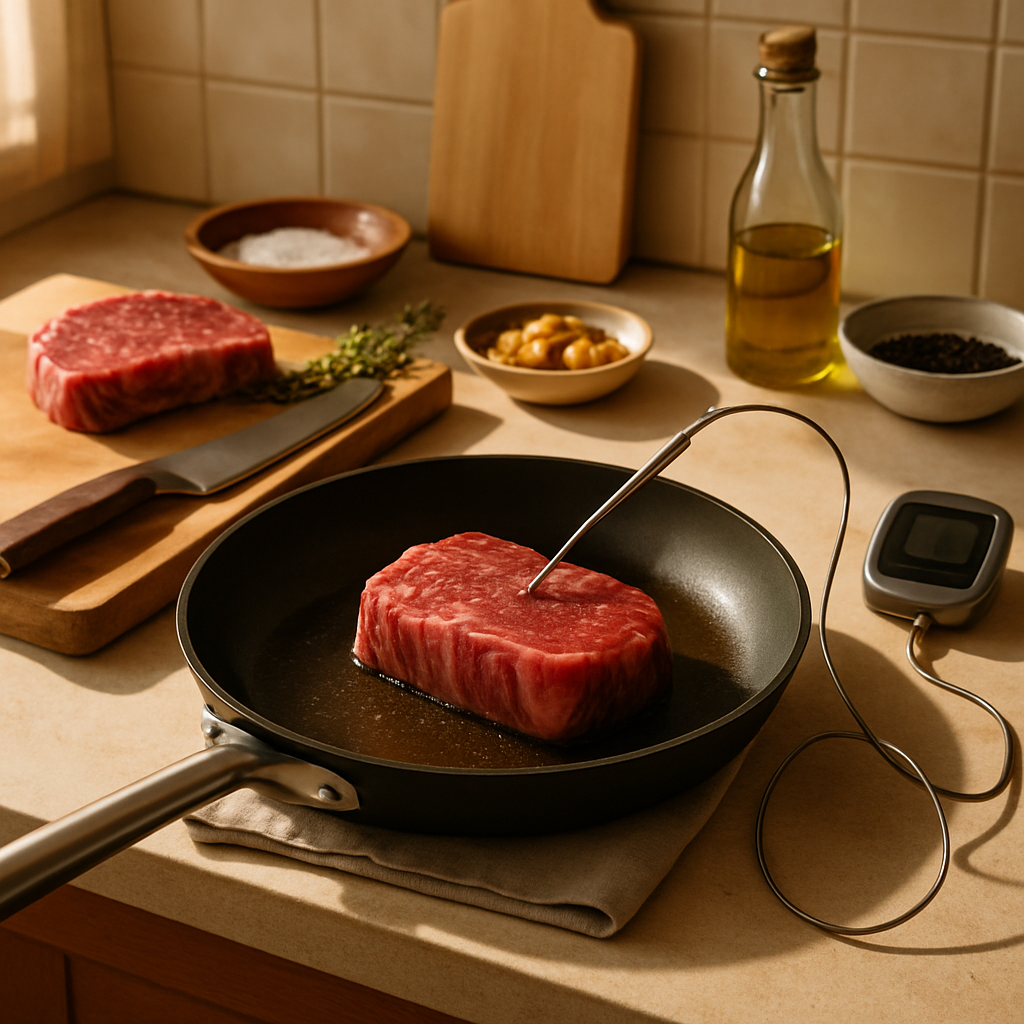
# How to Use Temperature Control to Get Better Results When Cooking Meat
There's a reason the same cut of beef can taste completely different at two different restaurants — and it's rarely about the seasoning. Temperature is the single biggest factor that separates a tender, juicy piece of meat from something dry, tough, or worse, unsafe to eat. Once you understand what's actually happening inside the meat as it heats up, you'll never guess at doneness again.
Why Temperature Matters More Than Timing
Recipes that say "cook for 20 minutes" are giving you a starting point, not a guarantee. The actual cooking time depends on the thickness of the cut, the starting temperature of the meat, the accuracy of your oven, and whether there's a bone involved. Every one of those variables shifts the outcome.
Internal temperature, on the other hand, is an objective measure. It tells you exactly what's happening to the proteins, fats, and connective tissue inside the meat — the things that determine texture, juiciness, and safety. A meat thermometer is one of the cheapest, most impactful tools you can add to your kitchen.
The good news is that once you get comfortable using one, you stop second-guessing. No more cutting into chicken to check if it's pink, no more pressing steak with your finger and hoping for the best. You get consistent results because you're working with information, not intuition.
What's Actually Happening Inside the Meat
Meat is mostly water, fat, and protein. As it heats up, different things happen at different temperatures, and understanding this helps explain why doneness levels actually matter.
At around 40–50°C, the proteins in the meat begin to denature — they unwind and restructure. This is when the texture starts to change from raw to cooked. Between 50–60°C, myosin (one of the key muscle proteins) has fully set, giving the meat a firmer texture while still retaining a lot of moisture. This is the sweet spot for medium-rare steak.
Above 70°C, actin — another muscle protein — begins to tighten significantly, squeezing out moisture rapidly. This is why well-done steak feels dry compared to medium-rare. It's not a matter of preference being wrong; it's physics. That said, tougher cuts with lots of collagen (like brisket or shin) actually benefit from long cooking at lower-to-mid temperatures, because the collagen slowly converts to gelatine, creating that melt-in-the-mouth texture you get from a good braise.
Safe Internal Temperatures: What the Evidence Shows
Food safety guidance in the UK comes primarily from the Food Standards Agency (FSA), and their recommendations are based on the temperatures at which harmful bacteria — including Salmonella, E. coli, and Listeria — are destroyed.
For whole cuts of beef, lamb, and pork, the FSA recommends reaching a core temperature of at least 63°C, followed by a two-minute rest. For poultry (chicken, turkey, duck), the target is 75°C at the thickest part, because contamination can penetrate the whole bird — unlike a beef steak where bacteria are only on the surface.
Minced meat — burgers, meatballs, sausages — must reach 75°C throughout, because grinding distributes any surface bacteria through the entire product. This is also why rare burgers in restaurants require a specific sign-off process and can't just be served like a rare steak.
One common misconception: pork no longer needs to be cooked until grey throughout. UK and US food safety guidelines have updated their recommendations, and a blush of pink in a properly temperature-checked pork chop or loin is both safe and far more enjoyable to eat.
How to Use a Meat Thermometer Properly
Owning a thermometer is step one — using it correctly is step two. A few things are worth knowing.
Insert the probe into the thickest part of the meat, avoiding bone, fat, or gristle. Bone conducts heat differently from muscle, so a reading next to the bone won't reflect the true internal temperature of the flesh. With a whole chicken, the thickest part is the thigh — not the breast, which cooks faster.
For thin cuts like chicken breasts or pork chops, insert the thermometer horizontally from the side rather than from the top. This gives you a reading through more of the meat rather than just the surface layer.
An instant-read thermometer is the most practical option for most home cooks — they're widely available for under £15 and give a reading in a few seconds. If you're doing longer cooks like a whole roast or a slow braise, a leave-in probe thermometer lets you monitor temperature without repeatedly opening the oven door.
The Resting Rule (and Why It Isn't Optional)
If you've ever cut into a steak and watched a pool of juice run out onto the board, you've skipped the resting step. Resting isn't just a chef's habit — it's rooted in how muscle fibres behave under heat.
When meat is cooking, heat drives moisture towards the centre of the cut. The outer fibres contract and squeeze liquid inward. Resting allows those fibres to relax, redistributing the moisture back through the meat. Cut too soon and that juice ends up on your chopping board rather than in your mouth.
As a general rule, rest steaks and chops for 3–5 minutes, a whole chicken for 15–20 minutes, and a large joint of beef or lamb for 20–30 minutes. Cover loosely with foil — not tightly, or you'll steam the crust you just worked to create.
It's also worth knowing that internal temperature continues to rise after you remove meat from the heat — a phenomenon called carryover cooking. A large roast can increase by 3–5°C during resting, which is why many cooks pull their meat slightly before the target temperature.
Temperature Control for Different Cooking Methods
The principles shift slightly depending on how you're cooking.
Roasting and grilling — Use the thermometer to check the centre, and factor in carryover cooking. With roasting especially, oven temperatures vary wildly between models, so a probe takes the guesswork out of timing.
Pan-frying steaks — A hot pan creates the Maillard reaction (the browning that adds flavour), while the internal temperature determines doneness. These are two separate things. You can get a beautiful crust on a steak and still undercook or overcook the inside if you're not checking temperature.
Slow cooking and braising — Low and slow cooking relies on collagen breakdown, which happens efficiently above 70–80°C over several hours. If you're braising brisket or short ribs, you're not aiming for a precise medium-rare — you're aiming for 90–95°C internal temperature where collagen has fully converted to gelatine.
Sous vide — This method holds meat at a precise temperature throughout, giving you a uniform cook edge to edge. A 54°C water bath for two hours produces a steak that's medium-rare from surface to centre, which is difficult to replicate with conventional methods. It's increasingly accessible for home cooks with affordable immersion circulators available online.
Practical Takeaways
Here's what to take away and put into practice straight away:
- Buy a decent instant-read thermometer — it's genuinely the best value kitchen upgrade you can make
- Learn the key temperatures for what you cook most: 63°C for whole beef/lamb/pork, 75°C for poultry and mince
- Always insert the probe into the thickest part, away from bone
- Factor in carryover cooking — pull the meat a few degrees before your target and let resting do the rest
- Rest your meat every time — even a 5-minute rest on a steak makes a real difference
- Don't default to timing alone — use timing as a rough guide and temperature as your confirmation
If you want to build meals around well-cooked, macro-balanced proteins without the guesswork, Macrology generates macro-perfect meal plans in seconds — https://macrology.app/signin
Want meals like this planned to your exact macros?
Macrology generates a personalised meal plan in seconds — breakfast, lunch, dinner and snacks, all hitting your daily targets.
Start your free 14-day trial