How to Use a Dry Pan to Toast Nuts, Seeds and Spices for Better Flavour
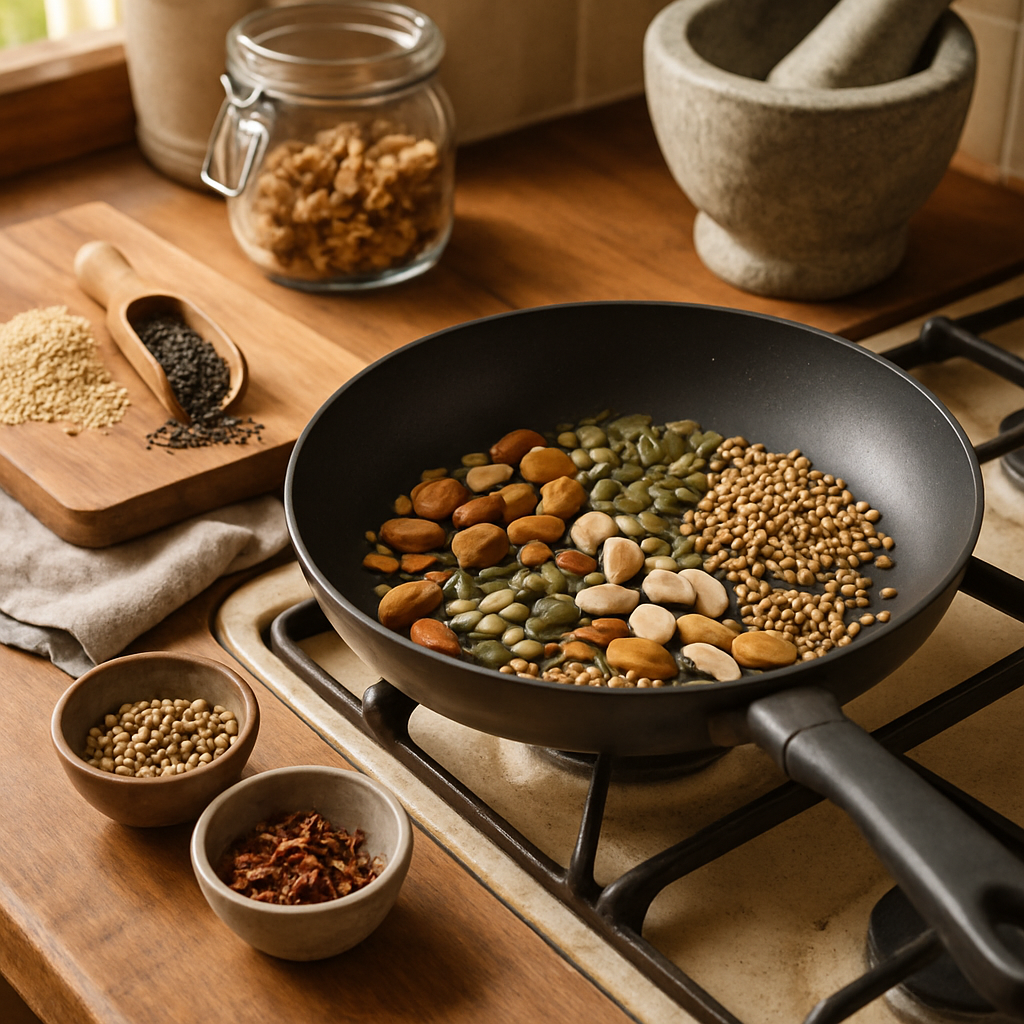
# How to Use a Dry Pan to Toast Nuts, Seeds and Spices for Better Flavour
There's a reason restaurant dishes taste richer and more complex than the same ingredients thrown together at home — and it's often not the recipe itself. One of the most overlooked techniques in everyday cooking is toasting, and it takes less than five minutes.
What "Toasting" Actually Means
Toasting is simply applying dry heat to an ingredient until its natural compounds transform. No oil, no water — just the ingredient and a hot pan.
When you toast nuts, seeds, or spices, you're triggering a cascade of chemical reactions that fundamentally change what's in the pan. The most important of these is the Maillard reaction, the same browning process responsible for the crust on a loaf of bread or the sear on a steak. Sugars and amino acids react under heat to create hundreds of new flavour compounds that simply don't exist in the raw ingredient.
For spices, there's an additional process at play: volatile aromatic compounds that have been locked inside the outer layer of the seed or dried spice are released when heat is applied. This is why freshly toasted cumin smells almost shockingly different from cumin straight out of the jar.
Why a Dry Pan Makes the Difference
You might wonder why you'd skip the oil. After all, most cooking involves fat as a carrier for flavour. But with toasting, fat actually gets in the way.
Oil lowers the surface temperature of the pan and creates a buffer between the ingredient and the heat. The result is something closer to frying than toasting — you get a different chemical outcome, often greasier and less fragrant. A dry pan allows the surface of the nut, seed, or spice to make direct contact with the heat source, accelerating those aromatic reactions quickly and evenly.
It also means the technique is incredibly versatile. You're not adding calories or changing the ingredient's character — you're simply unlocking what was already there.
The Difference Between Nuts, Seeds, and Spices
These three categories behave differently in a dry pan, and it's worth understanding each one separately before you start.
Nuts have a high fat content, which means they can go from perfectly toasted to burnt in under a minute. The natural oils within the nut conduct heat efficiently, so the process continues even after you've removed them from the heat. Always tip them out of the pan immediately and onto a cool surface.
Seeds — sesame, pumpkin, sunflower, fennel — are smaller and toast faster than nuts. Sesame seeds in particular can go from pale to golden in just 60–90 seconds. Because of their size, they benefit from near-constant movement in the pan. The payoff is significant: toasted sesame seeds have a nutty, almost caramel-like depth that the raw version entirely lacks.
Whole spices like cumin seeds, coriander seeds, mustard seeds, and cardamom pods are arguably where this technique delivers the most dramatic results. They contain volatile oils that only fully express themselves under heat. Indian and Middle Eastern cooking has relied on this principle for centuries — blooming spices in a dry pan before grinding or adding them to a dish is a foundational technique in both cuisines.
Ground spices behave differently again. They toast very quickly — sometimes in 30 seconds — and can burn before you realise what's happened. If you're working with ground spices, keep the heat moderate and never walk away from the pan.
How to Do It: A Step-by-Step Approach
The technique is simple, but the details matter.
Choose the right pan. A heavy-based pan — cast iron or stainless steel — distributes heat more evenly than a thin non-stick. That said, a non-stick pan works fine if it's all you have; just keep the heat slightly lower.
Start with a cold or lightly warmed pan. Placing nuts or seeds into a cold or barely warm pan and then gradually bringing up the heat gives you more control than dropping them into a ripping-hot surface. For whole spices, a medium heat from the start works well.
Use medium heat. High heat moves too fast and creates uneven results — the outside scorches before the inside warms through. Medium heat is patient and rewarding.
Keep things moving. Shake the pan or stir regularly. This ensures even contact with the heat and prevents any one piece sitting on the hot surface for too long. You can use a wooden spoon or simply swirl the pan.
Trust your nose as much as your eyes. The smell tells you more than the colour sometimes. When you can distinctly smell the nut, seed, or spice — when it's clearly releasing fragrance — it's close to done. At that point, you have a very short window before it tips into burnt territory.
Remove promptly and spread out. As mentioned, nuts and seeds continue to cook from residual heat. Tipping them onto a cold plate or a piece of baking paper stops that process quickly.
Common Mistakes and How to Avoid Them
The most common error is leaving the pan unattended. Toasting happens fast and punishes distraction. Set a timer if you need to — two minutes for most nuts, one minute for seeds, 30–45 seconds for ground spices.
The second mistake is toasting too large a batch at once. If the pan is overcrowded, the ingredients steam each other rather than toasting individually. Work in a single layer with space between pieces.
A third mistake, especially with spices, is using too high a heat. It can feel counterintuitive, but restraint with temperature gives you better, more consistent results than blasting the pan.
Finally, don't use damaged or non-stick pans on high heat — many non-stick coatings have upper temperature limits, and dry panning on a high flame can exceed these quickly.
What the Evidence Shows
From a nutritional standpoint, toasting doesn't significantly alter the macronutrient content of nuts or seeds. The fat, protein, and carbohydrate profiles remain largely intact. What does change is some of the micronutrient picture — prolonged or very high heat can degrade certain heat-sensitive vitamins, such as some B vitamins and vitamin E, particularly in nuts that already contain them in meaningful amounts.
Research published in food science literature confirms that light-to-moderate toasting of nuts enhances antioxidant activity in some cases, due to the formation of new phenolic compounds during the Maillard reaction. However, heavy or excessive toasting can have the opposite effect, reducing beneficial compounds and producing acrylamide — a compound that forms in starchy and protein-rich foods at high temperatures and has been linked to health concerns in high doses.
The practical takeaway from the evidence: light toasting is the sweet spot. Golden, fragrant, and warm — not dark brown or bitter. The flavour improvement alone justifies the technique; you don't need to push the heat to get the benefit.
Practical Ways to Use Toasted Ingredients
Once you get comfortable with the technique, you'll find yourself reaching for it constantly.
Scatter toasted pine nuts or walnuts over salads, roasted vegetables, or pasta for textural contrast and depth. Use toasted cumin or coriander seeds — ground after toasting — as the base of a spice rub, curry, or dressing. Add toasted sesame seeds to noodle dishes, rice bowls, or homemade granola. Fold toasted pumpkin seeds through soups just before serving, or stir them into yoghurt with a drizzle of honey.
Ground spices toasted in a dry pan before being added to a sauce or stew will taste noticeably more vivid than the same spices added straight from the jar. Try it once with a simple tomato sauce and the difference will be obvious.
Practical Takeaways
- Use a heavy-based pan and medium heat — patience pays off here
- Keep ingredients in a single layer and keep them moving
- Trust your nose: fragrance means you're close, and you have seconds to act
- Remove from the pan immediately and spread on a cool surface
- Light golden colour is the target — not dark brown
- Toast whole spices before grinding for the biggest flavour jump
- Ground spices toast in under a minute — don't walk away
If you want to build meals around ingredients you already love — and get the most out of them — Macrology generates macro-perfect meal plans in seconds — https://macrology.app/signin
Want meals like this planned to your exact macros?
Macrology generates a personalised meal plan in seconds — breakfast, lunch, dinner and snacks, all hitting your daily targets.
Start your free 14-day trial