How to Build a Flavourful Herb Oil to Finish Soups, Pastas and Roasted Dishes
# How to Build a Flavourful Herb Oil to Finish Soups, Pastas and Roasted Dishes
There's a reason restaurant dishes always seem to have something extra — a glossy, vivid drizzle that makes them look and taste finished. More often than not, that something is a herb oil. It takes minutes to make, costs almost nothing, and transforms even a simple bowl of soup into something that feels deliberate.
What Is a Herb Oil, Exactly?
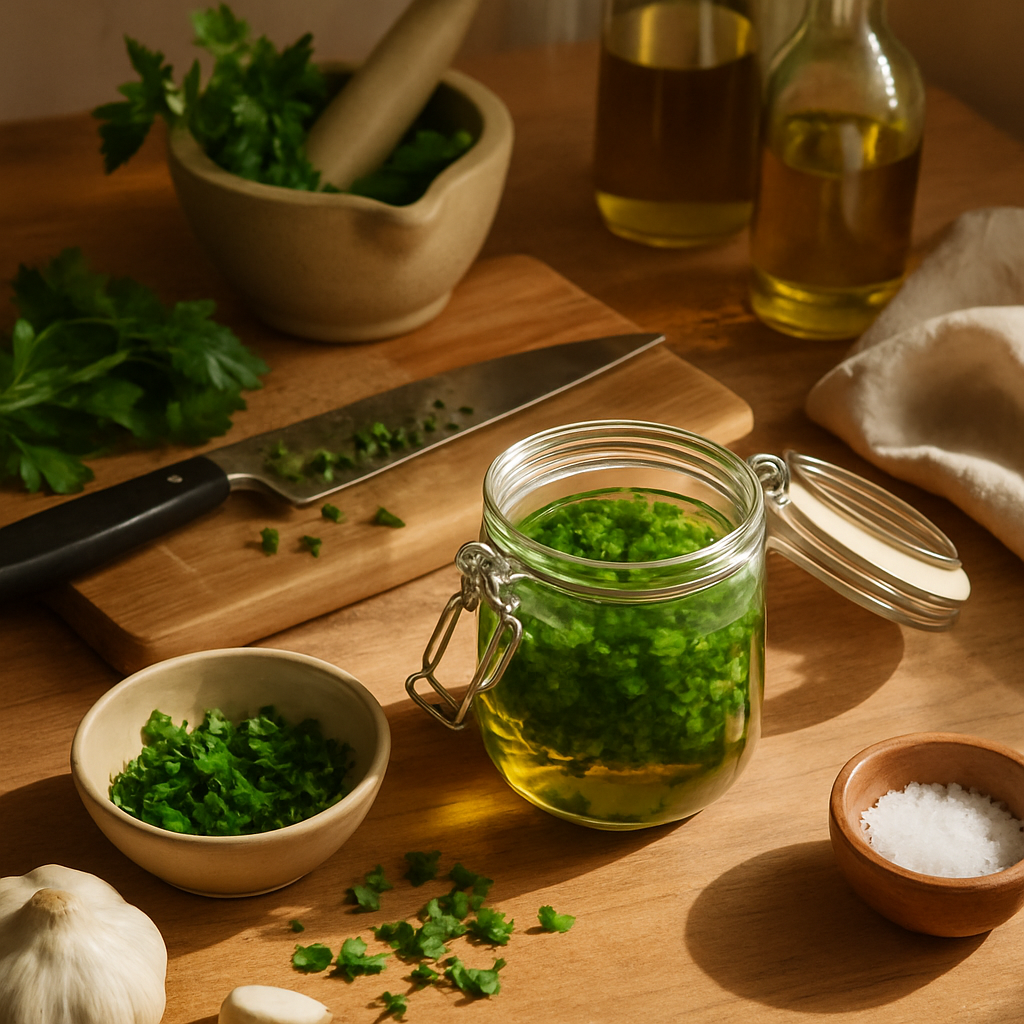
A herb oil is exactly what it sounds like: fresh herbs blended or steeped in oil to extract their colour, aroma, and flavour. The result is a vibrant, pourable condiment that you use to finish dishes rather than cook with.
It's distinct from infused oils that sit on a shelf for weeks — herb oils are typically made fresh, used within a few days, and stored in the fridge. Think of it less like a pantry staple and more like a quick sauce that happens to have a long shelf life relative to the herbs it came from.
The technique is used across professional kitchens not because chefs are precious about it, but because it genuinely works. A spoonful over a bowl of lentil soup, a pasta, or a platter of roasted carrots changes both how it looks and how it tastes.
The Two Main Methods
There are two reliable approaches, and they produce slightly different results. Knowing which to use and when makes the whole thing much more flexible.
Blanch and blend is the method for vivid green oils — the kind you see pooled around a plated dish in a restaurant. You briefly blanch soft herbs like basil, parsley, or tarragon in boiling water (10–15 seconds), then immediately transfer them to iced water to stop the cooking. This fixes the chlorophyll, which is what gives the oil its bright green colour. Drain them well, squeeze out excess moisture, then blend with a neutral oil until smooth. Strain through a fine sieve or muslin cloth for a clear, polished result — or leave it unsieved for something with more body.
Cold infusion or gentle warming is better for woodier, more robust herbs like rosemary, thyme, or sage. You combine the herbs with oil in a small saucepan over very low heat — we're talking 60–70°C, barely a shimmer — for around 20–30 minutes. This gently coaxes the aromatic compounds out of the herbs without destroying them. Strain, cool, and you're done. This method doesn't give you that vivid green colour, but it gives you depth of flavour that's harder to fake.
Choosing the Right Oil and Herbs
The oil you use matters more than people realise. A strongly flavoured extra virgin olive oil will compete with delicate herbs like basil or chervil. For those, a light olive oil, sunflower oil, or grapeseed oil gives the herb a chance to come through clearly.
Where extra virgin olive oil works well is when it's a flavour partner rather than a background, such as in a rosemary or chilli-infused oil where you actually want that fruity, grassy note in the finished dish.
As a general guide:
- Basil, parsley, tarragon, chervil — pair with a neutral oil; use the blanch-and-blend method
- Rosemary, thyme, sage, bay — pair well with a light olive oil; use the gentle heat method
- Coriander, mint — can go either way; handle gently as they discolour quickly
- Chives — excellent blended raw into a neutral oil, no blanching required
Don't be afraid to combine herbs. Parsley and tarragon together make a beautifully aromatic oil. Basil and a small amount of mint adds complexity without being obvious.
What the Evidence Shows
Herbs aren't just flavour — they contain polyphenols and volatile compounds that have been associated with anti-inflammatory effects in the research literature. Studies published in journals like Food Chemistry and Nutrients have shown that fresh herbs such as basil, rosemary, and parsley are meaningful sources of antioxidants, including luteolin, rosmarinic acid, and apigenin.
Blending or infusing herbs into oil may actually help preserve and even enhance the bioavailability of some of these compounds. Fat-soluble phytonutrients, including certain polyphenols and carotenoids, are better absorbed in the presence of dietary fat — so combining herbs with oil isn't just good cooking, it's a sensible pairing from a nutritional standpoint too.
That said, the quantities in a finishing drizzle are modest, so it's not worth framing this as a health intervention. What it does mean is that making herb oil a regular finishing habit adds genuine flavour and a small but consistent contribution of plant compounds to everyday meals.
How to Use It Well
The key word here is finish. Herb oil is applied after cooking, not during — heat will destroy the colour and the more delicate aromatic notes. A drizzle just before serving is all it takes.
For soups: Ladle the soup into bowls, then add a small pool of herb oil to the surface. A blanched parsley or basil oil works brilliantly with tomato soup, minestrone, or any pulse-based dish. Rosemary oil is excellent with white bean or roasted garlic soup.
For pasta: Toss the cooked pasta in its sauce, then finish each plate with a small spoon of herb oil. Tarragon oil with a simple butter and parmesan pasta is quietly brilliant. Basil oil over a cacio e pepe keeps it simple but elevated.
For roasted dishes: Drizzle over vegetables as they come out of the oven while they're still hot enough to absorb the oil slightly. Rosemary or thyme oil over roasted potatoes, sage oil over roasted squash, or coriander oil over spiced cauliflower all work particularly well.
You can also use herb oil as a base for a quick dressing, stirred into yoghurt for a sauce, or drizzled over eggs.
Storage and Safety
Homemade herb oils don't keep as long as people sometimes assume, and it's worth being clear about that. Fresh herb oils should be refrigerated and used within 3–5 days. This isn't just about flavour — wet herbs blended into oil can theoretically support the growth of Clostridium botulinum if left at room temperature, particularly if garlic is involved.
The blanch-and-blend method reduces risk slightly because blanching kills surface bacteria, but the safest approach is simple: make small batches, keep them cold, and use them quickly.
Oils made via the gentle heat infusion method (without water-bearing fresh herbs) and strained thoroughly are slightly more stable, but still benefit from refrigeration and should be used within a week.
Don't let this put you off — it's straightforward to manage. Making a small batch on a Sunday and using it across a few meals during the week is a completely practical habit.
Practical Takeaways
Here's what to take away and actually use:
- Start with parsley oil — it's forgiving, versatile, and almost always available. Blanch a large handful, blend with a neutral oil, strain if you want it smooth, and keep it in the fridge. Use it on anything.
- Keep batches small — around 100ml at a time is enough for several meals and stays fresh more easily.
- Get your ratios right — roughly 1 part herbs (by weight, after squeezing dry) to 3–4 parts oil produces a good consistency. Adjust to taste.
- Strain for restaurants, don't bother for home — straining gives a cleaner result, but leaving it slightly coarser is quicker and still delicious.
- Label and date whatever you put in the fridge. It sounds obvious until you're sniffing a jar four days later trying to remember when you made it.
- Use good oil — the quality of the oil you start with matters more here than in most cooking, because it's front and centre in the final flavour.
If you want to build meals that are more flavourful and nutritionally complete without spending hours in the kitchen, Macrology generates macro-perfect meal plans in seconds — https://macrology.app/signin
---
A herb oil is one of those techniques that makes cooking feel more rewarding with almost no extra effort. Once you've made it a couple of times, it becomes second nature — the kind of finishing touch that quietly improves everything it touches.
Want meals like this planned to your exact macros?
Macrology generates a personalised meal plan in seconds — breakfast, lunch, dinner and snacks, all hitting your daily targets.
Start your free 14-day trial