How to Use Pressure Cooking to Maximise Nutrition and Cut Cooking Time
# How to Use Pressure Cooking to Maximise Nutrition and Cut Cooking Time
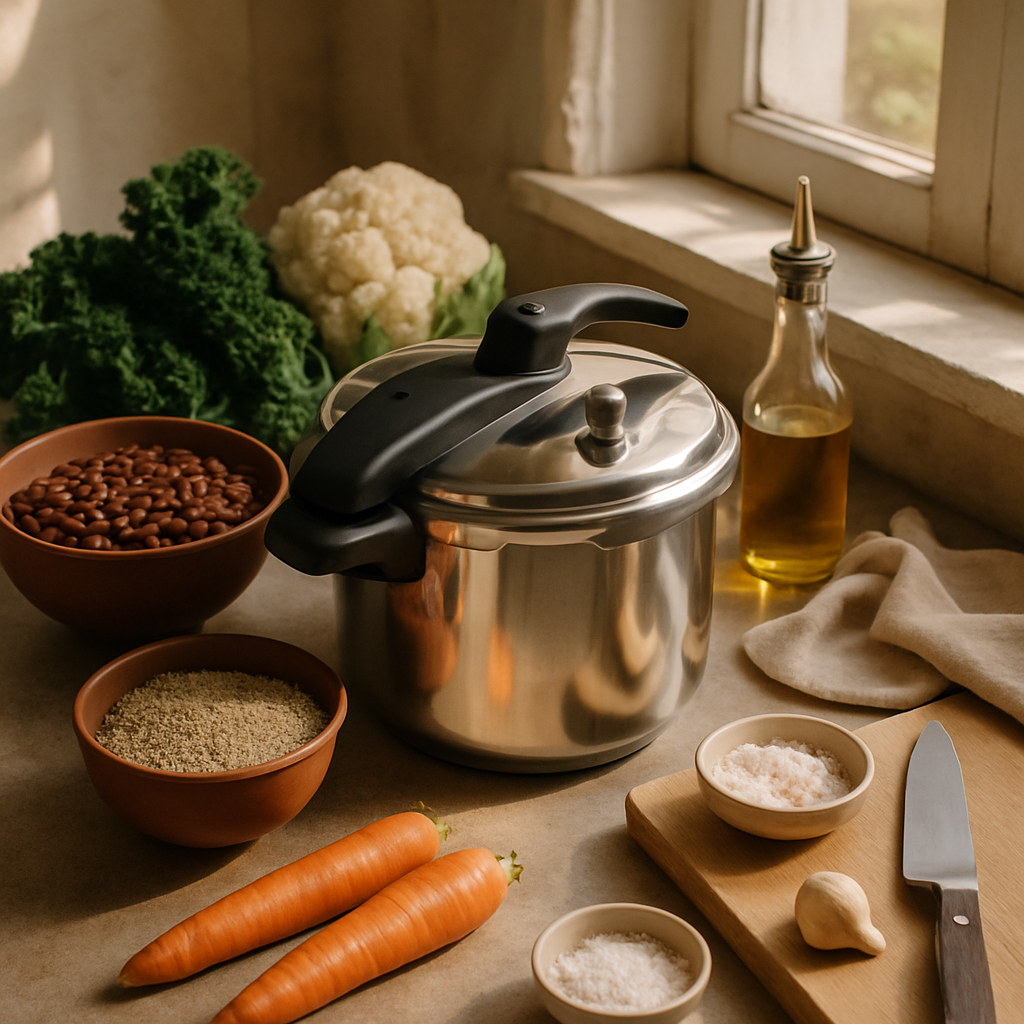
There's a common assumption that the faster you cook something, the more you're sacrificing nutritionally. It turns out, for a lot of foods, the opposite is true — and pressure cooking is one of the clearest examples of this. If you've got a pressure cooker gathering dust at the back of a cupboard, or you're on the fence about buying one, this article is worth your time.
What Actually Happens Inside a Pressure Cooker
A pressure cooker works by trapping steam inside a sealed pot, which raises the boiling point of water from 100°C to around 120°C. That higher temperature means food cooks significantly faster — typically 50–70% quicker than conventional methods.
The sealed environment is the key detail here. Unlike boiling, where water-soluble vitamins leach out into the cooking liquid and often get poured down the drain, pressure cooking uses far less water. What liquid is used tends to stay in the pot, along with the nutrients that would otherwise be lost.
This matters more than it might seem. When you boil broccoli or spinach in a large pan of water, you're losing a meaningful amount of vitamins B and C — both water-soluble and therefore vulnerable. Pressure cooking significantly reduces that loss simply by reducing water contact and cooking time.
What the Evidence Shows
The research on pressure cooking and nutrient retention is more positive than most people expect.
A study published in the Journal of Food Science found that pressure cooking retained significantly more vitamin C in broccoli compared to boiling — though steaming still edged it out. The key takeaway wasn't that pressure cooking is perfect, but that it's considerably better than the method most people actually use day-to-day.
Research on legumes — lentils, chickpeas, black beans — consistently shows that pressure cooking reduces cooking time dramatically while retaining protein content and improving digestibility. It also substantially reduces phytic acid, an antinutrient that can interfere with mineral absorption. Longer soaking and boiling does a similar job, but pressure cooking gets you there faster.
One area worth flagging: pressure cooking isn't ideal for every nutrient. Some heat-sensitive compounds, like certain antioxidants found in tomatoes, are actually increased by heat exposure (lycopene being the well-known example). Others, like folate in leafy greens, can degrade more quickly at higher temperatures. Context matters — no single cooking method is universally superior for every food.
Where Pressure Cooking Really Shines
Some foods are genuinely transformed by a pressure cooker in ways that benefit both nutrition and practicality.
Legumes are the standout. Dried chickpeas that would take 90 minutes to boil are done in under 30 minutes from dried (without pre-soaking). Lentils cook in 10–15 minutes. This makes it far easier to cook legumes from scratch rather than relying on tinned options — which, while convenient, often contain added salt.
Bone broth and stocks are another strong use case. The pressure environment extracts collagen, minerals, and gelatin from bones in a fraction of the usual time. A stock that would simmer for 8–12 hours on the hob takes 2–3 hours in a pressure cooker, with arguably richer results.
Root vegetables — sweet potatoes, carrots, parsnips — cook quickly under pressure and retain their potassium and beta-carotene well, particularly compared to boiling. Tough cuts of meat like shin beef or lamb shoulder become fork-tender in under an hour, making high-quality, protein-rich meals accessible on a weeknight.
Common Myths Worth Clearing Up
"Pressure cooking destroys nutrients." This one persists despite the evidence pointing the other way. The confusion likely comes from conflating high heat with nutrient destruction — but it's actually the duration of heat exposure that matters most, and pressure cooking dramatically reduces that duration.
"You need to soak legumes overnight." With a pressure cooker, you don't. Dry chickpeas, beans, and lentils can go straight in. Soaking does help reduce flatulence-causing oligosaccharides slightly, but it's not essential when you're pressure cooking.
"It's dangerous." Modern pressure cookers — particularly electric models like the Instant Pot — have multiple safety mechanisms. The locking lid, pressure release valves, and automatic pressure regulation make them considerably safer than older stovetop models from decades past. Treating them with basic care (don't overfill, always check the seal) is all that's needed.
Electric vs Stovetop: Which Is Better?
Both work well, but they suit different people.
Stovetop pressure cookers reach higher pressures (around 15 psi) than most electric models (around 11–12 psi), which means they cook slightly faster and tend to give better browning on meat before pressure cooking begins. They're also typically cheaper to buy and simpler to maintain.
Electric pressure cookers (multi-cookers) are more beginner-friendly. You set a timer, walk away, and the machine handles depressurisation automatically. They also function as slow cookers, rice cookers, and sometimes air fryers, which makes them genuinely useful if kitchen space is limited.
For pure cooking performance, stovetop has a slight edge. For everyday convenience and flexibility, electric models win for most households. Either way, the nutritional benefits are broadly comparable.
Getting the Most From Your Pressure Cooker
A few practical points that make a real difference:
Use the minimum liquid required. Most recipes specify at least 250ml of liquid, but adding more than necessary dilutes flavours and increases cooking time. Less water also means fewer water-soluble nutrients have somewhere to go.
Don't discard the cooking liquid. The water left after pressure cooking vegetables or legumes contains leached vitamins and minerals. Use it as the base for a soup, sauce, or gravy rather than tipping it away.
Match the method to the food. Delicate vegetables like peas or spinach don't benefit from pressure cooking — they're done in minutes conventionally and can turn to mush under pressure. Use it for foods that genuinely need extended cooking time: legumes, grains, root vegetables, tougher cuts of meat.
Natural release vs quick release matters. Allowing pressure to release naturally (just leaving the pot alone) continues cooking the food gently and works well for stews and legumes. Quick release (manually venting the steam) stops cooking more abruptly and is better for vegetables where you want to preserve texture.
Practical Takeaways
Here's what you can actually do with this today:
- Swap tinned chickpeas for dried ones. Pressure cook from dried in 25–30 minutes with no soaking. You'll save money and have more control over salt content.
- Batch cook grains and legumes on a Sunday. Brown rice, lentils, and black beans all pressure cook in under 20 minutes and keep in the fridge for five days. Having these ready removes a significant barrier to building balanced, protein-rich meals through the week.
- Try a one-pot pressure cooker meal. Chicken thighs, tinned tomatoes, onion, garlic, and butter beans cook together under pressure in around 20 minutes. No watching, no stirring — and the result is a genuinely high-protein, high-fibre meal with minimal effort.
- Make stock from scratch. Next time you have a chicken carcass or vegetable scraps, pressure cook them for 2 hours with water and aromatics. The result is more nutritious and cheaper than shop-bought stock, which is typically high in sodium.
- Keep cooking times conservative at first. Overcooking under pressure is easy when you're starting out. Start with the lower end of any time range — you can always add a few more minutes.
If you want help building pressure cooker meals that hit your macro targets without the spreadsheet work, Macrology generates macro-perfect meal plans in seconds — https://macrology.app/signin
The pressure cooker won't replace every method in your kitchen, but for legumes, batch cooking, and weeknight protein meals, it's one of the most practical tools you can have. The fact that it also tends to preserve nutrients better than boiling is, genuinely, a bonus worth knowing about.
Want meals like this planned to your exact macros?
Macrology generates a personalised meal plan in seconds — breakfast, lunch, dinner and snacks, all hitting your daily targets.
Start your free 14-day trial