How to Use a Spice-Crusted Finish to Transform Roasted Vegetables
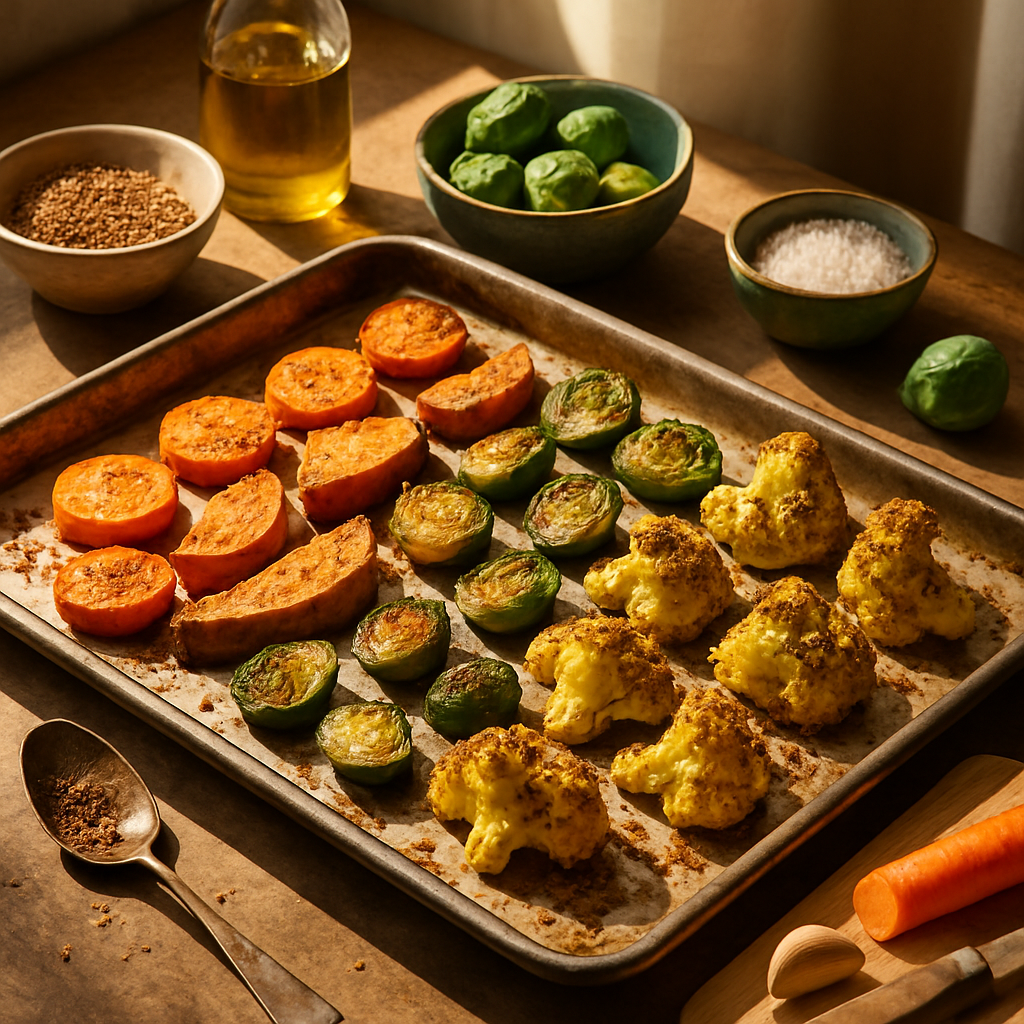
# How to Use a Spice-Crusted Finish to Transform Roasted Vegetables
Most people roast vegetables the same way every time — oil, salt, oven, done. And while there's nothing wrong with that, it's leaving a lot of flavour on the table.
A spice-crusted finish is one of the simplest techniques in a home cook's arsenal, and it turns an ordinary tray of roasted veg into something genuinely worth getting excited about.
What Is a Spice-Crusted Finish?
The name sounds more technical than it is. A spice-crusted finish simply means applying a dry spice mixture — sometimes combined with a small amount of a binding ingredient — in a way that creates a flavourful, textured exterior on your vegetables as they roast.
It's distinct from just tossing your veg in spices before cooking (though that's also worth doing). The "finish" element is about technique: how and when you apply the mixture matters as much as what goes into it.
Done well, you get a slight crust on the outside — caramelised, fragrant, and slightly crisp — while the vegetable inside stays tender. It's a textural contrast that makes the whole dish feel more considered, more satisfying, and honestly more interesting to eat.
Why Vegetables Benefit So Much from This Technique
Vegetables have a structural challenge that meat doesn't: they release a lot of moisture as they cook. That moisture is often the enemy of a good roast — it steams the veg rather than browning it, leaving you with something soft and a bit flat.
A spice crust helps address this in a couple of ways. First, the dry spices absorb some of that surface moisture, helping the exterior dry out faster and develop colour. Second, the crust itself creates a kind of barrier that traps flavour compounds against the surface of the vegetable rather than letting them evaporate off into the oven.
The Maillard reaction — the chemical process that gives browned food its deeper, more complex flavour — happens more readily on a drier surface. A spice crust essentially sets the stage for better browning, which means more flavour with no additional effort beyond the mixture itself.
What the Evidence Shows
There's a reason spice crusts have appeared in cooking traditions across the world, from North African chermoula to Indian bhuna techniques to the dry rubs of American barbecue. These aren't arbitrary culinary habits — they reflect a practical understanding of how heat, spice, and surface chemistry interact.
From a nutritional standpoint, many of the spices commonly used in these crusts — cumin, coriander, turmeric, smoked paprika, cinnamon — contain bioactive compounds that have been studied for their potential anti-inflammatory and antioxidant properties. Research published in journals including Food Chemistry and Nutrients has documented the presence of compounds like curcumin in turmeric and cineole in coriander, both associated with beneficial effects in lab and population studies.
It's worth keeping this in proportion — a teaspoon of turmeric on your cauliflower isn't a medicine. But adding more spice to your cooking is a genuinely low-effort way to add nutritional variety to your diet, alongside the flavour benefits. That's a reasonable trade-off by anyone's measure.
Building Your Spice Crust: The Basics
A good spice crust has a few components working together.
The base spice provides the dominant flavour and most of the volume. Smoked paprika, cumin, and za'atar all work well here. These are the notes that define the dish.
The accent spice adds complexity and contrast. Cinnamon with roasted carrots, chilli flakes with courgette, fennel seed with sweet potato — these pairings work because they play off the natural sweetness or earthiness of the vegetable.
A binding agent helps the spices adhere rather than falling off mid-roast. A light coating of olive oil on the veg before applying the spice mixture is the most reliable approach. Some cooks use a small amount of tahini, harissa paste, or even yoghurt, all of which also contribute flavour.
Salt and an acid note are the finishing touches. A pinch of flaky salt applied after roasting preserves its texture, and a small amount of acid — lemon zest in the crust itself, or a squeeze of lemon juice after cooking — lifts the whole thing noticeably.
Timing: When to Apply the Crust
This is where a lot of home cooks go slightly wrong, and it makes a real difference.
If you apply your spice mixture too early and your oven isn't hot enough, the spices can burn before the vegetable is cooked through — you get bitterness rather than depth. Conversely, if you add everything at the start and roast at a high heat, you risk the same problem with more delicate spices like garlic powder or dried herbs.
A practical approach that works well for most vegetables: toss in oil and your base spices at the start, then add the more delicate or aromatic components in the final 8–10 minutes of cooking. This two-stage method gives you browning on the base spices while protecting the more volatile aromatics.
For very dense vegetables like beetroot or butternut squash, a different approach works better — roast them most of the way through, then press a dry spice paste onto the cut surface and return them to a higher heat for the last 10 minutes. The crust forms quickly and intensely, almost like a glaze.
Matching Spices to Vegetables
Not every combination works equally well, and part of the skill is in the pairing. Here are a few combinations that consistently deliver:
Cauliflower with turmeric, cumin, and coriander — the cauliflower's mild, slightly nutty flavour takes on warmth without being overpowered. A spoon of yoghurt as a binder adds a slight tang that balances the earthiness.
Carrots with ras el hanout and preserved lemon zest — the natural sweetness of carrot plays beautifully against the complex, slightly floral notes of ras el hanout.
Courgette with za'atar and sumac — courgette can be watery and bland if you're not careful, but a za'atar crust helps dry the surface and adds a herby, sesame-forward flavour that makes it genuinely enjoyable.
Sweet potato with smoked paprika, chipotle, and a touch of maple — the smokiness and gentle heat of chipotle are a natural match for sweet potato's richness. Adding a small amount of maple syrup to the binding oil encourages even more caramelisation.
Tenderstem broccoli with chilli, garlic, and lemon zest — applied in the final few minutes only, this combination gives you something that looks as good as it tastes.
What Makes This Work Nutritionally
Roasting vegetables with spice crusts doesn't diminish their nutritional value in any meaningful way — and in some cases it may improve it. Fat-soluble vitamins and phytochemicals in vegetables like beta-carotene (abundant in carrots and sweet potato) are actually better absorbed in the presence of fat, which is already part of the roasting process.
The diversity of spices you bring in also adds to the overall variety of plant compounds in the dish. Research in nutrition science increasingly points to the value of dietary diversity — not just eating more plants, but eating a wider range of them, which includes the herbs and spices you cook with.
Practical Takeaways
A few things worth taking away from all of this:
Roast at a high enough temperature — 200–220°C is generally the right range. Lower than that and you're steaming rather than roasting, and no spice crust will compensate.
Don't overcrowd the tray. Give your vegetables space. Crowding causes steaming, which undoes the crust entirely.
Apply spices in two stages when possible — base spices at the start, aromatics and delicate herbs in the final 8–10 minutes.
Press the crust in. Don't just toss and hope — use your hands or a spoon to press the spice mixture against the surface of the vegetable so it actually adheres.
Finish with acid and flaky salt after cooking, not before. It keeps the texture bright.
If you want to plan meals around techniques like this — balancing flavour, nutrition, and variety without spending hours in the kitchen — Macrology generates macro-perfect meal plans in seconds — https://macrology.app/signin
Want meals like this planned to your exact macros?
Macrology generates a personalised meal plan in seconds — breakfast, lunch, dinner and snacks, all hitting your daily targets.
Start your free 14-day trial