How to Meal Prep Properly for a Busy Working Week
# How to Meal Prep Properly for a Busy Working Week
Sunday afternoons spent cooking for the week ahead used to feel like a chore — now they're one of the most useful things you can do for your nutrition. A bit of planning upfront means less stress, less money spent on last-minute lunches, and actually eating the food you intended to eat.
Why Most Meal Prep Attempts Fall Apart
The biggest reason people abandon meal prep isn't laziness — it's overambition. Cooking five completely different meals for five days is exhausting, and you'll likely run out of steam by Tuesday.
The fix is simpler than you'd think: cook components, not complete meals. A batch of roasted vegetables, a pot of grains, and a couple of protein sources can combine into dozens of different plates across the week without you eating the same bowl of rice and chicken every single day.
Boredom is the enemy of consistency. Building flexibility into what you prep keeps things interesting without adding much extra effort.
What to Actually Cook on a Prep Day
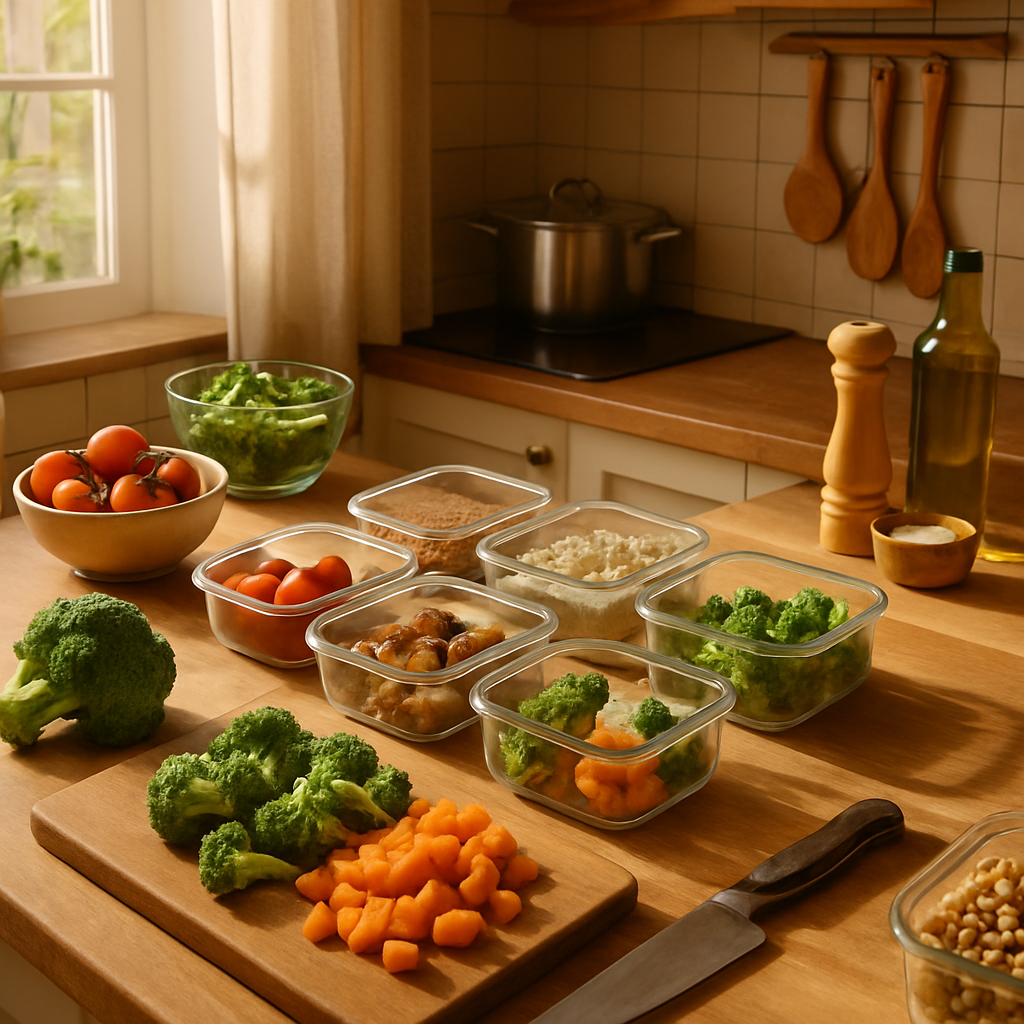
A solid prep session covers three categories: a protein source, a carbohydrate base, and some ready-to-use vegetables.
For protein, think batch-cooked chicken thighs, a tray of baked salmon fillets, boiled eggs, or a big pot of lentils or chickpeas if you eat more plant-based. These keep well in the fridge for three to four days and work across multiple meals.
For carbohydrates, rice, quinoa, and pasta all reheat well. Roasted or boiled potatoes are brilliant too — underrated for meal prep because they're filling, versatile, and incredibly cheap.
Vegetables are where most preps fall short. Raw veg goes limp, so either roast a big tray of whatever's in season, blanch some greens and keep them in the fridge, or keep washed salad leaves and cherry tomatoes ready to grab. A jar of homemade or shop-bought dressing in the fridge makes them far more appealing on a tired Wednesday evening.
The Practicalities That Actually Matter
Storage is worth thinking about properly. Glass containers are worth the investment — they reheat evenly, don't absorb smells, and you can see exactly what's inside without having to open everything.
Label things. It takes ten seconds with masking tape and a marker, and it means you're not inspecting chicken from memory trying to remember if it was Monday or Thursday you cooked it.
Portion your food before it goes in the fridge rather than leaving it in one big container. When a meal is already portioned and ready to grab, you're far more likely to actually eat it than if you have to weigh and divide things up after a long day.
One more thing: not everything needs to be cooked in advance. Breakfast items like overnight oats or yoghurt and fruit take two minutes the night before. Saving your prep energy for the meals that genuinely need it — usually lunch and dinner — makes the whole process more sustainable.
Keeping It From Feeling Like a Chore
The prep session itself doesn't need to take all day. An hour and a half, with a bit of organisation, is usually enough to cover lunches and dinners for four to five days.
Work in parallel rather than in sequence — get the oven on for your protein and vegetables while water boils for your grains. Most of the time is passive anyway; you're just waiting, not actively cooking.
Put on a podcast or a playlist you enjoy. It sounds small, but it genuinely changes the feel of the whole thing from obligation to something you might actually look forward to.
Your Practical Takeaway
Here's a simple framework to start with this week:
- Pick two proteins — one animal, one plant-based, or two of either
- Cook one grain or starchy carb in a big batch
- Roast one tray of vegetables with olive oil and seasoning
- Prep one easy breakfast the night before each day
- Store in portioned containers so meals are grab-and-go
That's it. You don't need to follow a rigid plan or cook restaurant-quality food every night. You just need enough ready-to-eat ingredients to make good choices easy when time and energy are low.
If you want a meal plan that tells you exactly what to prep and in what quantities to hit your nutrition targets, Macrology generates macro-perfect meal plans in seconds — https://macrology.app/signin
Want meals like this planned to your exact macros?
Macrology generates a personalised meal plan in seconds — breakfast, lunch, dinner and snacks, all hitting your daily targets.
Start your free 14-day trial