How to Build Flavour by Cooking Onions Properly
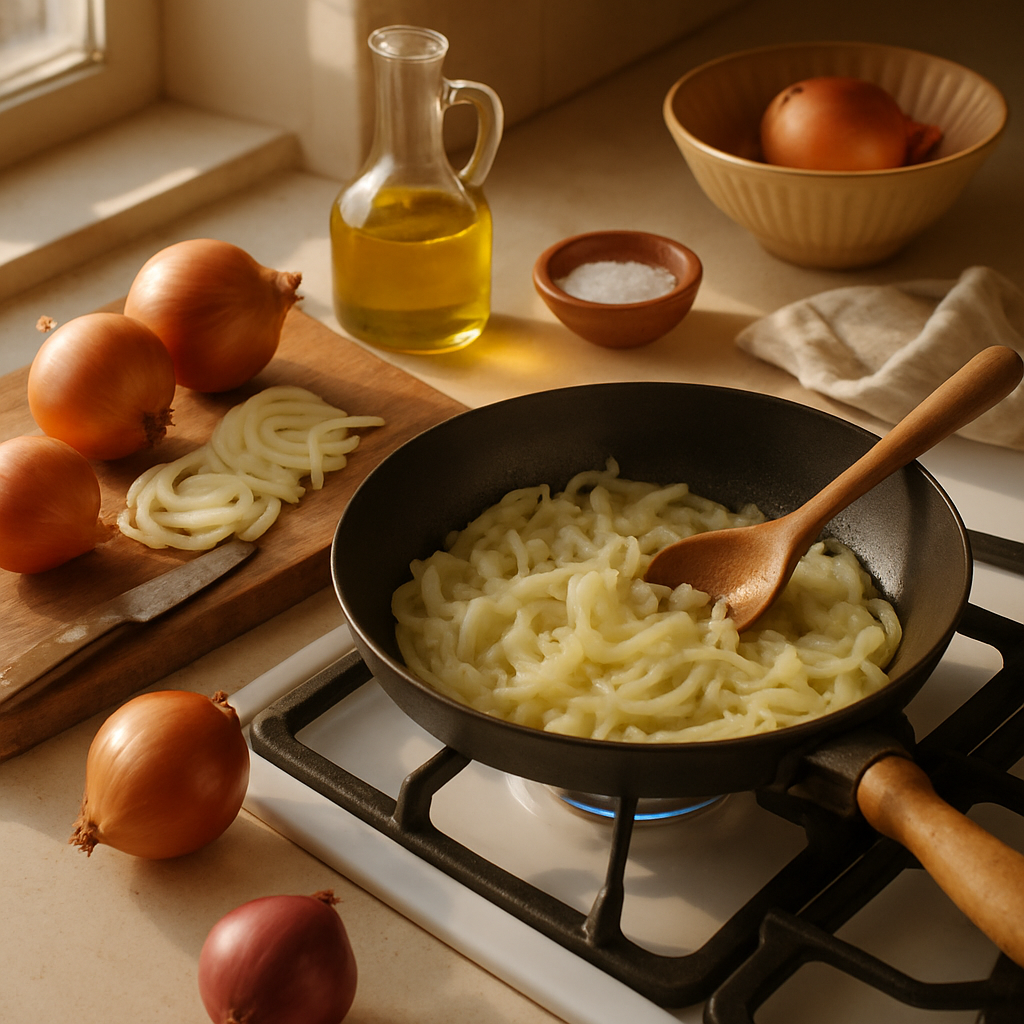
# How to Build Flavour by Cooking Onions Properly
There's a reason so many recipes start with "fry an onion" — onions are one of the most powerful flavour-building ingredients in the kitchen. But how you cook them makes an enormous difference to what ends up in your bowl.
Why Onions Taste So Different Depending on How You Cook Them
Raw onions are sharp and pungent. Give them heat and time, and something remarkable happens: the sulphur compounds that make your eyes water begin to break down, and the natural sugars start to concentrate and caramelise.
The result is a completely different flavour profile depending on how far you take the cooking. Lightly softened onions add gentle sweetness and body. Deeply caramelised onions bring a rich, almost jam-like intensity that can anchor an entire dish.
The mistake most people make is rushing this process — turning the heat up to save time and ending up with browned but bitter onions rather than truly sweet, deeply flavoured ones.
The Three Stages Worth Knowing
Understanding these stages means you can choose exactly the flavour you want.
Softened (5–8 minutes over medium heat): The onion turns translucent and loses its raw bite. This is the right stopping point for dishes where you want background flavour without sweetness — think soups, curries, or tomato sauces where other ingredients will do the heavy lifting.
Golden (15–20 minutes over medium-low heat): The onion starts to take on colour and a noticeable sweetness develops. Good for pasta sauces, lentil dishes, and anything where you want a bit more depth.
Caramelised (40–60 minutes over low heat): This is the long game. The onions shrink dramatically, turn deep amber, and develop a rich, sweet, complex flavour. Worth every minute for French onion soup, a proper cheese toastie, or spooned through scrambled eggs.
The key variable is heat level. Low and slow gives the sugars time to develop without burning. If you hear aggressive sizzling, the pan is too hot.
Practical Tips That Actually Make a Difference
Salt early. Adding a pinch of salt when the onions first hit the pan draws out moisture and helps them soften faster without burning.
Don't crowd the pan. Onions release a lot of water as they cook. Too many in a small pan and they'll steam rather than fry, which slows caramelisation significantly. Use a wider pan than you think you need.
A splash of water is your friend. If the onions are catching on the bottom of the pan before they're done, add a tablespoon or two of water and scrape up the stuck bits. This deglazes the pan and adds flavour back into the onions rather than wasting it.
Fat choice matters. Butter gives a richer flavour and helps with browning. Olive oil is more neutral and works well in Mediterranean-style dishes. A combination of both is a reliable option — the butter adds flavour, the oil raises the smoke point slightly.
Matching the Onion to the Job
Different onions behave slightly differently, and it's worth knowing the basics.
Brown onions are the everyday workhorse — they caramelise well and have a good balance of sweetness and savouriness. Use these for most cooking.
White onions are sharper and have a slightly higher water content, which can slow caramelisation. They're better suited to quick-cooking dishes or eating raw.
Red onions are milder raw but can turn an unappetising grey colour when cooked for a long time. They're best used lightly softened or in dishes where the cooking time is short.
Shallots are sweeter and more delicate than brown onions. They caramelise beautifully and work well in sauces, dressings, and any dish where you want subtle flavour rather than a bold onion hit.
Practical Takeaway
Next time you're making something that starts with an onion, slow down and give it more time than you think it needs. Match the cooking stage to what you're making — softened for subtle, caramelised for depth — and keep the heat lower than feels right. The difference in flavour is not subtle.
Getting the fundamentals right is what separates a flat meal from one that actually tastes like something.
If you want meal plans built around ingredients and techniques that genuinely work, Macrology generates macro-perfect meal plans in seconds — https://macrology.app/signin
Want meals like this planned to your exact macros?
Macrology generates a personalised meal plan in seconds — breakfast, lunch, dinner and snacks, all hitting your daily targets.
Start your free 14-day trial