How to Use Steam Properly When Cooking Vegetables, Fish and Grains
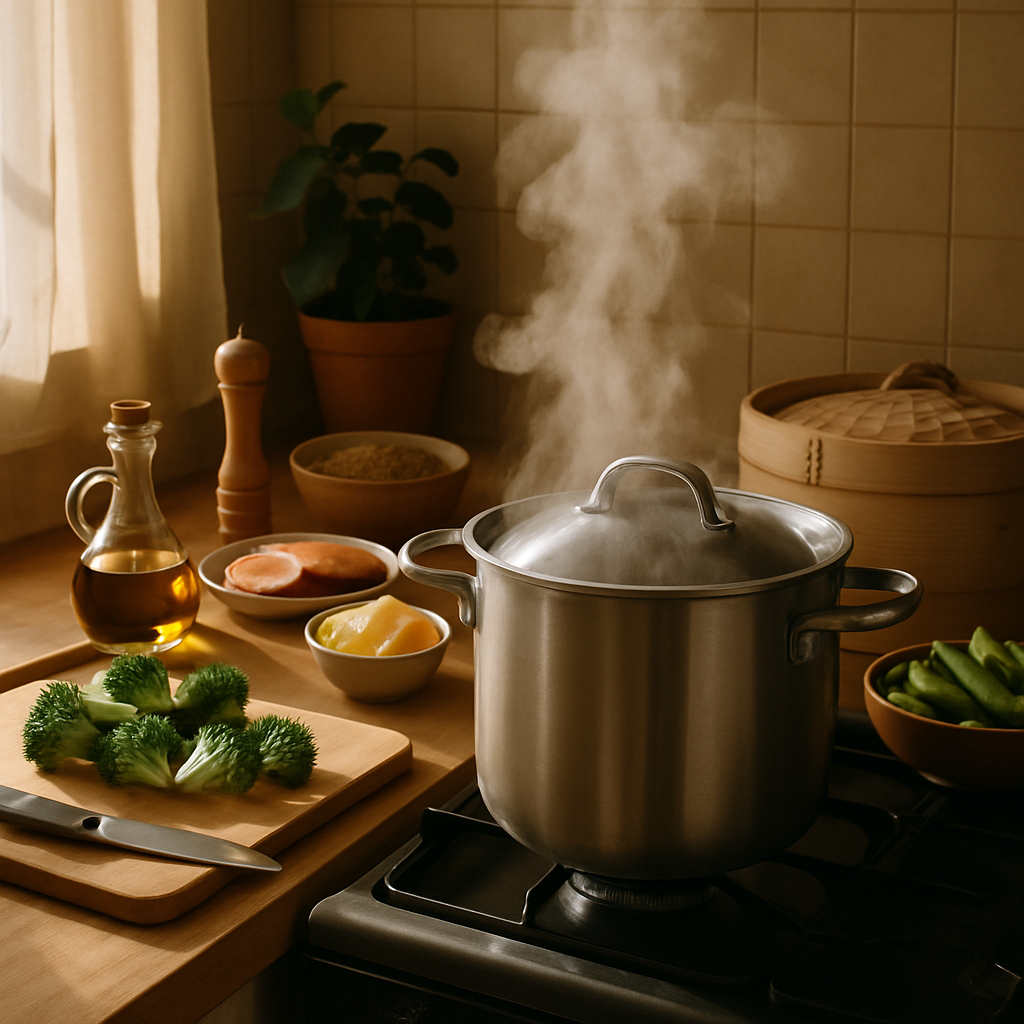
# How to Use Steam Properly When Cooking Vegetables, Fish and Grains
Most people who steam food are doing it wrong — not drastically wrong, but wrong enough to end up with soggy broccoli, bland fish, and grains that stick together in a clump. Steaming is one of the most useful techniques in any cook's arsenal, but there's a gap between "chucking things in a steamer basket" and actually getting the best out of it.
Why Steaming Deserves More Respect
Steaming has a bit of an image problem. It gets filed away mentally alongside diet food and joyless eating, when in reality it's one of the oldest, most versatile cooking methods in the world. Chinese dim sum, Vietnamese bánh cuốn, Japanese chawanmushi — steaming is behind some of the most celebrated dishes on the planet.
Beyond flavour, the technique has genuine practical advantages. Because food isn't submerged in water, it doesn't leach out as many water-soluble nutrients. A 2009 study published in the Journal of the Science of Food and Agriculture found that steamed broccoli retained significantly more glucosinolates — the compounds linked to its health benefits — than boiled broccoli. The key word is retained: steaming keeps more of what's already in the food.
It's also fast, hands-off, and easy to scale. Once you understand the mechanics, it becomes one of the most reliable methods in your kitchen.
The Mechanics: What's Actually Happening
Before getting into specifics, it helps to understand what steam is doing. When water boils, it produces vapour at around 100°C. That vapour surrounds your food and transfers heat more gently and evenly than direct contact with boiling water or a hot pan.
The result is gentle, moist heat — which is why steaming excels with delicate proteins like fish, and why it keeps vegetables from going limp the way aggressive boiling can.
The critical variable is the gap between the water and the food. Your food should never touch the boiling water. It should sit above it, catching only the rising steam. The moment food touches the water, you're boiling it — which is a different technique entirely, with different results.
Steaming Vegetables: Timing Is Everything
Vegetables are the most forgiving thing to steam, but they're also where most people go wrong. The number one mistake is overcooking. Steam is efficient — it works quickly — and leaving vegetables in even a minute too long collapses their structure and washes out their colour.
A rough guide for common vegetables:
- Tender greens (spinach, pak choi, kale): 2–3 minutes
- Broccoli and cauliflower florets: 4–6 minutes
- Green beans and asparagus: 4–5 minutes
- Courgette slices: 3–4 minutes
- Carrots (sliced): 5–7 minutes
- Potatoes (small or halved): 15–20 minutes
These are starting points, not rules. The size of your pieces matters enormously — thin carrot coins will cook in half the time of chunky chunks. Cut everything to a similar size within a batch so it all finishes at the same time.
Another thing worth knowing: don't lift the lid repeatedly. Every time you open the steamer, you release steam and drop the temperature. Trust the timing, then check once near the end. A sharp knife should glide through with very little resistance when a vegetable is done.
Steaming Fish: Where This Technique Really Shines
Fish is arguably the ingredient that benefits most from steaming. It's protein-dense and delicate, and the dry heat of an oven or the aggressive heat of a frying pan gives you a very small window before it overcooks and dries out. Steam is more forgiving.
Whole fish or fillets work brilliantly. A salmon fillet around 150g will take roughly 6–8 minutes over vigorously boiling water. A whole sea bass or bream (around 400–500g) needs closer to 12–15 minutes. The fish is done when the flesh turns opaque throughout and flakes easily — not when it falls apart completely.
The real advantage of steaming fish is that you can build flavour into the steam itself. Add a few slices of ginger and a couple of spring onions to the water. Tuck fresh herbs or lemon slices under and around the fish. In Cantonese cooking, steamed fish is finished with a splash of soy sauce and hot oil poured over the top — a technique called "pouring the wok" — which creates extraordinary depth of flavour from a very simple process.
Don't salt fish before steaming if you want to keep it particularly moist. Salt draws moisture out of proteins. Season after cooking, or use sauces and aromatics to provide flavour instead.
Steaming Grains: The Method Most People Haven't Tried
Most people boil their rice or couscous. Steaming grains is less common in Western kitchens, but it produces noticeably better results for certain varieties — particularly rice, millet, and couscous.
Couscous is technically the easiest: it's pre-cooked and just needs rehydrating. Steaming it rather than pouring over boiling water gives you lighter, fluffier grains that don't clump. Pour over just enough boiling water to absorb (roughly a 1:1.5 ratio of couscous to water), cover for 5 minutes, then finish in a steamer or over a pot of steam for a further 3–4 minutes, fluffing with a fork throughout.
For rice, the steam method — sometimes called the absorption-then-steam method — works like this: bring rice and water to the boil in a lidded pan, let it simmer until the water level drops to just above the surface of the rice, then turn the heat to its lowest setting and leave it covered for 10–12 minutes. This final phase is essentially steaming the rice in its own residual moisture. Don't lift the lid. The steam trapped inside finishes the cooking evenly and creates the slightly sticky, separated texture that works so well with most Asian dishes.
What the Evidence Shows
The nutritional case for steaming is fairly solid, particularly for vegetables. Boiling is the most aggressive method for nutrient loss — water-soluble vitamins like vitamin C and B vitamins leach out into the cooking water, which is then typically discarded.
A 2014 review in Food Research International found that steaming consistently preserved higher levels of vitamin C, folate, and polyphenols across multiple vegetable types compared to boiling. Roasting, interestingly, performs similarly to steaming for some nutrients but causes greater losses of heat-sensitive vitamins.
That said, it's worth keeping perspective. Cooking vegetables at all — regardless of method — dramatically increases the bioavailability of many compounds compared to eating them raw. The difference between steaming and boiling is real but marginal in the context of an overall diet. Don't let perfect be the enemy of good.
Practical Takeaways
Here's what to take away and actually use:
Get the setup right. Your food must sit above the water, never in it. Use a proper steamer basket, a metal colander over a saucepan, or a bamboo steamer over a wok. Make sure the lid fits well enough to trap steam.
Keep the water at a vigorous boil before you put the food in. Gentle simmering produces less steam and inconsistent results.
Cut ingredients to a uniform size so everything finishes at the same time. Mixed textures are usually a sign of uneven cutting, not bad technique.
Use the steam as a flavour vehicle. Add aromatics to the water — ginger, lemon, bay leaves, garlic, herbs. They won't dramatically transform the food, but they add a subtle layer of flavour you wouldn't otherwise get.
Check once, late. Set a timer, don't hover, and only open the lid near the end of the estimated cooking time. For fish especially, err on the side of checking a minute early.
Season after steaming, not before — particularly for fish and delicate vegetables. Sauces, dressings, and finishing oils applied after cooking add flavour without affecting texture during cooking.
If you want meal plans that actually make use of techniques like this — building practical, flavourful cooking into your week — Macrology generates macro-perfect meal plans in seconds — https://macrology.app/signin
Want meals like this planned to your exact macros?
Macrology generates a personalised meal plan in seconds — breakfast, lunch, dinner and snacks, all hitting your daily targets.
Start your free 14-day trial