How to Use Leftover Vegetables Before They Go Off
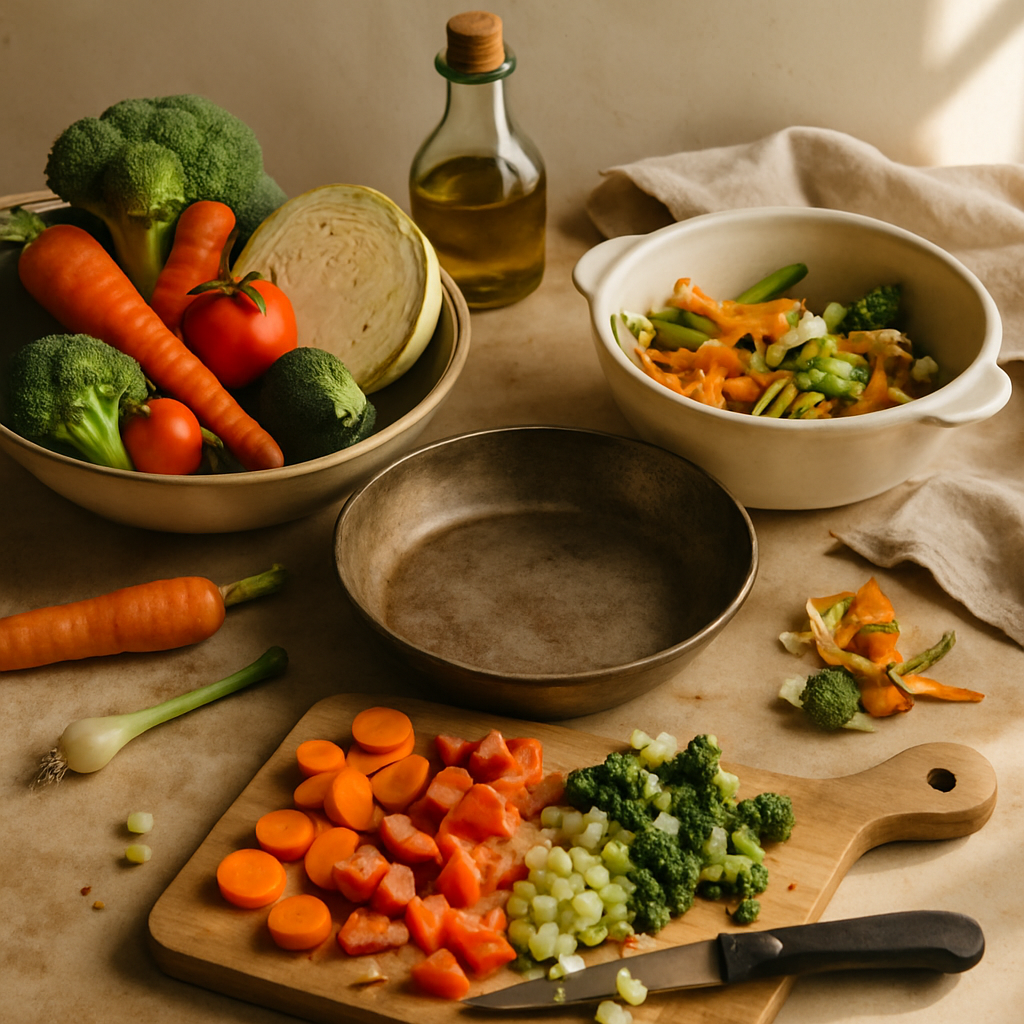
# How to Use Leftover Vegetables Before They Go Off
That half a courgette, the last few spinach leaves, the sad-looking pepper sitting in the back of the fridge — we've all been there. It's one of the most common sources of food waste in UK households, and it's also one of the easiest to fix once you know a few reliable tricks.
Why Vegetables Go to Waste in the First Place
The problem usually isn't laziness — it's planning. Most people buy vegetables with a meal in mind, use what they need, and then aren't quite sure what to do with the rest. By the time the next shop comes around, whatever was left has quietly turned.
A 2023 report from WRAP (the Waste and Resources Action Programme) found that UK households throw away around 4.5 million tonnes of food every year, and vegetables and salad are among the biggest culprits. A lot of that waste happens not because people don't care, but because they simply don't have a system.
The good news is that most vegetables are far more versatile than we give them credit for. A few go-to techniques can completely change how much you actually use — and how much ends up in the bin.
The "Use It Up" Hierarchy
Not all vegetables age at the same rate, and knowing this helps you prioritise. Leafy greens like spinach, rocket, and kale go first — they're usually done within three or four days of opening. Soft vegetables like courgettes, aubergines, and tomatoes come next, followed by firmer veg like carrots, broccoli, and cabbage, which can hold on for a week or more.
A simple habit is to do a quick scan of the fridge at the start of each day — or at least before you plan dinner — and identify what's closest to the edge. Build your meal around that, rather than buying something new.
This doesn't require any special skill. It just requires making it a conscious part of how you cook.
Roasting: The Most Reliable Method
If you're ever unsure what to do with a random collection of vegetables, roasting is almost always the answer. It works with nearly anything — peppers, mushrooms, red onion, sweet potato, courgette, broccoli, cauliflower, cherry tomatoes — and it transforms even slightly tired veg into something genuinely good.
The basics are simple: cut everything into similar-sized pieces, toss with oil and seasoning, and roast at around 200°C (180°C fan) until golden. The caramelisation that happens during roasting concentrates the natural sugars and develops flavour in a way that raw or steamed vegetables simply can't match.
Roasted veg keeps well in the fridge for three to four days and can be used in dozens of ways — stirred through pasta, piled onto flatbreads, added to grain bowls, folded into omelettes, or eaten straight from the container. It's one of the highest-leverage cooking habits you can develop.
Soups and Stews: Zero Waste by Design
A vegetable soup is one of the most forgiving things you can cook. It doesn't require a recipe, it doesn't require precise quantities, and it rewards improvisation. Virtually any combination of vegetables works, especially when you're building on a good base.
Start with some aromatics — onion, garlic, celery if you have it — softened in a little oil. Add your leftover veg, pour over stock (or even just water with a stock cube), and simmer until everything is soft. Blend it if you like, or leave it chunky. Season well. That's genuinely it.
Harder vegetables like carrots and parsnips hold their shape and add body. Softer ones like courgette or spinach can go in towards the end. Starchy veg like sweet potato or squash make a soup naturally thick and creamy without needing any cream at all.
A big batch takes maybe 30 minutes and can feed you across several days. It also freezes well, which means you can bank leftovers rather than just delay the waste problem by a few days.
Frittatas, Stir-Fries, and Fried Rice: Fast and Flexible
When time is short, these three formats are worth knowing by heart.
A frittata is essentially a baked omelette and it absorbs almost any combination of vegetables beautifully. Sauté your veg, pour over beaten eggs seasoned with salt and pepper, cook on the hob until the edges set, then finish under the grill for a few minutes. It works hot or cold, travels well for lunch, and the protein from the eggs helps make it a genuinely balanced meal.
A stir-fry is designed for using up whatever's in the fridge. The key is a hot pan, a little oil, and not overcrowding — cook in batches if needed. Most vegetables work well here: broccoli, peppers, courgette, spring onions, spinach, sugar snap peas, mushrooms. A simple sauce of soy, sesame oil, garlic, and a little honey ties it together in seconds.
Egg fried rice follows the same logic. Day-old rice (which is actually better than freshly cooked here, as it's drier), eggs, and whatever chopped veg you have. Ten minutes in the pan and you've got a complete meal with minimal washing up.
What the Evidence Shows
From a nutritional standpoint, there's good reason to make the most of the vegetables you've already bought. The NHS recommends at least five portions of fruit and vegetables a day, and most people in the UK fall short of that — not because they don't buy veg, but because they don't always eat it before it goes off.
Research also suggests that cooking methods matter less than we sometimes assume. A 2019 review published in Frontiers in Nutrition found that while some water-soluble vitamins (like vitamin C) can be reduced by heat, other nutrients — including certain antioxidants — actually become more bioavailable after cooking. Roasting and stir-frying, because they use less water than boiling, tend to preserve more nutrients overall.
The main point is this: an imperfect vegetable that actually gets eaten is nutritionally far superior to a perfect one that gets thrown away. Don't let the idea of "optimal" preparation stop you from using what you've got.
Freezing: Your Secret Weapon
A lot of people don't realise how many vegetables freeze well, and it's one of the most underused tools for cutting waste. Broccoli, peas, spinach, sweetcorn, green beans, peppers, courgette, and most root vegetables can all be frozen — either raw or after a quick blanch.
To blanch: bring a pan of water to the boil, drop in your veg for one to three minutes depending on size, then transfer immediately to ice-cold water. Drain, pat dry, and freeze in a single layer before bagging up. This preserves colour, texture, and most of the nutritional content.
Even without blanching, throwing a handful of wilting spinach or sliced mushrooms into the freezer is far better than the bin. They won't be great for salads afterwards, but they'll be perfectly fine cooked from frozen in soups, stews, or sauces.
Practical Takeaways
Here's what actually makes a difference, applied consistently:
- Scan the fridge before planning dinner, not after. Build meals around what needs using rather than what sounds appealing.
- Roast a tray of mixed veg early in the week so you have something versatile ready to go.
- Keep a container in the freezer specifically for vegetable offcuts — onion skins, leek tops, carrot peelings. Use it to make stock when it's full.
- Don't wait for a "proper" recipe. Frittatas, soups, and stir-fries are genuinely designed for imprecision.
- Know your timelines — leafy greens first, then soft veg, then firm veg. A quick daily scan takes thirty seconds and saves real money.
- Label and date anything you freeze so you actually use it later.
None of this requires a major overhaul of how you cook. It's mostly about building a few small habits and having a couple of reliable techniques you can reach for automatically.
If you want help planning meals around what you already have — reducing waste while hitting your macro targets — Macrology generates macro-perfect meal plans in seconds — https://macrology.app/signin
Want meals like this planned to your exact macros?
Macrology generates a personalised meal plan in seconds — breakfast, lunch, dinner and snacks, all hitting your daily targets.
Start your free 14-day trial