How to Use Dry Brining to Transform the Texture and Flavour of Fish
# How to Use Dry Brining to Transform the Texture and Flavour of Fish
There's a reason restaurant fish always seems to taste better than the version you make at home — and it's probably not your cooking skills. More often than not, it comes down to one simple technique that most home cooks have never heard of: dry brining.
Spend five minutes preparing your fish before it ever hits the pan, and you'll get cleaner flavour, better texture, and none of that watery mess that makes home-cooked fish feel disappointing.
What Is Dry Brining, Exactly?
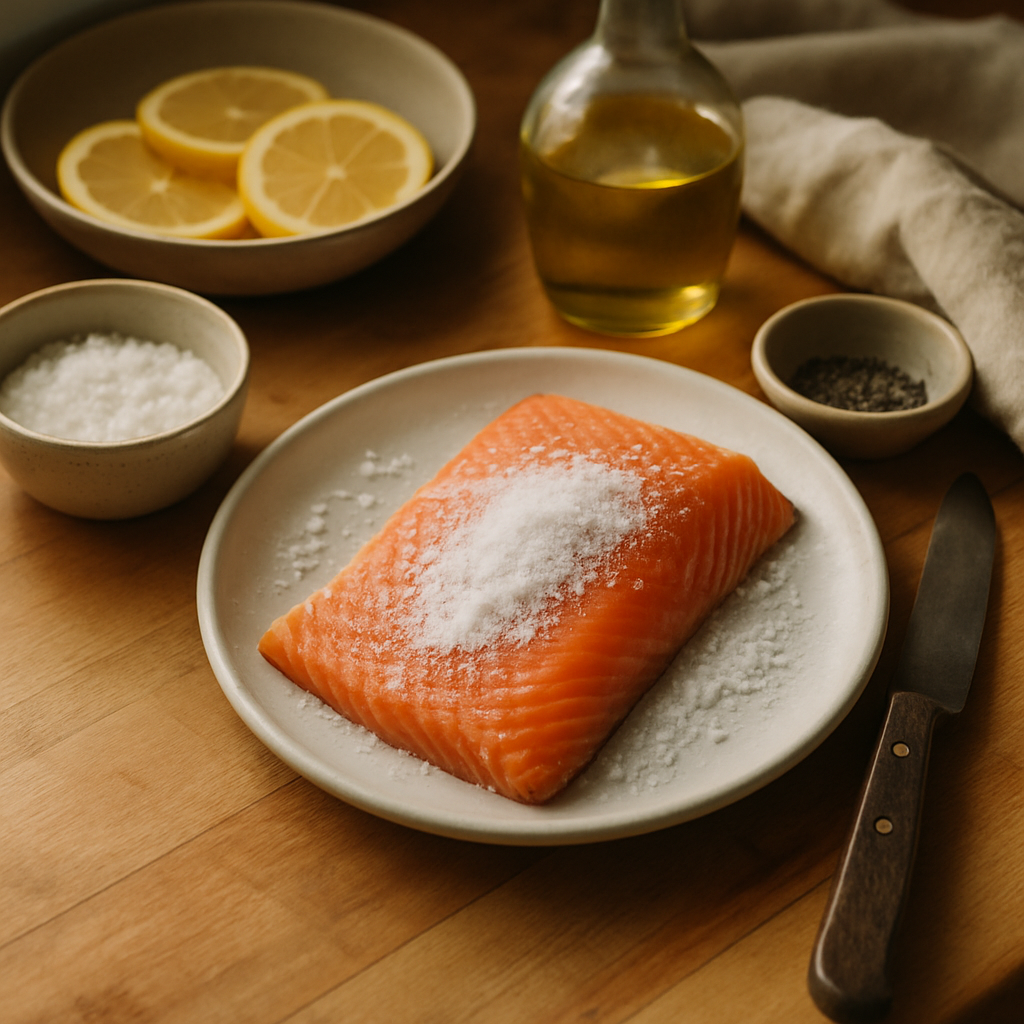
Dry brining is the process of applying salt — and sometimes other seasonings — directly to the surface of a protein and letting it rest before cooking. No liquid involved, despite the name.
With fish specifically, the salt draws moisture out of the flesh initially through osmosis, then something interesting happens: that moisture dissolves the salt and gets reabsorbed back into the muscle fibres. The result is fish that's seasoned all the way through, not just on the surface.
It's a technique more commonly associated with steak or whole roast chicken, but it works brilliantly with fish — and because fish is more delicate, even a short brining window makes a noticeable difference.
Why Fish Especially Benefits from This Approach
Fish flesh is structurally quite different from meat. It has shorter muscle fibres and a much higher water content, which is why it cooks quickly but also why it can turn watery, mushy, or bland so easily.
When you salt fish ahead of cooking, a few things happen at once. The salt begins to denature some of the surface proteins, which firms up the texture before heat is even applied. This means the fish holds together better in the pan, flakes more cleanly, and doesn't release a pool of liquid the moment it hits a hot surface.
That puddle of water in the pan is the enemy of a good sear. It drops the temperature dramatically, prevents browning, and leaves you with fish that's steamed rather than seared. Dry brining significantly reduces this effect.
The Science Behind the Salt
The mechanism at work here is worth understanding briefly, because it helps you make better decisions about timing and quantity.
When salt contacts the surface of fish, it pulls moisture out via osmosis — you'll see small droplets form on the surface within a few minutes. Left alone, that salty liquid is then reabsorbed into the flesh, carrying dissolved salt with it deep into the muscle tissue. This is called diffusion, and it's what gives dry-brined fish its evenly seasoned quality.
Salt also partially breaks down myosin, one of the main proteins in fish muscle. This changes the texture in a way that's hard to describe until you've experienced it — slightly firmer on the outside, but more succulent within. It's the difference between fish that falls apart in a disappointing way and fish that flakes beautifully.
How Long Should You Brine Fish?
This is where things get practical. Unlike a beef joint that benefits from overnight salting, fish is far more sensitive to time.
For thin fillets (think plaice, sole, or thin salmon portions): 15–30 minutes is enough. Go longer and the salt will start to cure the flesh rather than brine it — the texture becomes dense and the fish loses its freshness.
For thicker cuts (cod loin, a thick salmon fillet, whole sea bream): 45 minutes to an hour works well. The salt has more distance to travel, so it needs more time.
For whole fish: Up to two hours in the fridge is fine, and the skin will dry out slightly too — which is exactly what you want for crispy skin.
A good rule of thumb is roughly half a teaspoon of fine sea salt per 500g of fish. You're not trying to cure it; you're seasoning it intelligently.
What the Evidence Shows
Research published in food science literature confirms what chefs have long observed empirically. A study examining salt's effect on fish proteins found that pre-salting reduced moisture loss during cooking by up to 30% compared to fish salted immediately before or after cooking.
Separate work on the Maillard reaction — the browning process responsible for flavour development — showed that a drier surface produces significantly better caramelisation. Since dry brining draws and then reabsorbs surface moisture, it leaves the exterior of the fish in a better state for browning than fish straight from the fridge or, worse, from a wet brine.
There's also evidence that pre-salting improves the perceived saltiness of food, meaning you can achieve the same flavour impact with less total salt than if you season at the table or after cooking. For anyone keeping an eye on sodium intake, that's a meaningful benefit.
Common Mistakes and How to Avoid Them
The most frequent error is using too much salt or leaving it on too long. Over-brined fish tastes aggressively salty and has a rubbery, dense texture that no amount of sauce will rescue. Stick to the timings above and err on the side of less salt — you can always add more at the table.
Pat the fish dry before cooking. Even after the moisture has been reabsorbed, there will be a small amount of residual surface liquid. A quick press with kitchen paper before the fish goes in the pan makes a real difference to browning.
Another mistake is brining fish that's already been marinated in an acidic liquid (lemon juice, vinegar). Acid and salt together will begin to denature the proteins aggressively — you'll essentially start cooking the fish before it hits the heat. If you want to use acid, add it after cooking.
Finally, temperature matters. Brine fish on a rack in the fridge, uncovered if you can manage it. This allows air circulation and helps dry the surface — especially important for crispy-skin preparations.
Flavour Variations Worth Trying
Plain sea salt is perfect on its own, but dry brining is also a vehicle for building more complex flavour profiles.
Citrus zest + salt: Mix fine sea salt with lemon or orange zest before applying. The oils in the zest penetrate the flesh subtly, brightening the flavour without adding acidity.
Fennel seed + salt: Crush fennel seeds and combine with salt for an anise-forward rub that works particularly well with oily fish like mackerel or trout.
White pepper + salt: A classic combination that adds warmth without heat. Works brilliantly with white fish like hake or pollock.
Seaweed flakes + salt: A umami-forward option that genuinely enhances the oceanic quality of fish. Nori or dried dulse ground with salt is worth experimenting with.
Keep the quantities modest — the salt is doing the real work, and additional flavourings should complement rather than dominate.
Practical Takeaways
Here's how to put this into practice today:
- Use fine sea salt, not coarse flakes — it distributes more evenly and dissolves faster
- Measure loosely: about half a teaspoon per 500g is a solid starting point
- Set a timer: don't eyeball it, especially with thin fillets
- Brine on a rack in the fridge, uncovered if possible, to dry the surface as well as season the flesh
- Pat dry before cooking — this step is non-negotiable if you want good colour
- Add acid (lemon juice, etc.) after cooking, not before or during brining
- Start with a thick cod fillet or salmon portion — they're forgiving and the difference will be immediately obvious
If you want to take the guesswork out of planning nutritious, protein-rich fish meals throughout the week, Macrology generates macro-perfect meal plans in seconds — https://macrology.app/signin
Want meals like this planned to your exact macros?
Macrology generates a personalised meal plan in seconds — breakfast, lunch, dinner and snacks, all hitting your daily targets.
Start your free 14-day trial