How to Use a Wok Properly: Heat, Seasoning and Technique Explained
# How to Use a Wok Properly: Heat, Seasoning and Technique Explained
If you've ever tried to stir-fry at home and ended up with a soggy, steaming pile of vegetables instead of the blistered, smoky result you were after, you're not alone. The wok is one of the most versatile pieces of cookware ever invented, but it has a learning curve — and most of that curve comes down to understanding heat. Get a few fundamentals right and everything else follows.
Why Your Wok Results Might Be Disappointing So Far
The most common reason home stir-fries fail isn't the recipe — it's the setup. Restaurant woks sit over jet burners that can produce 150,000 BTUs or more. A standard domestic gas hob typically maxes out around 3,000–4,000 BTUs. That gap is enormous, and it explains the phenomenon Chinese chefs call wok hei — literally "wok breath" — that smoky, slightly charred, deeply savoury quality that's almost impossible to replicate without serious heat.
That said, understanding your equipment's limits and working with them (rather than against them) gets you much closer than most people realise. The difference between a mediocre home stir-fry and a genuinely good one is mostly technique, not equipment upgrades.
Choosing the Right Wok
Not all woks are equal, and the material matters more than the brand name on the side.
Carbon steel is the gold standard for most cooks. It's lightweight enough to toss food, conducts heat quickly, and — crucially — it seasons beautifully over time, building up a natural non-stick patina that improves with every use. A 14-inch carbon steel wok with a flat bottom (better for domestic hobs) is the starting point most people should reach for.
Cast iron woks are popular in some regional Chinese cooking traditions and retain heat brilliantly, but they're heavy and slow to respond to temperature changes — not ideal for fast stir-frying where you need to adjust heat rapidly.
Non-stick woks are convenient but fundamentally miss the point. You can't get them hot enough to develop real flavour without damaging the coating, and they don't season or improve over time. They're fine for gentle cooking, but if stir-frying is the goal, carbon steel wins.
Avoid woks with rounded bottoms unless you have a gas hob with a wok ring — on flat ceramic or induction hobs, contact with the heat source is everything.
How to Season a Carbon Steel Wok (and Why It Matters)
A new carbon steel wok arrives coated in a factory oil or rust-prevention layer that needs to come off before the wok can do its job. Seasoning is the process of baking thin layers of oil into the steel to create a natural, durable, non-stick surface.
Start by scrubbing the wok thoroughly with hot soapy water and a stiff brush — this is the one time soap is actively encouraged. Dry it completely, then place it over your highest heat until it begins to smoke and the steel changes colour, shifting through blue and grey tones. This is the steel oxidising, and it's exactly what you want.
Add a very thin layer of a high-smoke-point oil — flaxseed, grapeseed, or refined coconut oil all work well — and use a folded piece of kitchen paper (held with tongs) to wipe it over the entire interior surface. The layer should be almost invisible; too much oil and you'll end up with a sticky, gummy mess rather than a proper seasoned surface.
Keep heating until the oil smokes and polymerises onto the steel. Repeat this process three to five times. The wok won't look perfect after the first seasoning session, and that's fine — the patina builds up over months of regular cooking.
The Technique That Changes Everything: Mise en Place and High Heat
Here's where most home cooks lose the plot, even with a well-seasoned wok: they're not ready when the heat is.
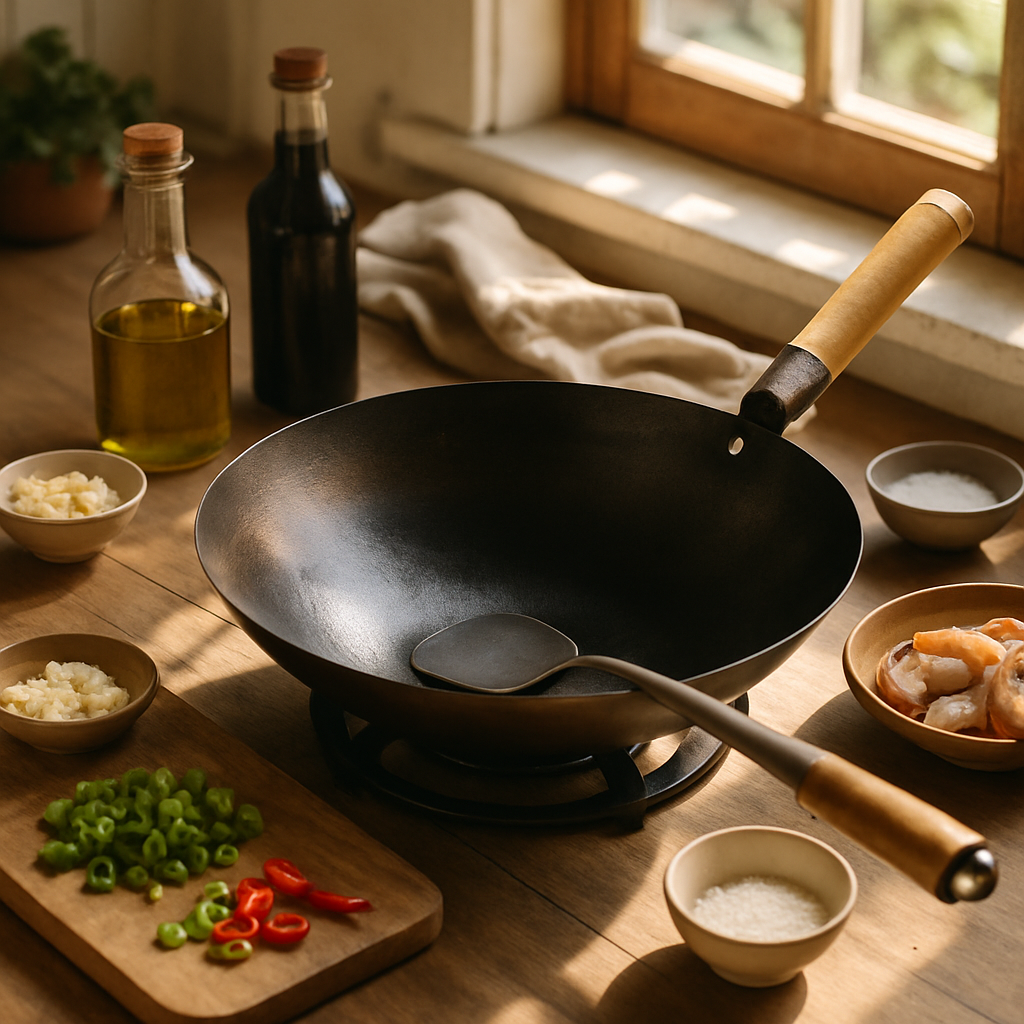
Stir-frying is a fast-cooking method — most dishes take two to five minutes once the heat is on. If you're stopping to chop a pepper or measure out soy sauce mid-cook, you've already overcooked something. Everything needs to be prepped, measured, and within arm's reach before you turn the hob on.
Heat the wok until it's properly hot before adding oil. A reliable test: hold your hand a few inches above the surface — you should feel intense heat radiating up. If you add oil and it starts to shimmer and thin out immediately, you're ready. If it just sits there looking flat, wait longer.
Add oil in a swirling motion around the sides of the wok, not just the centre. This ensures the cooking surface is properly coated and any ingredients that hit the sides during tossing won't stick.
Never overcrowd the wok. This is the cardinal rule. Too much food drops the temperature dramatically, and instead of frying, you're essentially steaming everything in its own released moisture. Cook in batches if you're feeding more than two people — it takes slightly longer but the result is incomparably better.
Understanding Wok Tossing (and When You Don't Need It)
Wok tossing looks impressive, but it's functional rather than theatrical. The purpose is to keep food moving over the hot surface consistently, exposing all surfaces to heat without letting anything sit still long enough to steam or burn.
If you have a domestic hob, you don't need to toss dramatically — and doing so will just drop your heat further as the wok lifts off the burner. Instead, use a long-handled wok spatula (a wok chuan) and keep things moving constantly with quick, confident strokes that push food up the sides and back down into the centre.
The sides of the wok aren't wasted space. When something needs a moment out of direct heat, push it up the sloping sides. This is particularly useful when cooking aromatics like garlic and ginger — they can go from raw to burnt in seconds over high heat, so getting them fragrant and then moving them up and out of the way before adding the next ingredient is a useful trick.
What the Evidence Shows: Is Wok Cooking Actually Nutritious?
Beyond technique, it's worth looking at what the research tells us about stir-frying as a cooking method from a nutritional standpoint.
A 2018 study published in the Journal of Food Science and Technology found that stir-frying vegetables for short periods retained more water-soluble vitamins (particularly vitamin C and several B vitamins) compared to boiling, where those nutrients leach out into the cooking water. The brief cooking times involved in wok cooking mean less nutrient degradation overall.
The fat content of stir-fried dishes is also often lower than people assume. Because the wok gets so hot, you typically need less oil to cook effectively than you would in a lower-heat pan — a tablespoon or two covers the entire cooking surface. The oil is a medium for heat transfer rather than a primary ingredient.
One area worth noting: cooking at very high temperatures with certain oils produces compounds called aldehydes, which are linked in some studies to negative health outcomes. Using oils with high smoke points — groundnut, refined avocado, or light sesame oil for finishing rather than frying — reduces this risk considerably. Extra virgin olive oil, despite its other merits, isn't the right choice for wok cooking at high heat.
Practical Takeaways: What to Do Differently This Week
Here's where to start if you want to improve your wok cooking immediately:
If you don't own a carbon steel wok, a 14-inch flat-bottomed model costs £20–40 and will last decades if you look after it. Joyce Chen and Ken Hom both make well-regarded entry-level options.
Season your wok before you cook with it — even if it claims to be pre-seasoned. Follow the steps above and repeat three to five times.
Prep everything before you turn on the heat. Lay it all out on a board or in small bowls in the order it goes into the wok.
Cook in smaller batches. If you're feeding four people, cook two portions at a time rather than all at once.
Use a high-smoke-point oil — groundnut oil is widely available, affordable, and traditional in Chinese cooking.
Keep things moving. Constant motion with a spatula is more practical than tossing for a domestic hob, and just as effective.
---
If you want to build meals around the food you're already cooking, Macrology generates macro-perfect meal plans in seconds — [https://macrology.app/signin](https://macrology.app/signin)
Want meals like this planned to your exact macros?
Macrology generates a personalised meal plan in seconds — breakfast, lunch, dinner and snacks, all hitting your daily targets.
Start your free 14-day trial