How to Use a Thermometer to Take the Guesswork Out of Cooking
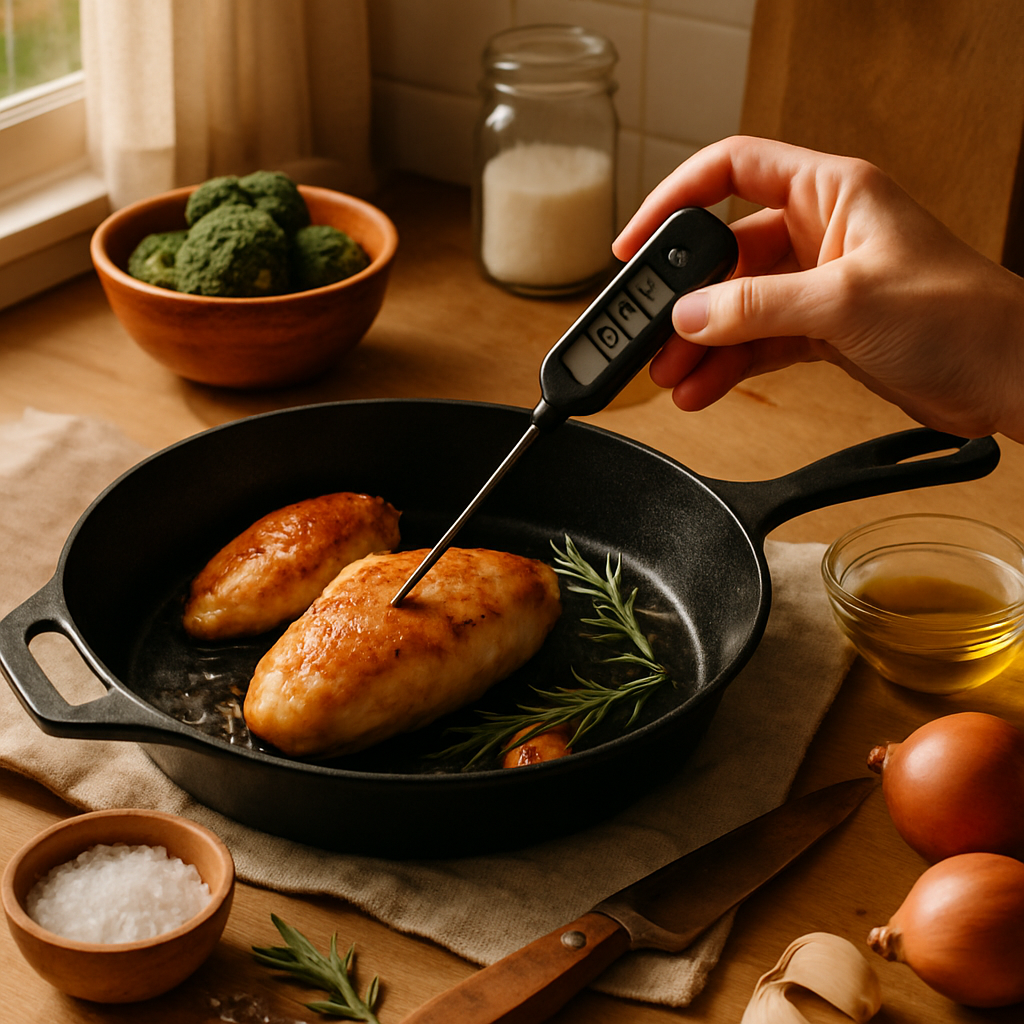
# How to Use a Thermometer to Take the Guesswork Out of Cooking
There's a moment every cook knows — hovering over a chicken breast, poking it, cutting into it, staring at the juices and hoping. A meat thermometer eliminates that moment entirely. It's one of those kitchen tools that sounds obvious in hindsight but genuinely changes how confident you feel at the hob.
Why Temperature Matters More Than You Think
Cooking by time and colour alone is surprisingly unreliable. Ovens run hot or cold, meat varies in thickness, and a chicken thigh fresh from the fridge behaves very differently to one at room temperature. Relying on visual cues means you're essentially guessing — and with certain foods, that guess has real consequences.
Undercooking proteins like chicken, pork, and minced beef carries genuine food safety risks. Overcooking them means dry, tough food that nobody enjoys. A thermometer gives you the exact internal temperature of whatever you're cooking, so you can hit that sweet spot reliably, every time.
It's also worth knowing that colour is not a reliable indicator of doneness. Research from the USDA has shown that some chicken can turn white and appear fully cooked while still being undercooked internally — and some beef burgers can brown in the middle before reaching a safe temperature. The only way to know is to measure.
The Different Types of Thermometer
Not all thermometers are the same, and picking the right one for how you cook makes a real difference.
Instant-read thermometers are the most versatile option for most home cooks. You insert the probe into the food, and within a few seconds you get a reading. They're not designed to stay in the oven during cooking — you take a quick reading and remove them. Brands like Thermapen are popular in the UK and are genuinely fast and accurate, though more affordable options work well too.
Leave-in probe thermometers sit inside the meat throughout cooking, with a cable connecting to a display outside the oven. These are brilliant for larger joints and roasts where you want to monitor temperature without opening the oven repeatedly. Some connect via Bluetooth to your phone.
Oven thermometers don't measure food at all — they measure your oven's actual temperature. If you've ever baked something that came out overdone despite following the recipe, your oven may be running hotter than the dial suggests. An oven thermometer is a cheap fix for a surprisingly common problem.
For everyday cooking, an instant-read thermometer is where most people start, and it covers the majority of scenarios.
Safe Internal Temperatures to Know
These are the UK Food Standards Agency guidelines for safe internal temperatures, measured at the thickest part of the food, away from bone:
- Whole chicken or turkey: 75°C at the thickest part of the thigh
- Chicken breasts and thighs: 75°C
- Minced beef (burgers, meatballs): 75°C — unlike a whole steak, the surface bacteria gets mixed throughout
- Pork: 75°C (though some cuts like loin can safely be served slightly pink at lower temperatures if high welfare and properly handled — check guidance for your specific cut)
- Lamb: 70°C for well done; lower for pink, though whole cuts are generally safer than mince
- Fish: 63°C, or until the flesh is opaque and flakes easily
- Beef and lamb steaks: The outside of whole cuts reaches high temperatures during searing, so you have more flexibility with internal temperature for personal preference
Knowing these numbers takes the anxiety out of cooking proteins. Instead of cutting into a chicken breast and hoping, you probe it, see 76°C, and serve with confidence.
How to Actually Use a Thermometer Properly
The technique matters as much as the tool. A few things to get right:
Insert it into the thickest part. For a chicken breast, that's the centre of the deepest section. For a whole bird, it's the inner thigh, not touching the bone. Bone conducts heat differently and will give you a falsely high reading.
Wait for the reading to stabilise. Even fast instant-read thermometers need a second or two. Don't pull it out the moment you see numbers moving.
Take multiple readings. For anything irregular in shape — a thick fillet, a butterflied leg of lamb — check in a couple of spots. The coldest point is what matters.
Account for carryover cooking. When meat rests after coming off the heat, the internal temperature continues to rise — typically by 2–5°C. For a large joint, you can pull it out slightly early and let resting finish the job. For smaller cuts like chicken breasts, this is less significant, but worth knowing.
Clean the probe between uses. If you're checking raw chicken and then want to probe again, wipe the probe with a hot, soapy cloth or antiseptic wipe first.
Beyond Meat: Other Ways a Thermometer Earns Its Place
A thermometer isn't just for proteins. Once you have one, you'll find yourself reaching for it in places you didn't expect.
Bread: A loaf of bread is done when the internal temperature reaches around 88–95°C, depending on the type. Tapping the bottom and listening for a hollow sound is the traditional method, but a probe reading removes all doubt.
Deep frying: Oil temperature is critical for crispy results. Too cold, and food absorbs excess oil and turns greasy. Too hot, and the outside burns before the inside cooks through. Most fried foods work best between 170–190°C, and a thermometer tells you exactly where you are.
Sugar and confectionery: Caramel, toffee, and fudge all rely on precise sugar temperatures. A jam or sugar thermometer (which reads higher than a standard probe) is essential here rather than optional.
Tempering chocolate: If you've ever tried to make chocolate decorations and ended up with a streaky, dull result, improper tempering is usually the culprit. Bringing chocolate to specific temperatures during the process gives it that glossy snap.
Common Mistakes People Make
Even with a thermometer in hand, a few habits can undermine the results.
Checking too early. If you probe a chicken breast after five minutes in the pan and it reads 45°C, that's useful information — but don't put it away. Keep cooking and keep checking.
Not calibrating occasionally. Most instant-read thermometers don't need regular calibration, but if you suspect yours is off, test it in ice water (should read 0°C) or boiling water (100°C at sea level). Some models have a calibration adjustment.
Trusting the pop-up timer in a supermarket chicken. Those plastic indicators are designed to pop at a temperature higher than necessary, often leaving the bird overcooked. Use your own thermometer instead.
Forgetting to check the battery. Not a technique issue, but worth mentioning — a slow or unresponsive reading is often just a dying battery.
Practical Takeaways
Here's what to actually do with this information:
1. Pick up an instant-read thermometer if you don't have one. You don't need to spend a lot — a reliable model is available for under £15, with higher-end options like the Thermapen MK4 around £70 for precision and speed.
2. Save the temperature list. Write the key safe temperatures on a piece of paper and stick it inside a kitchen cupboard door until they become second nature.
3. Use it every time you cook proteins for the next two weeks. By then, you'll have a feel for how your cooking methods behave and the thermometer will become a quick confirmation rather than a nervous check.
4. Check your oven with a separate oven thermometer — it's a £5–10 investment that can explain a lot of baking frustrations.
5. Let meat rest after cooking. The carryover effect is real, and resting improves texture as well as temperature distribution.
A thermometer won't make you a better cook in some abstract sense — but it will make your cooking more consistent, safer, and less stressful, which is really what skill in the kitchen comes down to.
---
If you want your meals planned around specific nutrition goals without the spreadsheet headache, Macrology generates macro-perfect meal plans in seconds — https://macrology.app/signin
Want meals like this planned to your exact macros?
Macrology generates a personalised meal plan in seconds — breakfast, lunch, dinner and snacks, all hitting your daily targets.
Start your free 14-day trial