How to Build Umami Without Meat or Fish
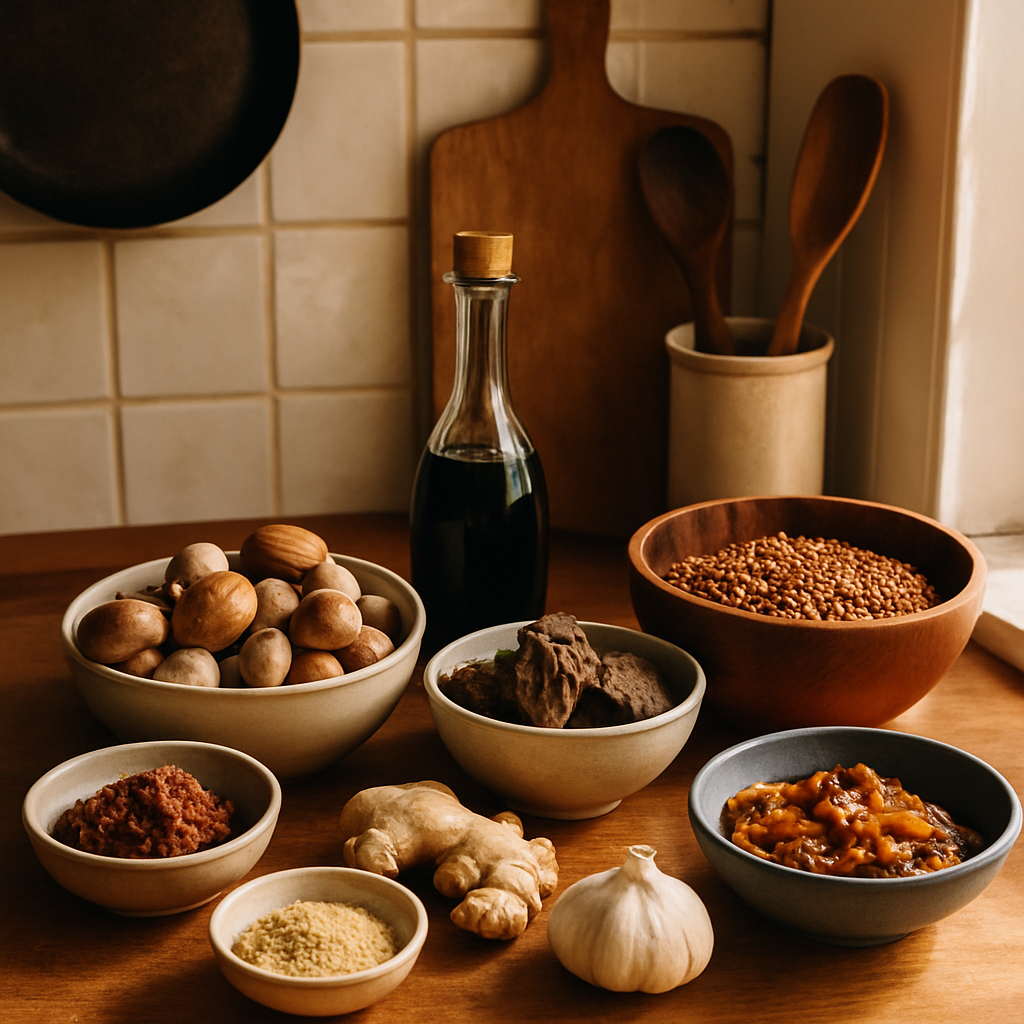
# How to Build Umami Without Meat or Fish
There's a flavour in your favourite dishes that you probably can't name, but you'd immediately miss if it disappeared. It's the deep, savoury richness in a slow-cooked ragu, the satisfying weight of a good stock, the reason a bowl of ramen feels so complete. That flavour is umami — and the good news is you don't need meat or fish to get it.
What Actually Is Umami?
Umami is often described as the fifth taste, sitting alongside sweet, sour, salty, and bitter. It was identified by Japanese chemist Kikunae Ikeda in 1908, who isolated it from kombu seaweed and named it after the Japanese words for "delicious" and "taste".
At the chemical level, umami comes primarily from glutamate — a naturally occurring amino acid — along with two nucleotides called inosinate and guanylate. When these compounds are present in food, either alone or in combination, your taste receptors register that deep, mouth-coating savoriness that makes you want another bite.
The combination effect is worth understanding. When glutamate and nucleotides are paired together, the umami sensation can be dramatically amplified — sometimes up to eight times more intense than either compound alone. This is why certain ingredient pairings just work, and why knowing your umami sources gives you real creative power in the kitchen.
Why Plant-Based Umami Is More Abundant Than You'd Think
Meat and fish are famous umami sources because they contain high levels of both glutamate and nucleotides. But glutamate exists in enormous quantities across the plant kingdom — often in higher concentrations than in meat.
Ripe tomatoes, for instance, contain around 250mg of glutamate per 100g. Parmesan (not vegan, but vegetarian) clocks in at roughly 1,200mg. Dried shiitake mushrooms, meanwhile, are one of the richest plant-based sources of guanylate — the nucleotide that turbocharged umami when paired with glutamate.
The key insight here is that cooking, fermenting, drying, and ageing all intensify umami. A fresh tomato is pleasant; a slow-roasted tomato is something else entirely. Understanding this principle means you can engineer depth of flavour deliberately, rather than hoping it appears.
The Umami Powerhouses Worth Keeping in Your Cupboard
Certain ingredients punch well above their weight when it comes to building savoury depth. Here are the ones most worth knowing:
Tomato paste is perhaps the most underused umami tool in everyday cooking. Frying it in oil for a minute or two before adding liquid caramelises the sugars and concentrates the glutamate, transforming a simple sauce into something that tastes like it's been cooking for hours.
Miso is fermented soybean paste, and fermentation is one of the most reliable ways to develop glutamate. White miso is milder and slightly sweet; red and brown misos are more intense and complex. Stir a tablespoon into soups, dressings, marinades, or even mashed potato — it adds a savoury backbone without tasting obviously "Asian."
Soy sauce and tamari work on the same fermentation principle as miso. A small amount added to a stew, a pasta sauce, or even a gravy won't make the dish taste of soy — it'll just make it taste more of itself.
Dried mushrooms, especially porcini and shiitake, are particularly valuable. The drying process concentrates their natural guanylate, and the soaking liquid they produce is essentially a free umami stock. Don't pour it away.
Nutritional yeast has a slightly cheesy, nutty flavour and is rich in glutamate. It works well stirred into sauces, sprinkled over pasta, or blended into dressings. It's also a useful source of B vitamins, including B12 in fortified versions.
Kombu is the dried seaweed Ikeda used in his original research. A small piece simmered in water makes a light, clean dashi stock — the backbone of Japanese cooking — with no fish required. It's available in most Asian supermarkets and many health food shops.
Walnuts, sun-dried tomatoes, and fermented black beans are less commonly discussed but genuinely useful additions to the roster.
What the Evidence Shows
The science around umami in plant-based cooking has grown considerably over the past decade, partly driven by increased interest in reducing meat consumption without sacrificing satisfaction.
Research published in the journal Flavour has shown that umami-rich ingredients increase the perceived palatability and satiety of meals. Importantly, studies suggest that umami may help reduce the desire to add salt, since glutamate enhances savouriness through a different receptor pathway than sodium. This is one reason why miso, soy sauce, and similar ingredients can make food taste well-seasoned even when overall sodium levels are moderate.
There's also evidence around the texture and satisfaction question. One of the reasons meat is considered satisfying is the combination of fat, protein, and umami. Plant-based meals that deliberately incorporate high-glutamate ingredients alongside adequate protein and fat tend to score significantly better on satisfaction ratings than those that don't. It's not just about flavour — it's about how complete a meal feels.
Fermented foods deserve particular attention here. The fermentation process breaks down proteins into free amino acids, including glutamate, which is why fermented ingredients like miso, soy sauce, and aged cheeses are so disproportionately powerful as umami contributors. This isn't a coincidence; it's biochemistry working in your favour.
How to Layer Umami in Practice
The difference between a flat plant-based dish and one that genuinely satisfies often comes down to layering — using multiple umami sources rather than relying on one.
A simple lentil soup, for example, might start by frying onions and garlic in oil, then adding a tablespoon of tomato paste and cooking it out. You could add a small piece of kombu to the cooking water, finish with a splash of soy sauce, and serve with a sprinkle of nutritional yeast. Each of those additions individually is subtle. Together, they create a synergistic effect that makes the finished dish taste deeply satisfying.
The same principle applies across cuisines. A mushroom ragu built on a base of sautéed porcini, tomato paste, and a small amount of miso will have a richness that surprises people. A roasted aubergine dish finished with a white miso glaze will have a caramelised, savoury complexity that stands on its own.
Roasting and caramelisation are also worth mentioning here. The Maillard reaction — the browning process that happens when proteins and sugars are exposed to high heat — creates hundreds of new flavour compounds and contributes to that satisfying "cooked" savouriness. Roasting tomatoes, mushrooms, or onions until they take on real colour is one of the easiest ways to deepen umami without adding a single new ingredient.
Common Mistakes That Flatten Umami
A few habits tend to undermine savoury depth in plant-based cooking.
Adding everything at once is probably the most common. Frying tomato paste, onions, or miso briefly in oil before adding liquids makes a significant difference — it's a step that takes two minutes and changes the character of a dish entirely.
Discarding soaking liquid from dried mushrooms is a genuine waste. That liquid is full of glutamate and guanylate that took hours to develop. Strain it to remove any grit and use it as stock.
Under-seasoning at each stage is another issue. Salt doesn't just add saltiness — it suppresses bitterness and allows umami to come forward. Adding a small amount at multiple points during cooking tends to work better than one large addition at the end.
Practical Takeaways
Here's what you can put into practice today:
- Build a small umami cupboard: tomato paste, miso, soy sauce or tamari, nutritional yeast, and a packet of dried porcini or shiitake. These five ingredients will change your cooking.
- Fry before you add liquid: give tomato paste, miso, or mushrooms a minute or two in the pan before adding stock or water. It makes an audible and measurable difference.
- Save your soaking liquid: always use dried mushroom soaking water as part of your stock.
- Layer sources: aim for at least two or three umami ingredients in a dish rather than one.
- Use heat deliberately: roast vegetables properly rather than steaming them, and let things brown.
If you want your meals to be more satisfying — and macro-balanced at the same time — Macrology generates macro-perfect meal plans in seconds — https://macrology.app/signin
Want meals like this planned to your exact macros?
Macrology generates a personalised meal plan in seconds — breakfast, lunch, dinner and snacks, all hitting your daily targets.
Start your free 14-day trial