How to Build a Spice Paste from Scratch: A Foundation Skill for Everyday Cooking
# How to Build a Spice Paste from Scratch: A Foundation Skill for Everyday Cooking
There's a moment in many people's cooking lives when they realise that the little jars of ready-made paste in the supermarket are actually quite simple to recreate at home — and that doing so completely transforms the food that comes out of their kitchen. Spice pastes are the hidden architecture behind some of the world's most beloved dishes, from Thai curries to Moroccan tagines to South Indian gravies. Once you understand how they're built, you'll find yourself improvising with confidence rather than following a recipe to the letter.
What a Spice Paste Actually Is
A spice paste is, at its most basic, a combination of aromatics and spices ground together into a concentrated flavour base. The word "paste" is doing a lot of work here — it covers everything from a Thai red curry paste packed with lemongrass, galangal and dried chillies, to a simple chermoula of garlic, cumin and coriander, to an Indian masala built around onion, ginger and tomato.
What sets a paste apart from simply adding spices individually is cohesion. When aromatics are broken down together, their oils and moisture bind, and you end up with something that distributes flavour evenly through a dish rather than leaving pockets of spice. The grinding process also ruptures cell walls and releases compounds that wouldn't be available otherwise, which is part of why paste-based curries taste so much more rounded than ones built from dry spices alone.
It's worth noting that "paste" doesn't have to mean a perfectly smooth purée. Many traditional pastes have texture — coarsely ground seeds, flecks of herb, bits of chilli. The goal is integration, not uniformity.
The Core Components to Know
Most spice pastes share a similar architecture, even when the ingredients are wildly different. Understanding the building blocks helps you adapt and invent.
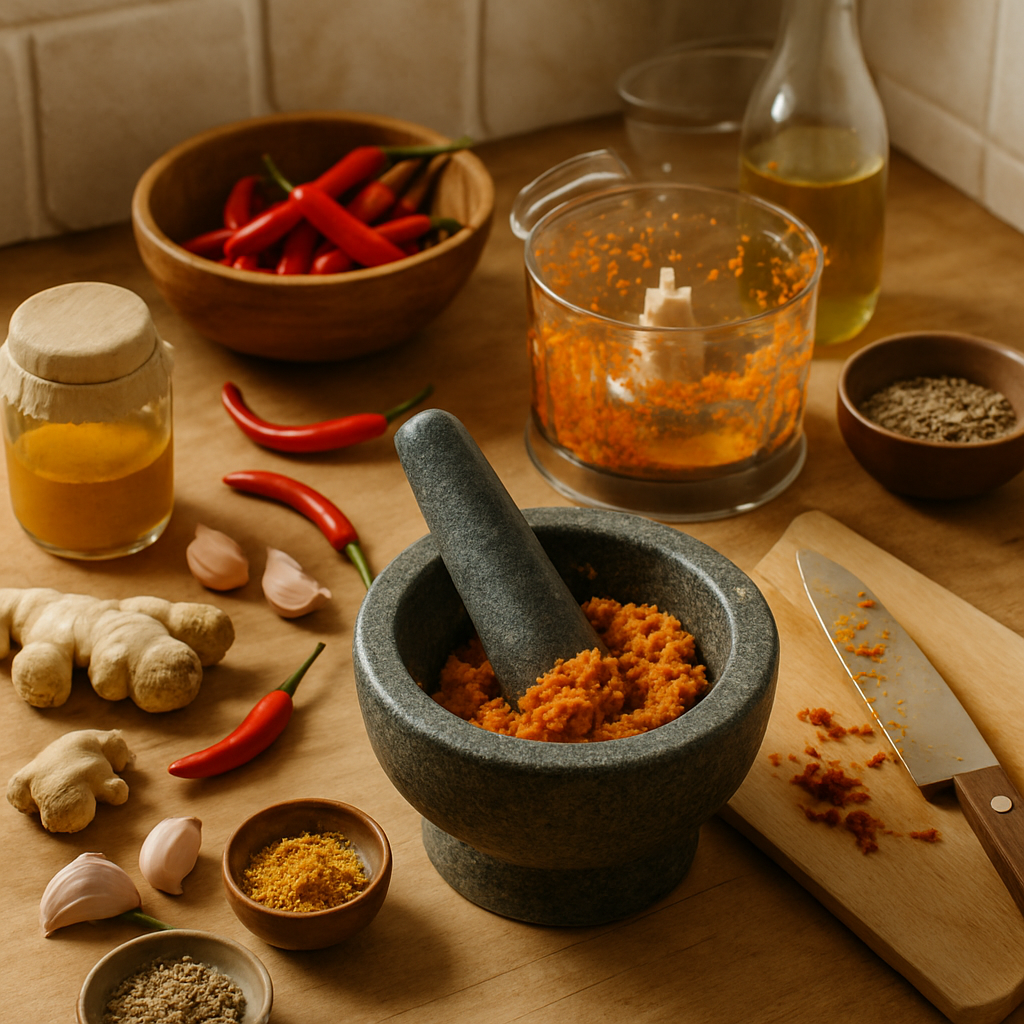
Aromatics form the base. Onion, shallot, garlic and ginger appear across almost every culinary tradition that uses pastes. They provide sweetness, depth and the savoury backbone that makes a dish feel complete. Fresh lemongrass, galangal and kaffir lime are key in Southeast Asian pastes; dried chillies, roasted tomatoes and tomatillos do similar work in Mexican ones.
Spices — both whole and ground — add complexity. Toasting whole spices before grinding them is one of the highest-impact things you can do in a home kitchen. Cumin seeds, coriander seeds, black pepper, fennel and cardamom all develop deeper, more nuanced flavour when they hit a dry, hot pan for a minute or two.
Fat is often incorporated either during grinding or when the paste hits the pan. Coconut, oil or ghee helps carry fat-soluble flavour compounds into the dish and prevents the paste from burning too quickly when it's first cooked out.
Acid — tamarind, lime juice, dried mango powder, vinegar — appears in many pastes to brighten the whole thing and cut through richness. It doesn't always go in at the paste stage, but knowing where acidity fits helps you balance as you go.
Equipment: Pestle and Mortar vs Blender
This is where people often overthink things. The short answer is: use whatever you have.
A traditional stone pestle and mortar produces a paste with better texture — the bruising action ruptures cells differently to a blade, and the resulting paste tends to cling to meat and vegetables more effectively. If you cook paste-based dishes regularly, a large granite mortar is one of the better kitchen investments you can make.
A blender or small food processor works well for larger quantities and for pastes that include a lot of wet ingredients like onions, tomatoes or soaked dried chillies. The trick is to add a small splash of water or oil to help things move — but as little as possible, because excess liquid means you'll need to cook the paste out for longer to drive off the moisture.
A spice grinder (or a dedicated coffee grinder) is useful for dry spices, and you can combine the two approaches: grind the dry spices, then pound or blend with the wet aromatics.
How to Cook Out a Paste
This step is where many home cooks lose confidence, and it's worth going into detail because cooking out the paste properly is what separates a great curry or stew from a flat one.
Get your pan hot — properly hot — before adding fat. Add the paste and let it sizzle immediately. You're looking for it to start frying rather than steaming, which means the moisture is evaporating and the aromatics are beginning to caramelise. Stir regularly but not constantly; letting the paste sit against the hot pan for a few seconds at a time encourages browning.
The paste is ready to build on when the oil begins to separate from it around the edges, the raw smell of onion and garlic has cooked off, and the colour has deepened by a shade or two. Depending on the paste, this can take anywhere from five to fifteen minutes. Rushing this stage is the most common reason a dish tastes raw or one-dimensional at the end.
If the paste starts to catch, add a small splash of water and scrape the base of the pan — those stuck bits are flavour, and you want them incorporated, not burnt.
Matching Pastes to Dishes
One of the most freeing things about understanding paste-building is that you stop needing to match a specific paste to a specific dish. You start thinking in principles.
A Southeast Asian-style paste built on lemongrass, galangal, shallot, dried chilli and shrimp paste is at home with coconut milk, seafood, chicken or tofu. A North African-style paste of garlic, cumin, coriander, smoked paprika and preserved lemon works beautifully rubbed into lamb or stirred through roasted vegetables. An Indian-style base of ginger, garlic, chilli and tomato — cooked down until dark — is the starting point for dozens of subcontinental dishes.
The key is keeping your flavour profile internally consistent. Don't mix lemongrass with smoked paprika unless you're deliberately fusing cuisines (which, if you are, go for it). Within a tradition, most ingredients are interchangeable in similar proportions.
Batch Cooking and Storage
Spice pastes are one of the few things in a kitchen that genuinely reward making in bulk. A double or triple batch takes almost no extra effort and transforms your weeknight cooking.
Fresh pastes — those without dried or preserved ingredients — will keep in the fridge for up to a week if stored in a clean jar with a thin layer of oil on top to keep air out. Most paste recipes freeze extremely well: portion them into an ice cube tray, freeze solid, then transfer to a bag. A cube or two straight from frozen into a hot pan is one of the more satisfying shortcuts in home cooking.
Toasted dry spice blends — the dry component of your paste — can be made separately and stored in an airtight jar for months. This means you can grind spices fresh into the paste when you need them, using the pre-toasted mix as a shortcut.
Practical Takeaways
Start with one paste and cook it repeatedly until it feels instinctive — a simple ginger, garlic and chilli base is the most versatile starting point for a beginner. Once you can build and cook out that paste without thinking, you'll find it easy to add complexity.
Toast your whole spices every time, even if the recipe doesn't specify it. It takes two minutes and meaningfully improves the result.
Cook the paste out longer than you think you need to. If you're unsure whether it's done, give it another two minutes.
Freeze in portions so that a genuinely flavourful meal on a Wednesday evening is no harder than reaching into the freezer.
Taste as you build, particularly when adding salt and acid. A paste that tastes slightly over-seasoned in the jar will often be just right when it's diluted through a dish.
If you want to build meals around ingredients like homemade spice pastes without spending hours calculating how they fit your nutrition goals, Macrology generates macro-perfect meal plans in seconds — https://macrology.app/signin
Want meals like this planned to your exact macros?
Macrology generates a personalised meal plan in seconds — breakfast, lunch, dinner and snacks, all hitting your daily targets.
Start your free 14-day trial