How to Build a Marinade That Actually Works
# How to Build a Marinade That Actually Works
There's a particular frustration that comes from pulling chicken off the grill only to find it tastes exactly the same as it did raw — just cooked. You followed the recipe, you left it overnight, and somehow the flavour is entirely on the surface while the inside remains completely bland. The good news is that this isn't bad luck. It's chemistry, and once you understand it, you can build marinades that genuinely deliver.
What a Marinade Actually Does (and Doesn't Do)
Let's clear up a persistent myth first: marinades do not penetrate deep into meat. Research has consistently shown that most marinades only permeate a few millimetres into the surface of proteins, no matter how long you leave them. A 24-hour soak does not mean 24 hours' worth of extra flavour absorption — after a few hours, you've largely hit the point of diminishing returns.
What marinades are genuinely good at is creating flavour on the surface, encouraging browning through sugars and fats, and in some cases, modifying the texture of the outer layer. For cuts like chicken thighs, flank steak, or tofu, where the surface-to-volume ratio is favourable, a well-built marinade can make a real difference. For a thick beef joint, it's doing considerably less work than you might think.
Understanding this shapes how you approach the whole process — and means you stop wasting time on overnight soaks when two hours will do just as well.
The Four Building Blocks of Every Good Marinade
Every effective marinade is built from the same four components. You don't need all four every single time, but knowing what each one contributes lets you make deliberate choices rather than just throwing things together.
Fat — Oil, coconut milk, yoghurt, or tahini. Fat carries fat-soluble flavour compounds and helps the marinade cling to the surface of food. It also supports browning during cooking and prevents sticking. Without fat, a lot of your aromatics simply won't adhere properly.
Acid — Lemon juice, vinegar, buttermilk, wine, or yoghurt (yes, yoghurt pulls double duty). Acid breaks down surface proteins, which can create a more tender texture on the outer layer. The key word there is can — overdo it, and acid denatures proteins too aggressively, leaving the exterior mushy rather than tender. For most proteins, 30 minutes to 2 hours in an acidic marinade is plenty.
Salt — This is arguably the most important component. Salt draws moisture out initially, then pulls it back in along with dissolved flavour compounds — a process similar to brining. Unlike everything else in a marinade, salt genuinely does penetrate deeper into meat over time. If you want flavour on the inside, salt is your most reliable tool.
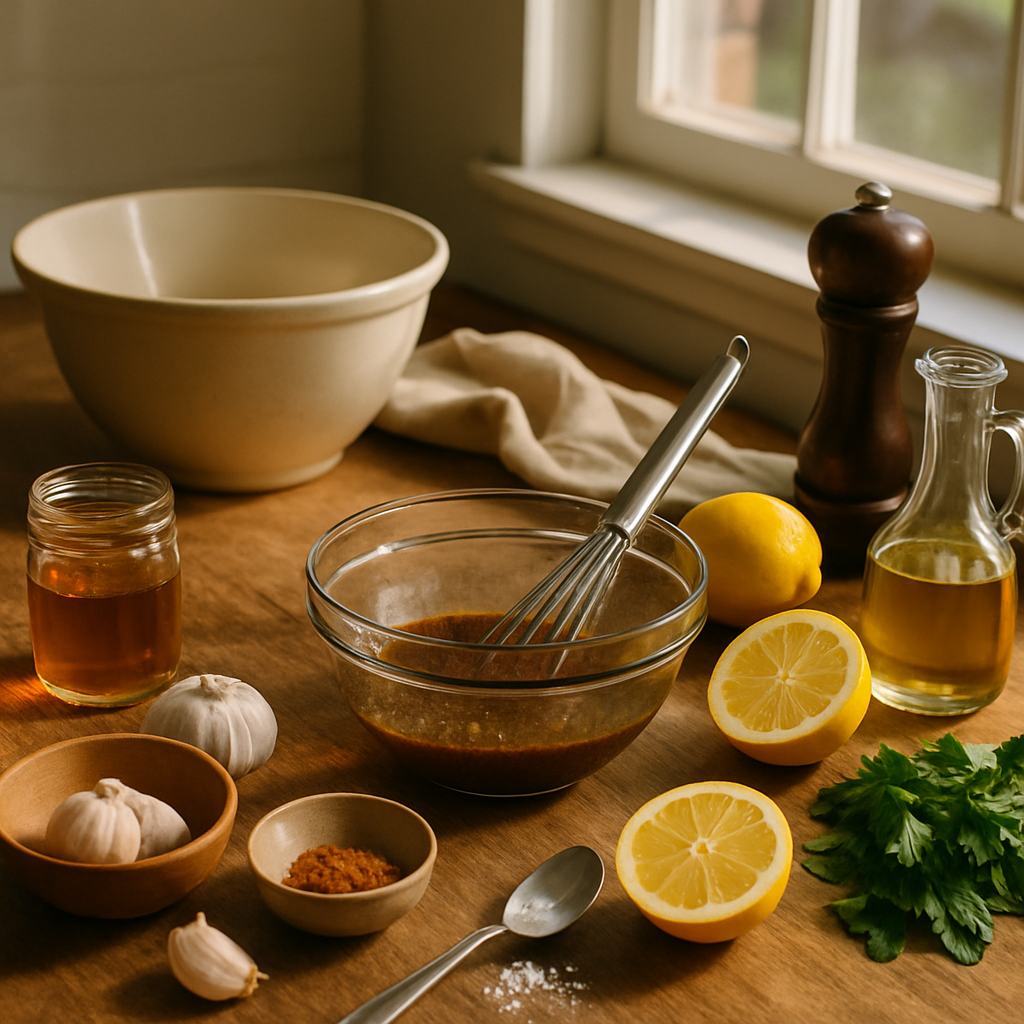
Aromatics and flavourings — Garlic, ginger, herbs, spices, citrus zest, chilli, miso, soy sauce, fish sauce. These provide the character of the marinade. The fat and acid are your delivery mechanism; the aromatics are what you're actually delivering.
What the Evidence Shows
The science of marinades has been studied fairly extensively, partly because food scientists are interested in both flavour and food safety. A few findings are worth knowing.
On texture: a 2010 study published in the Journal of Food Science found that acidic marinades do tenderise the surface of meat, but the effect is largely superficial. Enzymatic marinades — those using papaya (papain), pineapple (bromelain), or kiwi (actinidin) — can penetrate more meaningfully, but the window is narrow. Leave chicken in a pineapple marinade for much more than an hour and you'll end up with an unpleasant, mealy texture. These enzymes are powerful and worth using sparingly.
On salt: the brining effect of salt is well-documented. Unlike marinades generally, salt given enough time will migrate inward and season the protein throughout. This is why a dry brine — simply salting meat and leaving it uncovered in the fridge — often produces more evenly seasoned results than a wet marinade, particularly for larger cuts.
On food safety: the USDA and UK Food Standards Agency both recommend marinating in the fridge rather than at room temperature to avoid bacterial growth. Reusing a marinade that's been in contact with raw meat as a sauce is not recommended unless you bring it to a rolling boil first.
Balancing Flavour Like a Cook, Not a Recipe
Once you understand the four components, the skill is in balancing them. A common mistake is overloading on acid — the marinade tastes bright and punchy in the bowl but leaves the food tasting sour or with an odd, slightly chalky texture after cooking.
A useful rough ratio to start from is 3 parts fat to 1 part acid, with salt and aromatics to taste. From there, you're adjusting for what you want the final dish to be. A Middle Eastern-style chicken marinade might lean on yoghurt (fat and mild acid), lemon, cumin, and garlic. A Korean-inspired version might use sesame oil, soy sauce, ginger, and a small amount of rice vinegar. A simple herb marinade for white fish might be little more than olive oil, lemon zest, garlic, and fresh thyme.
Taste your marinade before the food goes in. It should taste intentionally seasoned — slightly more intense than you'd want the final dish, because some flavour will cook off.
The Role of Time (and When More Isn't Better)
The relationship between marinating time and flavour is not linear, and this is where a lot of home cooks go wrong. More time does not reliably mean more flavour.
For fish and seafood, 15–30 minutes is usually enough. Any longer and acid starts to chemically "cook" the protein — the same principle as ceviche — which changes the texture significantly.
For chicken pieces and pork, 2–6 hours is a practical sweet spot. Overnight is fine for cuts without a strong acid component, but it's rarely going to improve on a proper afternoon soak.
For beef and lamb, particularly thicker cuts, the surface benefits from 4–8 hours. If you're using an enzymatic marinade, keep it short — 45 minutes to an hour maximum.
Tofu and vegetables absorb marinade differently because they lack the dense protein structure of meat. Tofu benefits from pressing first to remove excess moisture, then marinating for 30 minutes to 2 hours. Vegetables with a high water content (courgettes, mushrooms, peppers) can go from marinade to cooking fairly quickly — 20–30 minutes is often enough.
Five Practical Marinade Formulas Worth Knowing
Rather than abstract principles, here are five templates you can adapt:
All-purpose herb and garlic — Olive oil, lemon juice, garlic, dried oregano, salt. Works on chicken, fish, pork, halloumi, and most vegetables. Balanced, versatile, endlessly adaptable.
Yoghurt and spice — Full-fat yoghurt, garlic, ginger, cumin, coriander, a pinch of turmeric, salt. Excellent for chicken thighs and lamb. The yoghurt tenderises gently without going mushy.
Soy and sesame — Soy sauce, sesame oil, rice vinegar, garlic, ginger, a little honey or maple syrup. Works brilliantly on beef, salmon, tofu, and aubergine.
Chipotle and lime — Chipotle in adobo, olive oil, lime juice, garlic, cumin, salt. Smoky, earthy, great for anything headed for a grill or griddle pan.
Simple fish marinade — Olive oil, lemon zest, fresh thyme or dill, a small amount of garlic, salt. Keep it light — fish doesn't need much.
Practical Takeaways
A few things you can apply straight away:
- Salt is your most powerful tool — if you want seasoned-from-within results, salt the protein well and give it time, even before adding anything else.
- Match the acid to the protein — use aggressive enzymatic acids (pineapple, kiwi) sparingly and briefly; yoghurt and buttermilk are more forgiving.
- Taste the marinade before using it — if it doesn't taste good in the bowl, it won't taste good on the food.
- Pat food dry before cooking — excess marinade on the surface creates steam rather than a sear, especially on a hot pan or griddle.
- Don't marinate at room temperature — keep it in the fridge and allow enough time for the cold to not be a limiting factor (an extra hour compensates for slower absorption in the cold).
If you want to plan meals around recipes and flavour profiles like these without the faff of tracking macros manually, Macrology generates macro-perfect meal plans in seconds — https://macrology.app/signin
Want meals like this planned to your exact macros?
Macrology generates a personalised meal plan in seconds — breakfast, lunch, dinner and snacks, all hitting your daily targets.
Start your free 14-day trial