How to Build a Better Stock: The Foundation of Great Cooking
# How to Build a Better Stock: The Foundation of Great Cooking
There's a reason professional chefs treat stock-making like a craft. A good stock doesn't just add liquid to a dish — it adds depth, body, and a complexity that no shop-bought cube can replicate. Once you understand what's actually happening in the pot, making it at home stops feeling like a chore and starts feeling like a genuine skill.
What Stock Actually Is (And Why It Matters)
Stock is, at its core, flavoured liquid — but that description barely scratches the surface of what makes a great one.
When you simmer bones, vegetables, and aromatics in water over time, you're extracting collagen, minerals, gelatin, and soluble proteins. The collagen in connective tissue and cartilage converts to gelatin during cooking, which is what gives a well-made stock that silky, almost lip-coating quality. When chilled, a proper stock should set to a wobbling jelly — that's the sign you've done it right.
That body matters practically too. A gelatinous stock coats and clings to ingredients in a way that thin liquid doesn't. It reduces down into glossy sauces, enriches risottos, and gives braises a rounded, savoury depth that water or a stock cube simply can't match.
The Difference Between Stock and Broth
These two terms are used interchangeably in most home kitchens, but they're not quite the same thing.
Stock is made primarily from bones, which is where you get all that collagen and gelatin. Broth is made from meat, which contributes more flavour but less body. Commercially, most products labelled "stock" are closer to a thin broth — which explains why they taste fine but never quite give you that luxurious texture.
For cooking purposes, stock is generally the more versatile option. Broth is delicious to drink, especially when well-seasoned, but stock is what gives your cooking structure. That said, many home cooks make a hybrid — bones plus some meat — and this is a perfectly solid approach.
Bones: Choosing the Right Foundation
The bones you use will define the character of your stock, so it's worth thinking about this before you start.
Chicken: The most accessible and forgiving. Chicken carcasses (roasted or raw), wings, and feet are all excellent. Feet in particular are extraordinarily high in collagen and will give you the most gelatinous result. Most butchers will sell carcasses cheaply or even give them away — it's worth asking.
Beef and veal: Richer, deeper, and more robust. Knuckle bones, oxtail, and marrow bones all work well. Roasting them in the oven first (around 200°C, until well browned) is essential here — it develops the Maillard reaction flavours that give brown beef stock its characteristic depth. Veal bones produce a paler, more neutral stock that's particularly prized in classical French cooking.
Pork: Underused in British kitchens, but pork bones make a rich, slightly sweet stock that's excellent for Asian-inspired dishes, ramen bases, and braises.
Fish: Quick to make (45 minutes is enough — any longer and it turns bitter), fish stock benefits from the bones and heads of white fish. Avoid oily fish like salmon for stock; the fat turns the flavour rancid.
Vegetables: Worth making even if you cook plenty of meat. A good vegetable stock relies on onion, carrot, celery, leek, garlic, and bay — avoid starchy vegetables like potato, which cloud the liquid, and brassicas like cabbage or broccoli, which add a sulphurous note.
The Aromatics and Flavour Builders
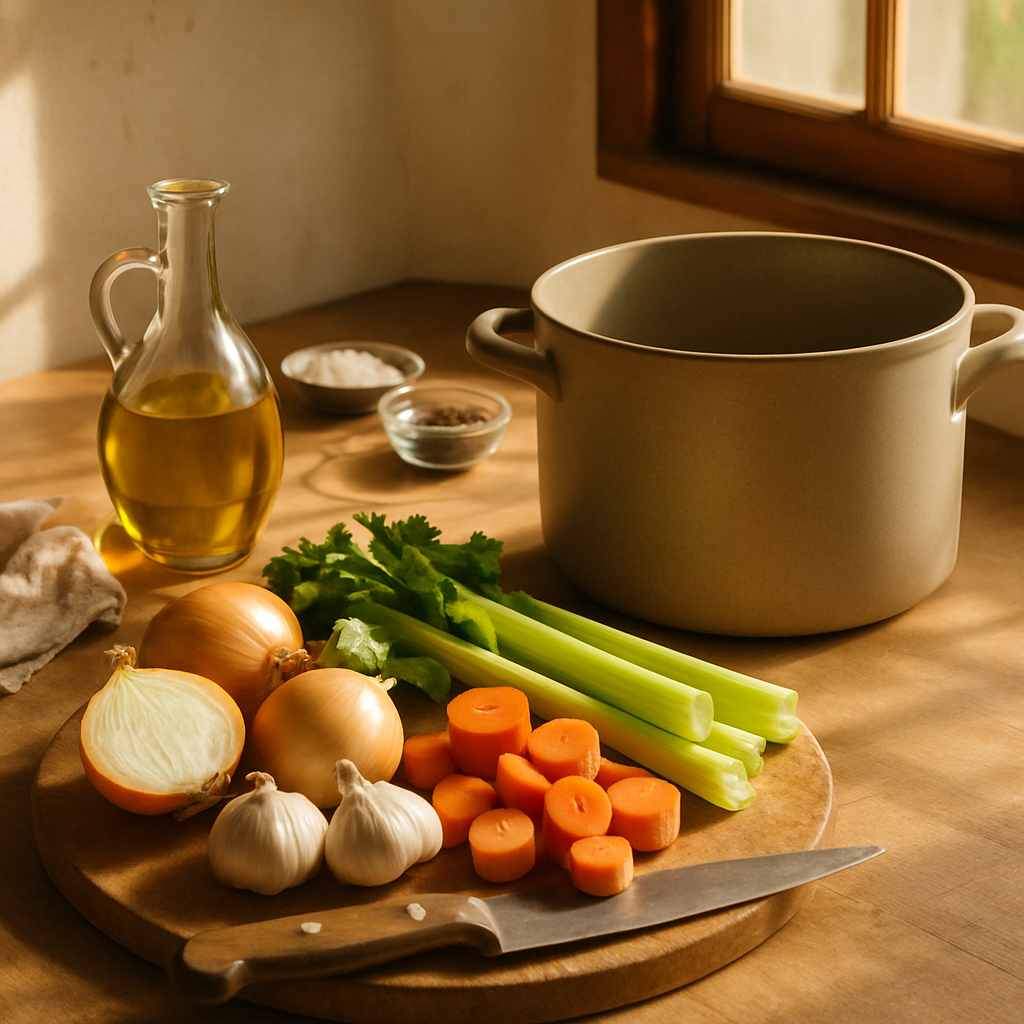
Bones provide the body; aromatics provide the flavour. The classic combination — onion, carrot, celery — is known as a mirepoix, and it forms the aromatic backbone of most European stocks.
Beyond the mirepoix, a bouquet garni is the traditional flavouring bundle: bay leaves, thyme, parsley stalks, and sometimes black peppercorns, tied together or wrapped in muslin so they can be removed easily. Parsley stalks are worth noting specifically — they carry more flavour than the leaves and would otherwise go to waste.
A few additions worth knowing about:
- Leek tops: Often discarded, but excellent in stock — they add a mild, sweet onion note.
- Tomato paste: A tablespoon stirred in and cooked briefly before adding water deepens beef or chicken stocks considerably, adding colour and a subtle acidity.
- Vinegar: A small splash of apple cider or white wine vinegar (roughly a tablespoon per litre of water) is sometimes added to bone broths. Some evidence suggests it helps draw minerals from the bones into the liquid — more on that below.
- Mushroom stalks and dried mushrooms: Excellent for vegetable stocks or to add umami depth to chicken or beef.
One thing to leave out: salt. This is intentional. An unsalted stock is far more versatile — you can reduce it without it becoming unpalatably salty, and you season the final dish instead. Season when you cook, not when you stock.
What the Evidence Shows
Stock's reputation has grown considerably in recent years, partly due to the bone broth trend that swept through wellness circles. Some of the claims made — that it cures gut issues, reverses ageing, or "heals" the gut lining — go well beyond what the evidence currently supports.
What the research does show is more measured, and still genuinely interesting.
Gelatin and gut health: A 2011 study published in the Journal of Clinical Gastroenterology found that gelatin (from collagen) may have a protective effect on the gut lining. The amino acids glycine and proline — found in collagen-rich stocks — do appear to have some anti-inflammatory properties in cell and animal studies. Whether this translates meaningfully to humans through dietary intake remains an open question.
Mineral content: Studies on bone broths have found they do contain calcium, magnesium, and phosphorus, though typically in modest amounts — not enough to constitute a significant dietary source of these minerals on its own.
Glycine: This amino acid, abundant in collagen and gelatin, has been studied for its role in sleep quality. A 2012 randomised trial in Sleep and Biological Rhythms found that glycine supplementation improved subjective sleep quality. Whether stock provides enough glycine to have a similar effect is unclear — doses used in studies are generally higher than you'd get from a bowl of soup.
The honest summary: stock is a nutritious, whole-food ingredient with some promising compounds. It's worth making for the flavour alone. Don't expect it to be medicine, but don't dismiss the nutritional side either.
Common Mistakes That Weaken Your Stock
Boiling instead of simmering: This is the most common error. A rolling boil agitates the fat and proteins, emulsifying them into the liquid and making it cloudy and greasy. Keep the heat gentle — small bubbles breaking the surface occasionally is exactly right.
Skipping the skim: In the first 20–30 minutes, a grey-brown foam will rise to the surface. This is coagulated protein. Skim it off with a spoon or ladle. It won't ruin your stock if you miss it, but removing it gives you a cleaner, clearer result.
Not enough time: Chicken stock needs around 3–4 hours. Beef stock benefits from 6–8 hours. Going shorter means less gelatin extraction and a thinner result. A slow cooker on low overnight is a genuinely excellent approach.
Too much water: Start with just enough water to cover the bones by a few centimetres. Excess water dilutes the flavour. You can always add more later; you can't take it back.
Practical Takeaways
Making stock doesn't require a special occasion or a free afternoon — it requires a bit of planning and the willingness to use what you'd otherwise discard.
- Save your carcasses: After a roast chicken, strip the meat and freeze the carcass. Once you have two or three, you have everything you need for a batch of stock.
- Keep a vegetable bag: A freezer bag of leek tops, carrot peelings, celery leaves, and onion skins accumulates quickly and costs nothing. These go straight into your pot.
- Freeze in portions: Ice cube trays and 500ml freezer bags are both useful. Cubes are great for deglazing pans and finishing sauces; bags work for soups and braises.
- Reduce for a glaze: Simmer your finished stock down by two-thirds or more and you have a glossy, intensely flavoured glaze — a shortcut to restaurant-quality sauces at home.
- Label everything: Frozen stock all looks the same. Date it and write the type. Future you will be grateful.
If you want to build meals around ingredients like homemade stock and make sure your nutrition actually adds up, Macrology generates macro-perfect meal plans in seconds — https://macrology.app/signin
Want meals like this planned to your exact macros?
Macrology generates a personalised meal plan in seconds — breakfast, lunch, dinner and snacks, all hitting your daily targets.
Start your free 14-day trial