How to Build the Perfect Grain Bowl
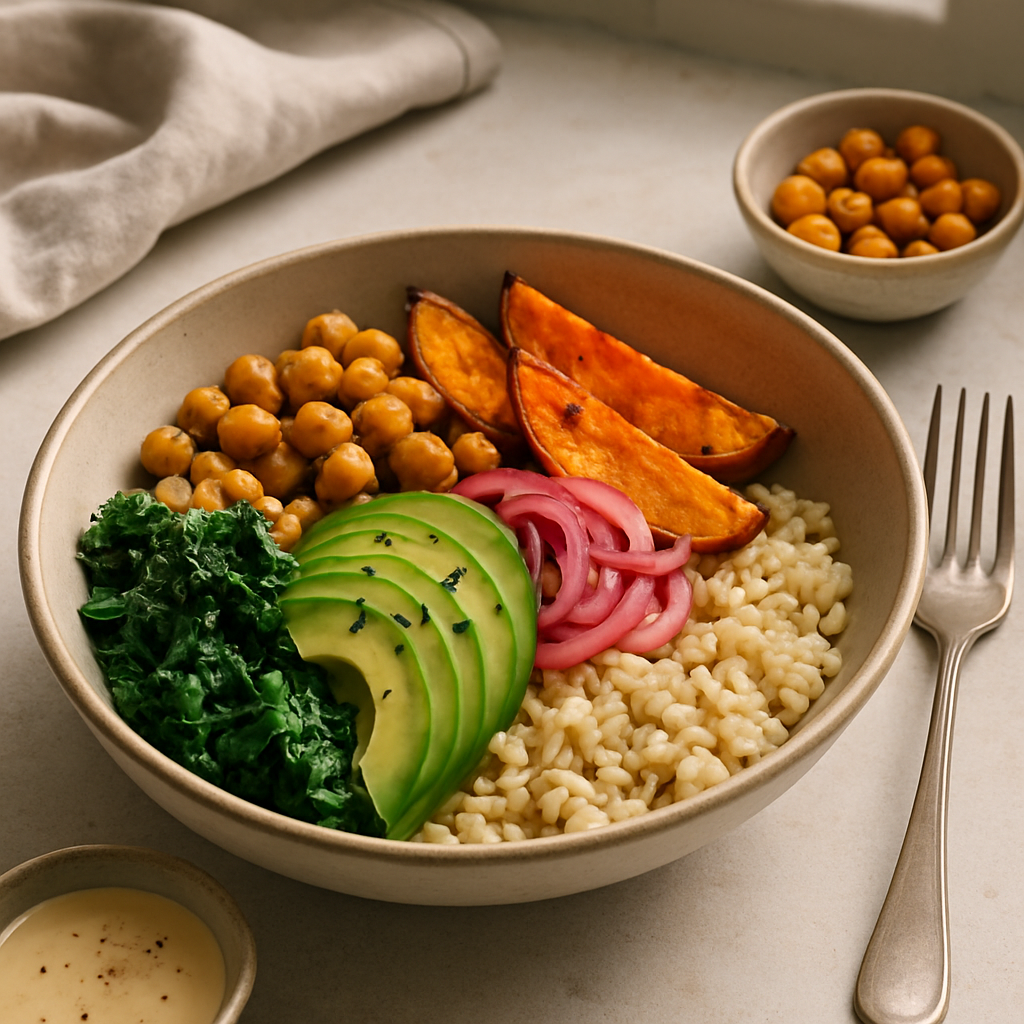
The Formula: Five Layers That Do the Work
There's a reason grain bowls have become a staple for people who actually enjoy eating well — they're endlessly flexible, genuinely filling, and come together fast once you know the formula. The trick isn't following a specific recipe to the letter; it's understanding the building blocks so you can throw one together with whatever's in your fridge.
A great grain bowl isn't just rice with stuff on top. It's built in layers, and each one has a job.
The Base (Grains) — This is your foundation and your primary source of complex carbohydrates. Aim for around a fist-sized portion. Brown rice, quinoa, farro, bulgur wheat, and pearl barley all work brilliantly. Quinoa is worth a particular mention because it's a complete protein, meaning it contains all nine essential amino acids — useful if you're building a plant-based bowl.
The Protein — This is what keeps you full for hours rather than minutes. Roasted chickpeas, grilled chicken thighs, soft-boiled eggs, edamame, baked tofu, salmon, or lentils all slot in well. Roughly a palm-sized portion is a solid starting point.
The Vegetables — Go for a mix of cooked and raw. Roasted sweet potato or butternut squash adds warmth and natural sweetness; shredded red cabbage or cucumber brings freshness and crunch. More colour generally means more variety in micronutrients, so pile them in.
The Fat — Avocado, a tahini drizzle, toasted seeds, or a small handful of nuts. Fat helps your body absorb fat-soluble vitamins (A, D, E, K) from the vegetables, and it rounds out the flavour in a way that makes the bowl feel complete rather than sparse.
The Dressing — This is where most grain bowls either sing or fall flat. Don't skip it. A simple formula: one part acid (lemon juice, rice vinegar, apple cider vinegar), two parts oil, plus flavour (miso paste, garlic, ginger, mustard, chilli flakes). Mix it in a jar and it'll keep in the fridge for a week.
Four Archetypes Worth Knowing
Once the formula clicks, you can build around different flavour profiles depending on what you're in the mood for.
The Mediterranean — Farro or bulgur wheat base, grilled halloumi or falafel, roasted red peppers and cherry tomatoes, cucumber, kalamata olives, and a lemon-tahini dressing. Fresh mint on top pulls it all together.
The Japanese-Inspired — Brown rice or sushi rice, edamame, pan-fried tofu or sesame-crusted salmon, shredded red cabbage, pickled cucumber, and a miso-ginger dressing with toasted sesame seeds. Simple, clean-tasting, and very satisfying.
The Tex-Mex — Cilantro-lime rice or quinoa, black beans, charred sweetcorn, sliced avocado, pickled jalapeños, and a cumin-lime vinaigrette. Add a soft-boiled egg or leftover roasted chicken if you want more protein.
The Warming Autumn Bowl — Pearl barley or farro, roasted butternut squash and beetroot, puy lentils, toasted pumpkin seeds, and a maple-dijon dressing. This one works particularly well in autumn and winter when you want something more robust.
What Makes This Work Nutritionally
Grain bowls hit a natural macro balance when you follow the formula — complex carbohydrates from the grain, protein from a dedicated protein source (and sometimes the grain itself, in the case of quinoa), healthy fats, and fibre from the vegetables.
Fibre is the unsung hero here — most people in the UK eat far less than the recommended 30g per day, and a well-built grain bowl can easily contribute 10–15g in one sitting. The combination of protein, fat, and fibre also slows digestion, which helps keep blood sugar steadier compared to a simpler carb-heavy meal.
Practical Takeaway
- Batch your grain on Sunday — most cooked grains last four to five days in the fridge and reheat in minutes
- Keep two or three dressings on rotation so assembly is fast during the week
- Mix one raw and one cooked vegetable for better texture every time
- Rotate your protein to avoid flavour fatigue and vary your nutrient intake
- The formula is a framework, not a rule — swap freely based on what you have
---
> Macrology tip: If you want to dial in the macros on your grain bowls without doing the maths yourself, Macrology generates macro-perfect meal plans in seconds — https://macrology.app/signin
Want meals like this planned to your exact macros?
Macrology generates a personalised meal plan in seconds — breakfast, lunch, dinner and snacks, all hitting your daily targets.
Start your free 14-day trial