How Blanching and Shocking Vegetables Preserves Colour, Texture and Nutrients
# How Blanching and Shocking Vegetables Preserves Colour, Texture and Nutrients
Have you ever noticed that the frozen peas you tip into a pan turn a brighter, more vivid green than fresh ones before you've cooked them? That's not a coincidence — it's chemistry, and it's the same principle that professional chefs have used for decades to keep vegetables looking and tasting their best.
Blanching and shocking is one of those techniques that sounds fancier than it is. Once you understand what's actually happening inside the vegetable, it becomes a genuinely useful tool in everyday cooking — not just something reserved for restaurant kitchens.
What Blanching and Shocking Actually Means
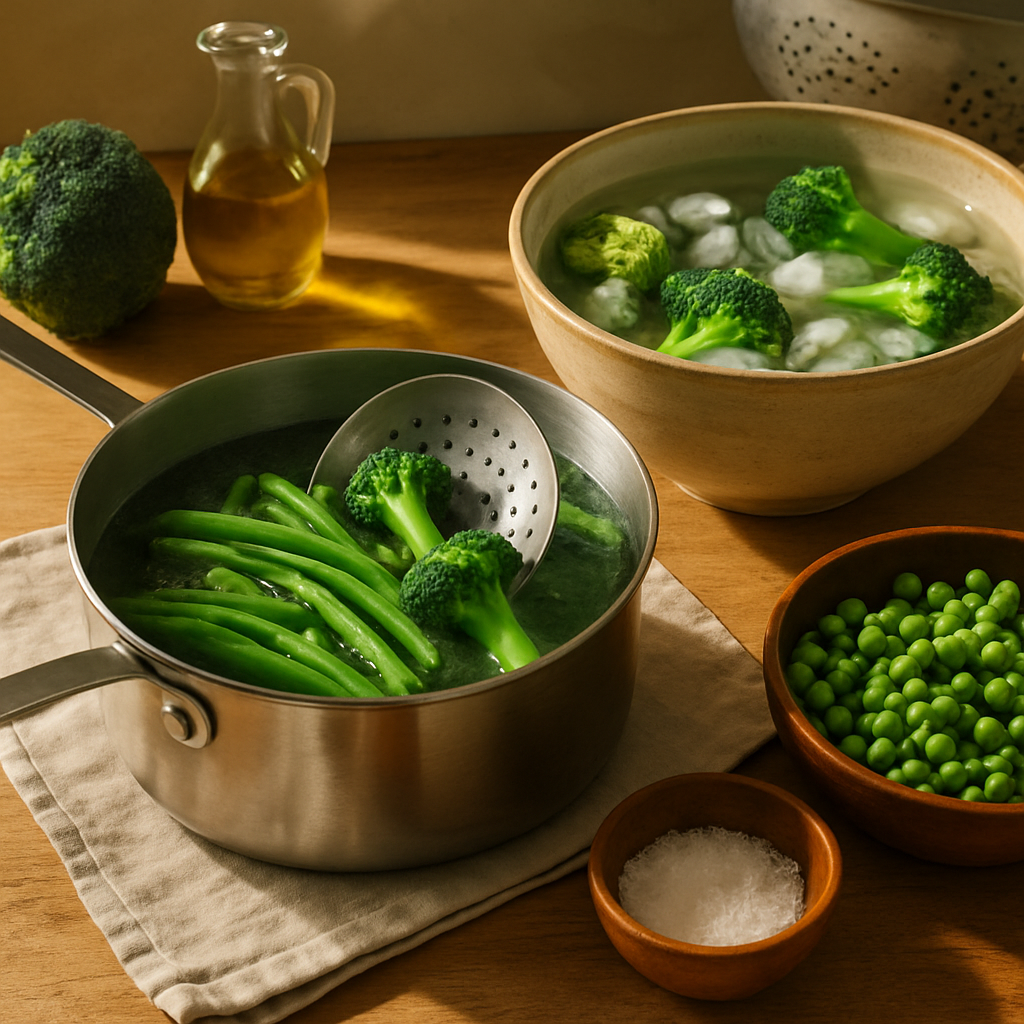
Blanching simply means briefly cooking a vegetable in boiling, well-salted water — typically for anywhere between 30 seconds and 5 minutes depending on the ingredient. Shocking means immediately plunging that vegetable into ice-cold water (an "ice bath") the moment it comes out of the pot.
The two steps work together. The boiling water starts a controlled cooking process; the ice bath stops it dead. Without the cold-water plunge, carry-over heat continues cooking the vegetable even after it leaves the pot, and you end up with something soft and dull rather than vibrant and snappy.
It's worth noting that blanching is distinct from boiling. The goal here is partial cooking, not cooking through — you're setting colour and texture, then halting the process before things go wrong.
What's Happening Inside the Vegetable
To understand why blanching works, it helps to know a little about vegetable structure. Green vegetables get their colour from chlorophyll, which is stored in chloroplasts inside plant cells. When a vegetable is raw, pockets of air between the cells scatter light, making the colour appear dull and muted.
When you drop a vegetable into boiling water, those air pockets collapse within the first 30 to 60 seconds. Suddenly, light passes through the cells more cleanly and the chlorophyll underneath becomes far more visible — which is why that flash of brilliant green happens so quickly.
At the same time, heat deactivates enzymes (particularly one called lipoxygenase) that would otherwise continue breaking down chlorophyll after harvest. This is why a green bean left in the fridge for a week gradually yellows — those enzymes are slowly doing their work. Brief heat stops that process, locking in colour for longer.
The shocking step preserves the structural integrity of the cells. Cold water causes the cell walls to firm up rapidly, maintaining crispness. It also prevents the chlorophyll from being further degraded by prolonged heat exposure, which would eventually turn those greens an army-drab olive colour.
What the Evidence Shows
The nutritional side of blanching is where things get genuinely interesting — and where the answer is more nuanced than "heat destroys nutrients".
Research published in food science literature consistently shows that blanching does cause some loss of water-soluble vitamins, particularly vitamin C and folate, which leach into the cooking water. A study in the Journal of Food Science and Technology found that blanching broccoli for two minutes resulted in around a 22% reduction in vitamin C content. That sounds significant — but context matters.
The same process that causes minor vitamin loss also deactivates oxidative enzymes that would continue degrading nutrients during storage. Studies comparing fresh, unblanched vegetables stored for several days against blanched-then-frozen vegetables have found that the blanched versions often retain more nutrients over time — because the enzymatic degradation has been stopped. A green bean blanched and frozen on the day of harvest may genuinely be more nutritious than a "fresh" one that's sat in a supply chain and your fridge for a week.
Blanching also appears to increase the bioavailability of certain compounds. Heat softens plant cell walls, making carotenoids (like beta-carotene in carrots and lutein in spinach) more accessible for absorption. Some research suggests modest heat treatment can increase carotenoid bioavailability by a meaningful margin compared to eating the same vegetables completely raw.
The key variable is time. Short blanching windows preserve far more than longer ones. Every extra minute in boiling water increases leaching. The goal is the shortest exposure that achieves what you need.
Which Vegetables Respond Best
Not every vegetable benefits equally, and it's worth knowing where the technique pays dividends.
Green vegetables are the most obvious candidates — French beans, tenderstem broccoli, asparagus, mangetout, courgette, spinach, and peas all respond brilliantly. Their colour transforms immediately and, if shocked properly, they hold that vibrancy for hours without wilting.
Waxy vegetables like carrots and beetroot benefit from slightly longer blanching times (2–4 minutes) and tend to hold their structure well afterwards. They're ideal candidates for batch cooking — blanch, shock, and store in the fridge for quick assembly later in the week.
Cruciferous vegetables like cauliflower and broccoli blanch well but are more sensitive to overcooking. Aim for 90 seconds to two minutes maximum, then shock immediately. Go any longer and you'll hit that characteristic sulphurous smell as glucosinolates break down.
Starchy vegetables like potatoes and parsnips don't tend to benefit from blanching in the same way — they need more sustained heat to cook properly, and the colour-preservation benefit is less relevant.
How to Do It Properly
The difference between blanching done well and blanching done badly usually comes down to a few simple variables.
Use a large pot with plenty of water. When you add cold vegetables, the water temperature drops. The bigger the volume of water, the quicker it returns to a rolling boil — which matters enormously for timing accuracy and for keeping the cooking process consistent.
Salt the water generously. This isn't just a flavour trick. Salting raises the boiling point slightly and seasons the vegetable from the outside in. Vegetables blanched in unsalted water taste flat, even if they look perfect.
Prepare your ice bath in advance. Have a large bowl filled with cold water and a generous amount of ice ready before anything goes near the pot. The moment the vegetable comes out, it needs to go straight in — there's no time to rummage for ice.
Dry the vegetables thoroughly after shocking. Once cooled, lift the vegetables out and spread them on a clean tea towel or kitchen paper. Excess water dilutes flavour and creates steam when you're sautéing or roasting later, leading to soggy results.
Time it precisely. A timer isn't optional here. The difference between 90 seconds and three minutes is the difference between vibrant and khaki.
Practical Takeaways
Here's what you can put into practice this week without overcomplicating anything:
- Batch blanch green vegetables at the start of the week. Blanch, shock, dry, and store in an airtight container in the fridge. They'll keep their colour and texture for 3–4 days and are ready to go straight into stir-fries, salads, or grain bowls in seconds.
- Use blanching before freezing any vegetables you've bought in bulk or grown yourself. Unblanched vegetables frozen directly will turn mushy and lose colour rapidly. A two-minute blanch first makes a significant difference to quality after freezing.
- Season your blanching water as if it were pasta water — it should taste noticeably salty. You'll immediately notice the difference in flavour.
- Don't skip the ice bath. If you're out of ice, use the coldest tap water available and change it once it warms up. It's not quite as effective, but it's far better than nothing.
- Match timing to the vegetable. Asparagus: 2 minutes. French beans: 2–3 minutes. Broccoli florets: 90 seconds. Peas: 60 seconds. Spinach: 30 seconds. These aren't rigid rules, but they're reliable starting points.
If you want help building meals around techniques like this — planning your week so that a Sunday batch of blanched vegetables actually becomes lunches and dinners — Macrology generates macro-perfect meal plans in seconds — https://macrology.app/signin
Blanching is one of those small kitchen skills that, once you've tried it properly, you'll wonder how you cooked without it. The vegetables look better on the plate, hold up well in meal prep, and are arguably more nutritious than their long-stored fresh counterparts. That's a rare case where the practical and the nutritional case point in exactly the same direction.
Want meals like this planned to your exact macros?
Macrology generates a personalised meal plan in seconds — breakfast, lunch, dinner and snacks, all hitting your daily targets.
Start your free 14-day trial