A Beginner's Guide to Cooking Pulses from Dried
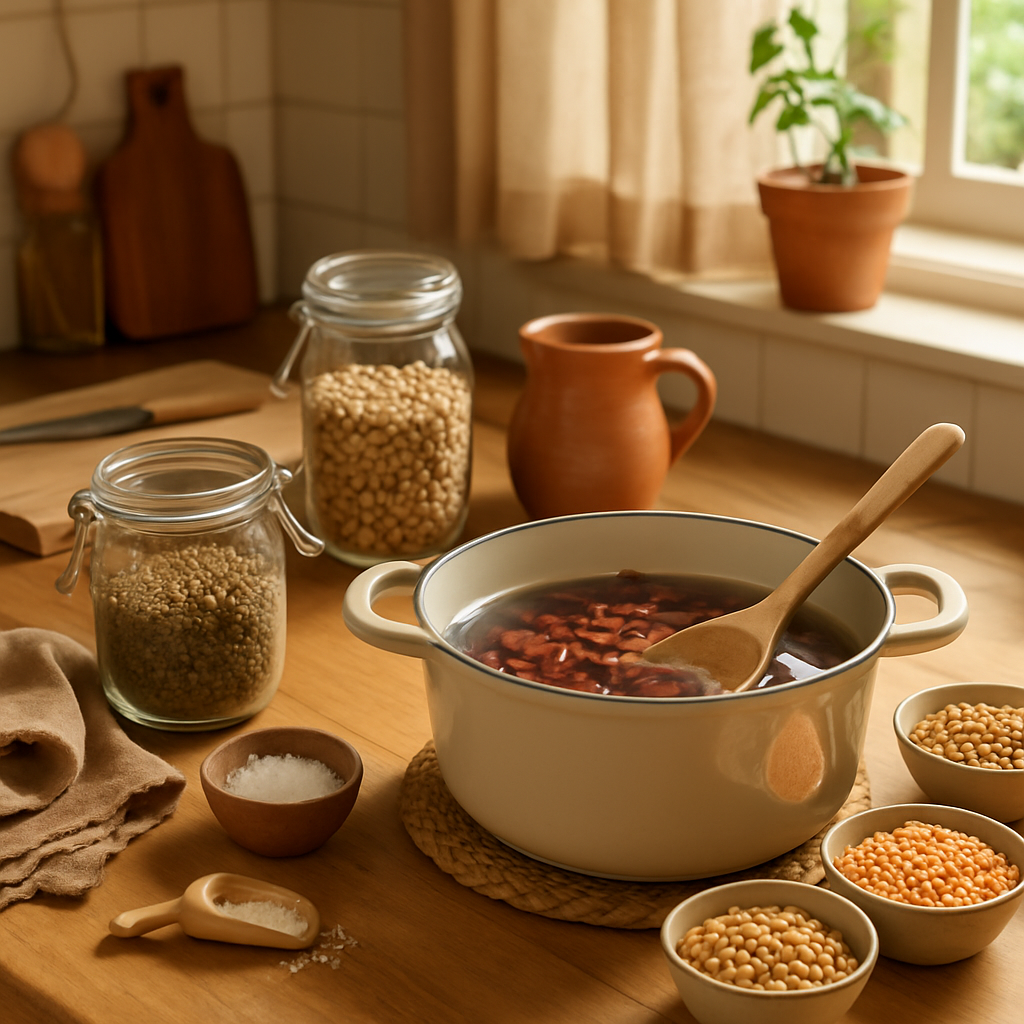
# A Beginner's Guide to Cooking Pulses from Dried
Dried pulses — lentils, chickpeas, black beans, kidney beans — are one of the best-value ingredients in any kitchen. Once you know how to handle them, you'll wonder why you ever paid three times the price for the tinned version.
Why Bother with Dried Pulses?
The economics alone make a decent case. A 500g bag of dried chickpeas costs roughly the same as two tins, yet it yields the equivalent of four or five tins once cooked.
Beyond the cost, texture and flavour are noticeably better. Dried chickpeas cooked from scratch have a creamier interior and a slightly firmer skin. Dried black beans taste earthier and richer. The difference is subtle, but it's real.
There's also flexibility — when you cook pulses yourself, you control the salt, the aromatics, and how firm or soft the final result is.
Soaking: What Actually Matters
Most pulses benefit from an overnight soak in cold water, covered generously — they'll absorb a surprising amount of liquid. Lentils and split peas are the exception; they cook quickly enough that soaking isn't necessary.
For everything else — chickpeas, kidney beans, black beans, cannellini beans — aim for 8 to 12 hours. Drain and rinse well before cooking.
If you've forgotten to soak overnight, the quick-soak method works reasonably well. Cover the pulses in cold water, bring to the boil for two minutes, turn off the heat, and leave them to sit for an hour. Drain, rinse, and carry on. The texture won't be quite as even, but it's far from a disaster.
One important note: kidney beans must be boiled vigorously for at least 10 minutes at the start of cooking. They contain a naturally occurring compound called phytohaemagglutinin that causes serious digestive distress if not destroyed by a proper boil. Don't skip this step, and don't cook them in a slow cooker without pre-boiling first.
The Cooking Process
Once soaked and rinsed, cover your pulses with fresh cold water — roughly twice the volume of pulses — and bring to the boil. Skim off any foam that rises in the first few minutes; it won't harm you, but removing it gives you a cleaner result.
Don't add salt, tomatoes, or acidic ingredients until the pulses are almost tender. Acid in the cooking liquid causes the skins to tighten and can leave you with beans that never quite soften properly — a common frustration for beginners that has a simple fix.
Cooking times vary quite a bit depending on the pulse and how long they've been sitting in the back of your cupboard:
- Red lentils — 15 to 20 minutes (no soaking needed)
- Green or brown lentils — 25 to 35 minutes
- Cannellini or butter beans — 45 to 60 minutes
- Chickpeas — 60 to 90 minutes
- Black beans — 60 to 75 minutes
Older pulses take longer. If your chickpeas are still firm at 90 minutes, they'll get there — just keep going and top up the water if needed.
Storing and Using What You Cook
Here's where cooking from dried really pays off. A large batch cooked once covers you for the week. Cool the cooked pulses, then store them in the cooking liquid in the fridge for up to five days, or freeze in portioned bags for up to three months.
Having cooked chickpeas or lentils on hand makes throwing together a high-protein meal genuinely fast — into a salad, blended into a dip, stirred through a curry, or tossed with roasted vegetables and a decent dressing.
If you want those meals to also hit your protein, carbohydrate, and fat targets without doing mental arithmetic, Macrology generates macro-perfect meal plans in seconds — https://macrology.app/signin
Quick Reference: Getting Started Today
- Buy one bag of dried chickpeas or red lentils — the two most versatile starting points
- Soak chickpeas overnight, skip soaking for red lentils
- Boil kidney beans hard for 10 minutes before simmering
- Salt goes in late — once nearly tender
- Cook a big batch, refrigerate or freeze in portions
- Add aromatics (a bay leaf, a halved onion, a smashed garlic clove) to the cooking water for better flavour
Pulses are genuinely one of the most useful things you can have in your kitchen — high in protein, high in fibre, cheap, and endlessly versatile. Getting comfortable with the basics opens up a lot of doors.
Want meals like this planned to your exact macros?
Macrology generates a personalised meal plan in seconds — breakfast, lunch, dinner and snacks, all hitting your daily targets.
Start your free 14-day trial