Why the Ratio of Protein to Calories in Your Meals Matters More Than Total Protein
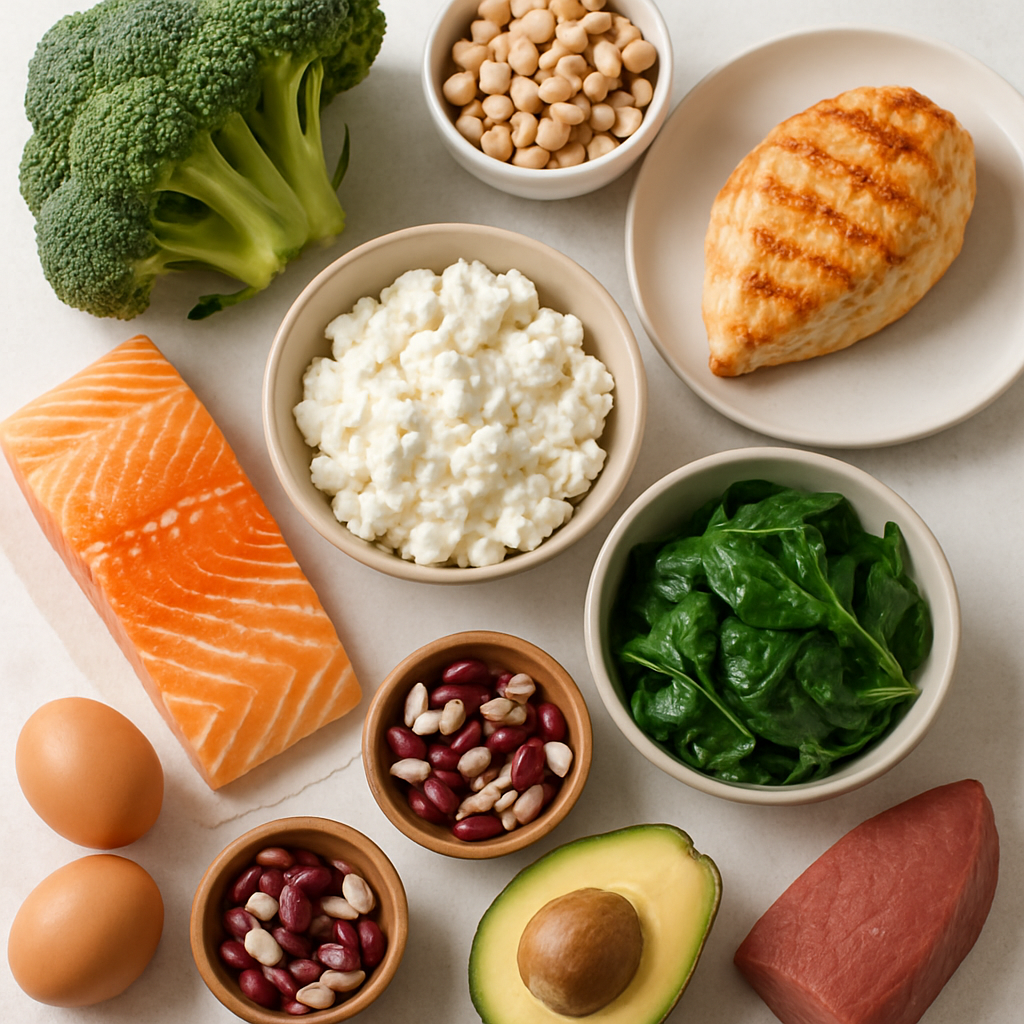
# Why the Ratio of Protein to Calories in Your Meals Matters More Than Total Protein
Most people tracking protein are asking the right question in the wrong way. Instead of "how much protein did I eat today?" the more useful question is "how much protein did I get relative to the calories?"
That shift in thinking — from absolute grams to protein density — can quietly change the quality of your diet without adding any extra complexity.
What is protein density, and why does it matter?
Protein density is simply the amount of protein in a food relative to its calorie content. A food that delivers a lot of protein for relatively few calories is considered protein-dense. Think cooked chicken breast, fat-free Greek yoghurt, or egg whites.
Compare that to something like peanut butter. It contains protein, yes — but it's also very calorie-dense, meaning you'd need to eat a significant number of calories to hit a meaningful protein contribution from it alone.
This distinction matters because most people are eating to a calorie target, not an unlimited one. If your daily goal is 2,000 kcal, every meal is essentially a budget. The question becomes: how much protein are you getting out of each "spend"?
A diet built around protein-dense foods naturally allows you to hit your protein targets without burning through your calorie budget too quickly — leaving room for carbohydrates, fats, and the foods you actually enjoy.
The problem with just tracking total grams
Hitting 150g of protein in a day sounds impressive. But if it came alongside 3,500 calories of food, the picture looks different from the same 150g arriving within 2,000 calories.
In the first scenario, you've likely consumed far more fat and/or carbohydrates than intended, and the protein — while adequate — isn't doing the structural work of anchoring your diet. In the second, protein is doing what it does best: providing satiety, preserving muscle, and giving your body what it needs without excessive caloric surplus.
Total protein tells you about quantity. Protein-to-calorie ratio tells you about quality of food selection. Both matter, but if you're only watching one number, the ratio gives you more useful information.
What the evidence shows
Researchers have studied this concept under the umbrella of "protein leverage" — a theory proposed by nutritionists David Raubenheimer and Stephen Simpson. Their work suggests that humans have a strong biological drive to hit a protein target, and that if protein density in the diet is low, people will keep eating (and consuming more total calories) until that target is met.
In practical terms: eating low-protein-density foods may drive overconsumption, not because of a lack of willpower, but because the appetite system hasn't received the signal it's looking for.
A 2011 study published in PLOS ONE tested this directly, finding that participants eating a diet where protein made up 10% of calories consumed significantly more food overall than those eating a diet where protein made up 15% — even when both groups were eating freely. The difference in calorie intake was substantial.
More broadly, research consistently shows that higher protein diets improve satiety hormones, including GLP-1 and peptide YY, while reducing ghrelin (the hormone that drives hunger). These effects are stronger when protein comes from low-calorie-density sources, because you're getting that hormonal response without the accompanying calorie load.
A simple way to think about protein efficiency
One practical framework is to look at what's sometimes called the protein-to-calorie ratio — specifically, grams of protein per 100 calories of food.
Here's a rough sense of how common foods compare:
- Cooked chicken breast: ~23g protein per 100 kcal — very high
- Fat-free Greek yoghurt: ~17g protein per 100 kcal — high
- Eggs: ~8g protein per 100 kcal — moderate
- Cheddar cheese: ~6g protein per 100 kcal — lower
- Peanut butter: ~4g protein per 100 kcal — low
- Almonds: ~3.5g protein per 100 kcal — low
None of these foods are "bad" — cheese, nuts, and nut butters bring real nutritional value. But if protein efficiency is your goal, leaning on the top of this list for your main protein sources makes a significant difference.
The takeaway here isn't to avoid calorie-dense foods. It's to understand that not all protein sources are equal when calories are your limiting factor.
How this plays out across a day
Imagine two people both eating 2,000 calories. Person A uses cheese, nuts, and protein bars as their main protein sources. Person B builds meals around chicken, fish, low-fat dairy, and legumes.
Person A might end the day with 90–100g of protein. Person B, eating the same calories, might reach 140–160g. That gap has real consequences for muscle retention, recovery, satiety, and body composition over time — not because Person B has more willpower, but because their food choices were more protein-efficient.
This also explains why two people eating the same calorie target can have wildly different hunger levels. If one person's meals are protein-dense and the other's are built around foods that are calorically expensive but protein-light, the first person will likely feel more satisfied — their appetite hormones are better regulated throughout the day.
Where this gets more nuanced
It's worth acknowledging that protein quality also matters, not just density. Complete proteins — those containing all essential amino acids — are more useful to the body than incomplete ones. Animal proteins (meat, fish, dairy, eggs) are generally complete. Most plant proteins are not, though combinations (like rice and beans, or hummus with wholemeal bread) can cover all essential amino acids across a meal or day.
There's also the question of meal distribution. Research suggests the body can only utilise roughly 30–40g of protein effectively per meal for muscle protein synthesis — though this is debated, and the ceiling is likely higher for larger individuals. Spreading protein across three or four meals rather than loading it all into dinner tends to be more effective for body composition goals.
So the full picture is: protein density, protein quality, and protein distribution all contribute to how useful your dietary protein actually is. But of these, density is arguably the most overlooked — and the most immediately actionable.
Practical takeaways
Here's what you can do with this information today:
1. Audit your main protein sources. Look at what's actually contributing protein in your diet versus what's just accompanying protein with a lot of calories. If most of your protein is coming from cheese, nuts, or processed snacks, consider swapping some of those for higher-efficiency sources at main meals.
2. Build meals around a protein anchor. Choose a protein-dense food as the centrepiece of each meal — a piece of fish, a chicken thigh, a tin of tuna, a portion of low-fat Greek yoghurt, or a large serving of legumes — and build the rest of the meal around it.
3. Don't fear calorie-dense foods, just be deliberate about them. Nuts, olive oil, and full-fat dairy bring valuable nutrients and flavour. They just don't need to be your protein strategy.
4. Think about protein per meal, not just per day. A useful rough target is 30–40g of protein per meal, from protein-dense sources, spread across three or four eating occasions.
5. Use tools that do the maths for you. Manually calculating protein density for every food is tedious. The more practical solution is to plan meals in a way that's already optimised for this.
If you want to consistently hit your protein targets without going over on calories, Macrology generates macro-perfect meal plans in seconds — https://macrology.app/signin
The shift from counting total protein to thinking about protein density isn't a complicated one — but it consistently makes a difference. It's the kind of small reframe that tends to produce big results over time, not because it requires more effort, but because it quietly changes which foods end up on your plate.
Want meals like this planned to your exact macros?
Macrology generates a personalised meal plan in seconds — breakfast, lunch, dinner and snacks, all hitting your daily targets.
Start your free 14-day trial