How Steaming, Boiling and Roasting Vegetables Compares for Nutrient Retention
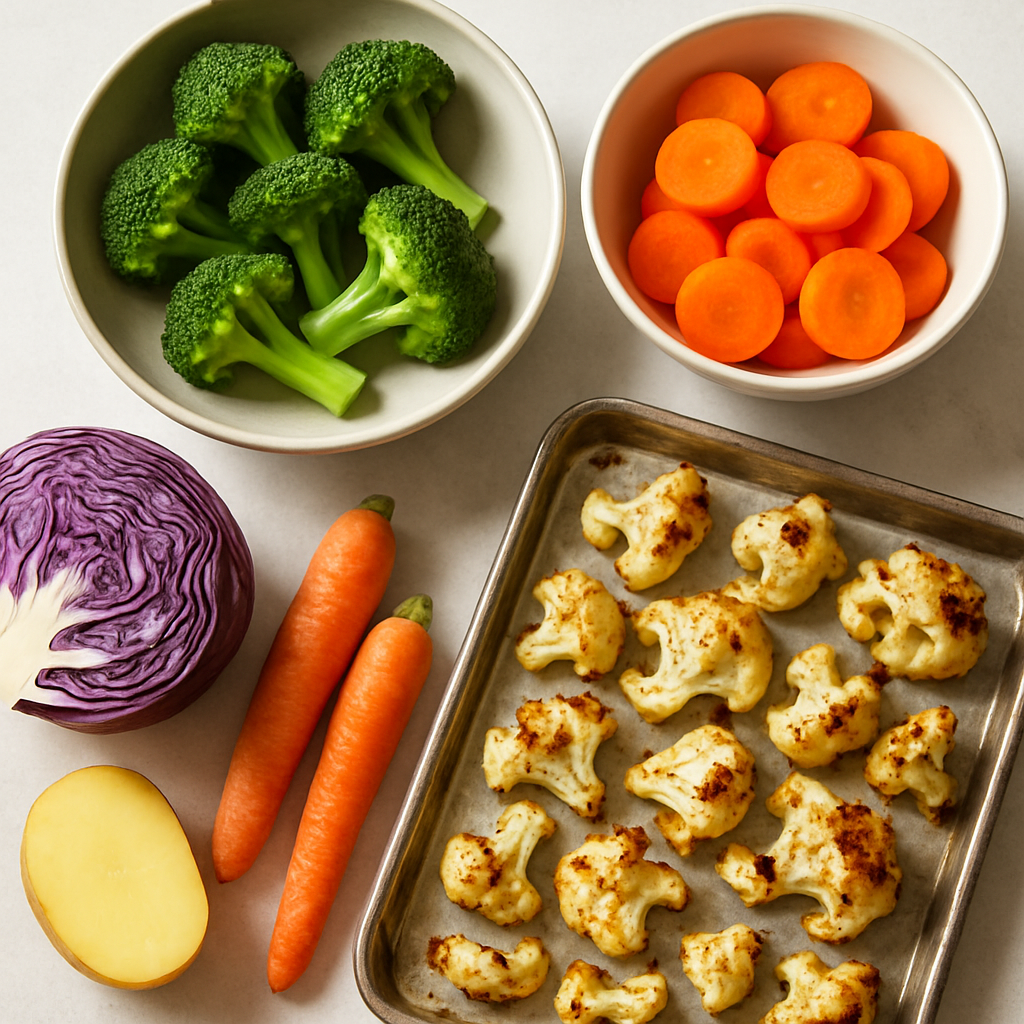
# How Steaming, Boiling and Roasting Vegetables Compares for Nutrient Retention
Most of us were told at some point that boiling vegetables destroys all the goodness. But is that actually true — or is it a bit more complicated than that?
The answer, as with most things in nutrition, is: it depends. Different cooking methods affect different nutrients in different ways, and the vegetable itself matters just as much as what you do to it.
Why Cooking Method Actually Matters
Raw vegetables aren't automatically superior to cooked ones. Cooking can break down cell walls, making certain nutrients easier for your body to absorb. It can also destroy heat-sensitive vitamins, or leach water-soluble ones into whatever liquid surrounds the food.
The nutrients most at risk during cooking are the water-soluble ones — vitamin C and the B vitamins (including folate). Fat-soluble vitamins like A, D, E and K are far more stable under heat, and some antioxidants actually become more bioavailable once vegetables have been cooked.
So the question isn't just "how much of a nutrient survives?" — it's "how much does your body actually absorb?" Those two things can point in opposite directions.
What the Evidence Shows
The research on cooking and nutrient retention is genuinely interesting, and it doesn't lead to one tidy conclusion.
A widely cited study published in the Journal of Food Science found that steaming preserved significantly more vitamin C and glucosinolates (the sulphur compounds in broccoli linked to health benefits) compared to boiling. Boiled broccoli lost around 50% of its vitamin C in some analyses, while steamed broccoli retained most of it.
However, a 2008 study in the Journal of Agricultural and Food Chemistry found something surprising: boiling and steaming actually increased the antioxidant activity of certain vegetables — including carrots, courgettes and leeks — compared to raw. The cooking process appeared to free up antioxidants that were bound within the plant's cell matrix.
Roasting tells its own story. High, dry heat causes the Maillard reaction — the browning process that creates flavour — but also degrades heat-sensitive vitamins more aggressively. On the other hand, roasting requires no water, so there's no leaching, and the concentration of nutrients per gram can actually increase as water evaporates from the vegetable.
Boiling: The Reputation vs The Reality
Boiling has a bad reputation, and some of it is deserved. When you boil vegetables, water-soluble vitamins literally dissolve into the cooking water — and if you tip that water down the sink, those nutrients go with it.
Studies suggest boiling can reduce vitamin C content by 50–80% in some vegetables, and folate losses can be similarly significant. Potassium also leaches into boiling water, though this is sometimes used intentionally in clinical settings for people managing kidney conditions.
That said, boiling isn't a nutritional disaster. It actually increases the bioavailability of lycopene in tomatoes and carotenoids in carrots. It softens fibrous vegetables, making them easier to digest for people with sensitive guts. And if you use the cooking water — in a soup, gravy or sauce — you recover many of those leached nutrients anyway.
The real problem with boiling isn't the method itself, it's discarding the cooking water. Keep it, and boiling becomes a far more defensible choice.
Steaming: The Reliable Middle Ground
Steaming is consistently the top performer in nutrient retention research, and the reason is simple: the vegetables never sit in water, so water-soluble vitamins have nowhere to go.
Studies on broccoli — one of the most researched vegetables in this space — consistently show steaming preserves the most glucosinolates, vitamin C and folate compared to boiling, microwaving in water, or pressure cooking. A 2009 analysis found steamed broccoli retained around 90% of its vitamin C, compared to roughly 50% for boiled.
Steaming is also gentler on texture. Vegetables retain more structure, which some people find more enjoyable to eat — and if you're more likely to eat a vegetable when it tastes good, that matters more than marginal nutrient differences.
One counterpoint worth raising: steaming doesn't deliver the flavour complexity that other methods create. For some vegetables — cauliflower, sprouts, root vegetables — roasting transforms palatability in a way that steaming simply doesn't. A highly nutritious meal you don't enjoy eating is harder to sustain long-term.
Roasting: Lower Retention, Higher Flavour
Roasting is harder to defend purely on nutrient retention grounds. High temperatures (typically 180–220°C) over longer cooking times break down heat-sensitive vitamins more aggressively than steaming or brief boiling.
Vitamin C is particularly vulnerable — roasting can reduce it by 60% or more in some vegetables. Folate, another heat-sensitive B vitamin, also takes a hit. The drier environment does prevent leaching, but oxidation from prolonged heat exposure is its own form of nutrient loss.
Where roasting earns its place is in what it does to bioavailability and enjoyment. Roasting carrots, for example, concentrates their natural sugars and increases the bioavailability of beta-carotene (a precursor to vitamin A). Roasted tomatoes release more lycopene than raw ones. And the caramelisation process makes many vegetables significantly more palatable — which matters when we're talking about food people actually want to eat regularly.
There's also a practical angle: roasting is largely hands-off. You can prepare a tray of mixed vegetables, put them in the oven, and get on with something else. Ease of cooking is a real factor in whether people cook at all.
The Vegetable Itself Makes a Difference
It's worth noting that not all vegetables respond to cooking in the same way, and this often gets lost in the broader conversation.
Tomatoes, carrots and sweet potatoes actually benefit from cooking — their key antioxidants become more bioavailable after heat exposure. Broccoli, kale, and other brassicas are more sensitive, particularly when boiled, and retain more of their beneficial compounds when lightly steamed or eaten raw.
Alliums like garlic and onions are interesting: crushing or chopping garlic and leaving it to sit for 10 minutes before cooking allows the enzyme alliinase to form allicin, which is far more heat-stable than the precursor compounds. This one simple step preserves more of the beneficial compounds regardless of how you cook it afterwards.
The takeaway is that generalising about "best" cooking methods works less well than thinking about which method suits which vegetable.
Practical Takeaways
You don't need to overhaul your cooking. Here's what the evidence actually supports doing:
Steam where you can — particularly for brassicas (broccoli, kale, cabbage, sprouts) and leafy greens. A basic steamer insert costs a few pounds and fits most pans.
If you boil, save the water — use it as a base for soups, stocks or sauces. This alone recovers a significant portion of leached nutrients.
Keep roasting in the rotation — especially for root vegetables, tomatoes and anything where the flavour difference genuinely affects whether you enjoy the meal. The nutrient trade-off is real but modest, and palatability is a legitimate consideration.
Don't stress about raw vs cooked — some nutrients are better absorbed from cooked vegetables; others are better from raw. Eating a variety of vegetables prepared in different ways is more useful than optimising for one cooking method.
Cut vegetables larger when boiling — less surface area means less leaching. Avoid overcooking; stop when the vegetable is tender but still has some bite.
Add a little fat to roasted or steamed vegetables — fat-soluble vitamins (A, D, E, K) and carotenoids are better absorbed in the presence of dietary fat. A drizzle of olive oil isn't just for flavour.
If you want your meals planned around real nutritional goals without spending hours thinking about it, Macrology generates macro-perfect meal plans in seconds — https://macrology.app/signin
Want meals like this planned to your exact macros?
Macrology generates a personalised meal plan in seconds — breakfast, lunch, dinner and snacks, all hitting your daily targets.
Start your free 14-day trial