Why Protein Quality Matters as Much as Protein Quantity
# Why Protein Quality Matters as Much as Protein Quantity
Most people counting protein stop at the number. Hit your grams, job done — or so the thinking goes. But two people eating the same amount of protein can get very different results, and the reason comes down to something most nutrition apps don't even track.
What Do We Actually Mean by Protein "Quality"?
When nutrition researchers talk about protein quality, they're referring to two things: how well a protein source provides all the amino acids your body needs, and how well your body can actually absorb and use them.
Protein is made up of 20 amino acids. Nine of these are "essential" — meaning your body can't make them itself and has to get them from food. A protein source that contains all nine in adequate amounts is called a complete protein. One that's missing or low in one or more is called incomplete.
This distinction matters far more than most people realise, because amino acids aren't interchangeable. If you're consistently short on one, your body can't simply substitute another — certain biological processes just won't happen as efficiently.
The Leucine Problem Nobody Talks About
Of all the essential amino acids, leucine has received the most research attention, particularly in the context of muscle protein synthesis — the process by which your body repairs and builds muscle tissue.
Leucine acts as a kind of trigger. When levels in the bloodstream hit a certain threshold, it signals the body to start building muscle. This is sometimes called the "leucine trigger" or leucine threshold, and it's why not all protein sources produce the same muscle-building response even when the gram count is identical.
Animal proteins — meat, fish, eggs, dairy — tend to be naturally high in leucine. Many plant proteins are lower in it, which is one reason studies have historically found animal protein to be more anabolic gram for gram. That said, this doesn't mean plant proteins are ineffective — it just means context and combination matter, which we'll come back to.
What the Evidence Shows
The science on protein quality has become considerably more nuanced over the last decade. For a long time, the PDCAAS (Protein Digestibility Corrected Amino Score) was the gold standard for measuring quality. More recently, researchers have moved towards the DIAAS (Digestible Indispensable Amino Acid Score), which is considered more accurate because it measures amino acid absorption in the small intestine rather than overall digestibility.
Under the DIAAS system, whole eggs, milk, and whey protein consistently score above 1.0 — meaning they more than meet the reference requirements for essential amino acids. Many plant proteins, such as pea or rice protein in isolation, score lower, though combining them (as in many commercial plant protein blends) brings the score up significantly.
A widely cited 2015 study published in the American Journal of Clinical Nutrition found that whey protein stimulated muscle protein synthesis more effectively than soy protein at equivalent doses in older adults. However, research from 2023 has shown that over longer timeframes, well-planned plant-based diets can support muscle gain comparably to omnivorous diets when total leucine and calorie intake are matched.
The takeaway isn't that one dietary pattern beats another — it's that quantity and quality working together produces better outcomes than either alone.
The Digestibility Factor
Even a protein with a perfect amino acid profile won't do much good if your body struggles to absorb it. Digestibility varies quite a bit between food sources, and it's often overlooked in everyday nutrition conversations.
Animal proteins are generally highly digestible — somewhere in the range of 90–99%. Many plant proteins are lower, partly due to the presence of antinutrients like phytates and tannins, which can bind to proteins and reduce absorption. Cooking, soaking, sprouting, and fermenting plant foods can all reduce antinutrient levels meaningfully, which is worth knowing if you rely heavily on legumes and pulses.
Processing also plays a role. Isolated plant protein powders (like pea protein isolate) tend to have much higher digestibility than whole food sources, because the processing removes much of the fibre and antinutrients that slow absorption. This isn't a reason to favour powders over whole foods — whole foods bring other nutritional benefits — but it does help explain why protein powders can be a useful supplement for people who struggle to hit their targets through food alone.
Does This Actually Matter for the Average Person?
Here's where a bit of perspective is useful. If you're eating a varied diet and hitting a reasonable protein target, the differences in protein quality become less significant. Your body is remarkably good at compensating over time, and the practical gap between a "good" and "excellent" protein source is much smaller for a sedentary person than for someone in serious athletic training.
Where quality starts to matter more:
- Older adults, who experience something called anabolic resistance — the muscle-building machinery becomes less sensitive, so the quality and leucine content of each meal has a bigger impact
- People eating primarily plant-based diets, where incomplete proteins are more common and strategic combining becomes relevant
- Athletes and people in calorie deficits, where getting the most from every gram of protein is genuinely important
- People with digestive issues, where absorption may already be compromised
For most people, this isn't about obsessing over DIAAS scores — it's about being a bit more thoughtful about the sources you're drawing from.
How to Improve Your Protein Quality Without Overthinking It
The good news is that you don't need a spreadsheet or a biochemistry degree to eat protein well.
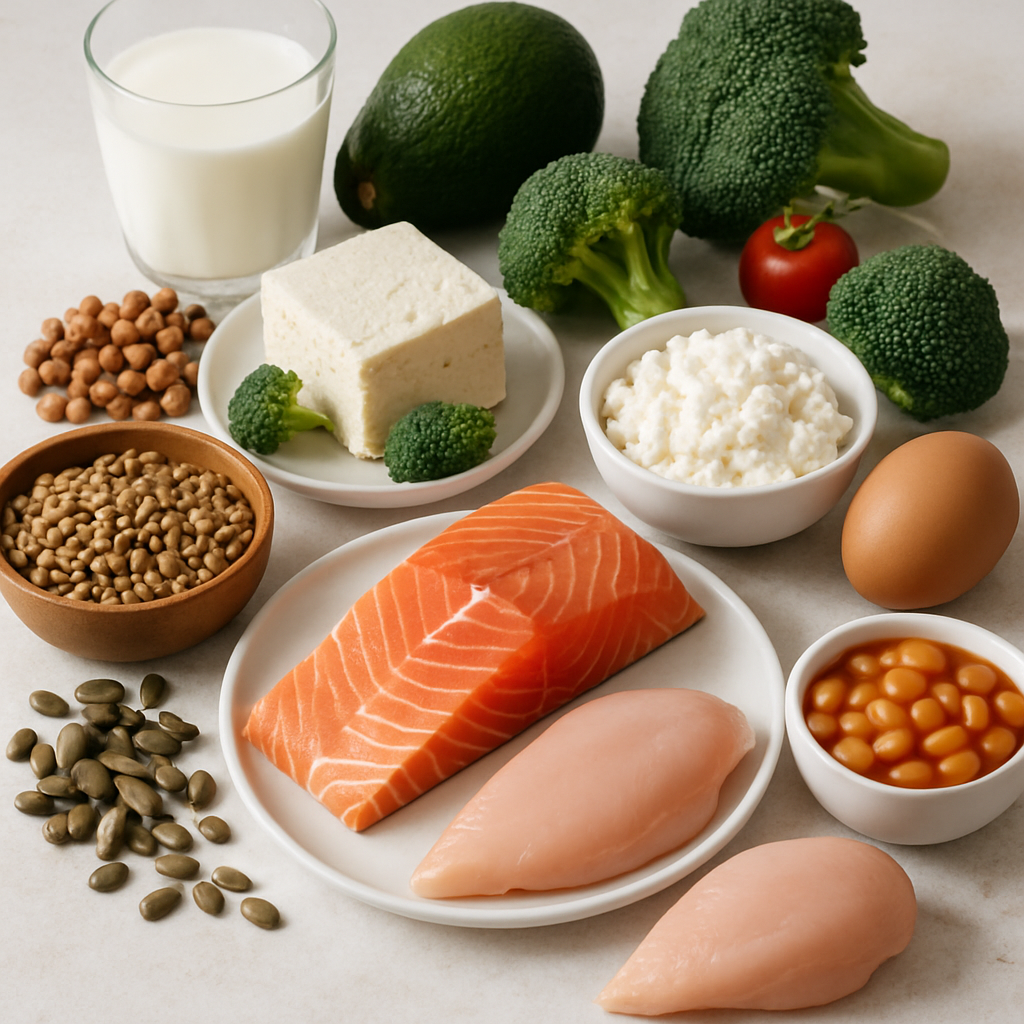
Eat a variety of protein sources. Rotating between meat, fish, eggs, dairy, legumes, tofu, tempeh, and wholegrains naturally covers your amino acid bases without any deliberate combining.
Don't rely on a single plant protein. Rice protein alone is low in lysine; pea protein alone is lower in methionine. Together, they complement each other well — which is why most quality plant protein blends use both.
Spread your protein through the day. Research consistently shows that distributing protein across meals (rather than eating most of it in one sitting) supports muscle protein synthesis better. Aiming for roughly 25–40g per meal is a reasonable starting point for most adults.
Pay attention to leucine-rich foods if muscle building or retention is a goal: eggs, chicken, tuna, Greek yoghurt, cottage cheese, edamame, and lentils are all solid sources.
Prepare legumes properly. Soaking dried beans overnight and cooking them thoroughly reduces antinutrients and improves digestibility significantly.
Practical Takeaways
- The gram count on your tracker is useful, but it's not the whole picture — amino acid profile and digestibility also shape what your body actually gets from the protein you eat
- Complete proteins (eggs, dairy, meat, fish, soy, quinoa) provide all nine essential amino acids in one go; incomplete proteins can be combined to achieve the same effect
- Leucine is particularly important for muscle protein synthesis — if this is a goal, prioritise leucine-rich foods or combinations
- Older adults and plant-based eaters have the most to gain from being thoughtful about protein quality
- Variety is the simplest strategy — eating from a range of sources covers most of the bases without any complicated tracking
If you want to hit your protein targets from the right sources without spending hours planning meals, Macrology generates macro-perfect meal plans in seconds — https://macrology.app/signin
Want meals like this planned to your exact macros?
Macrology generates a personalised meal plan in seconds — breakfast, lunch, dinner and snacks, all hitting your daily targets.
Start your free 14-day trial