Understanding Micronutrients: Why Vitamins and Minerals Matter Beyond Your Macros
# Understanding Micronutrients: Why Vitamins and Minerals Matter Beyond Your Macros
Most people tracking their food are laser-focused on protein, carbs, and fat — and fair enough, macros matter. But there's an entire layer of nutrition quietly running in the background that determines how well you sleep, how fast you recover, how sharp you feel at 3pm, and whether your immune system actually holds up when everyone around you is ill.
Micronutrients don't get the same airtime as macros, but they're arguably just as important to how you feel day to day.
What are micronutrients, exactly?
The term "micronutrient" simply refers to vitamins and minerals — the compounds your body needs in relatively small amounts but cannot function properly without.
Unlike macronutrients (protein, carbohydrates, and fat), micronutrients don't provide energy directly. Instead, they act as the machinery that makes everything else work. They help your body convert food into usable fuel, build and repair tissue, regulate hormones, transmit nerve signals, and maintain a functioning immune system.
There are 13 essential vitamins — including vitamins A, C, D, E, K, and the eight B vitamins — and at least 16 essential minerals, such as calcium, iron, magnesium, zinc, and potassium. Each one has specific roles, and most of them can't be manufactured by the body in meaningful quantities, which means they have to come from food.
Why macro tracking alone can miss the bigger picture
Here's something worth sitting with: it's entirely possible to hit your protein, carb, and fat targets every day and still have significant nutritional gaps.
A diet built around processed foods, protein shakes, and the same five meals on rotation might look fine on paper — macros ticked, calories in range — but it could be low in magnesium, vitamin D, zinc, or folate. Over time, those shortfalls add up.
Micronutrient deficiencies don't always show up dramatically. You're unlikely to develop scurvy from mildly low vitamin C in 2025. But what you might experience is persistent fatigue, slower recovery from exercise, brittle nails, low mood, frequent colds, or difficulty concentrating. These are the kinds of symptoms people tend to chalk up to stress or poor sleep, when the missing piece might actually be nutritional.
Dietary variety is one of the most reliable predictors of adequate micronutrient intake — more so than any single "superfood." Research published in the European Journal of Nutrition has consistently linked dietary diversity with better micronutrient status across populations.
What the evidence shows
The science on micronutrients is extensive, and a few findings stand out as particularly relevant to everyday life in the UK.
Vitamin D is arguably the most pressing concern for people living in Britain. Public Health England recommends that everyone consider supplementing vitamin D during autumn and winter, because the angle of sunlight between October and March isn't sufficient for the skin to synthesise it. Studies estimate that around 1 in 5 people in the UK have low vitamin D levels, which is associated with reduced immune function, lower bone density, and poorer mood.
Iron deficiency is the most common nutritional deficiency worldwide, particularly affecting women of reproductive age. Even without full anaemia, low iron stores (low ferritin) can cause fatigue, impaired concentration, and reduced exercise performance.
Magnesium is involved in over 300 enzymatic reactions in the body, including muscle contraction, sleep regulation, and blood sugar control. UK dietary surveys suggest a significant proportion of adults don't meet the reference nutrient intake for magnesium — largely because it's found in foods like whole grains, legumes, and leafy greens that many people don't eat consistently.
Zinc plays a central role in immune function and protein synthesis. It's found in red meat, shellfish, seeds, and legumes, and deficiency is more common than many people realise, particularly in those following plant-based diets.
The most common micronutrient gaps in the UK
Based on the UK National Diet and Nutrition Survey, a few micronutrients consistently fall below recommended levels across the population:
- Vitamin D — widespread insufficiency, especially in winter months and among people with darker skin tones who require more sun exposure to synthesise it
- Iron — particularly low in women aged 19–64
- Magnesium — below reference intake in a large proportion of adults
- Folate (vitamin B9) — important for cell division and especially critical during early pregnancy; many people don't get enough from diet alone
- Iodine — often overlooked, but essential for thyroid function; dairy and white fish are the main dietary sources, and those avoiding them are at higher risk
- Potassium — most adults fall short of the recommended 3,500mg per day, which has implications for blood pressure and heart health
It's also worth noting that certain groups face elevated risk: people following vegan or vegetarian diets need to pay closer attention to B12, iron, zinc, calcium, and omega-3s. Older adults often absorb B12 and calcium less efficiently. Athletes have higher demands for iron, magnesium, and several B vitamins due to increased losses and turnover.
Do you need to track micronutrients obsessively?
Probably not. And there's a reasonable case that trying to track every micronutrient in detail would be both stressful and counterproductive for most people.
The good news is that variety and whole foods do most of the heavy lifting. A diet that regularly includes a range of vegetables, fruit, whole grains, legumes, nuts, seeds, dairy or fortified alternatives, and quality protein sources will cover most micronutrient needs without spreadsheets.
That said, awareness matters. Knowing which nutrients are harder to get — vitamin D in the UK, B12 if you're vegan, iron if you're a pre-menopausal woman — means you can make smarter choices without overhauling everything.
Supplements can fill genuine gaps, but they're not a substitute for food quality. The bioavailability of nutrients (how much your body actually absorbs and uses) is generally better from whole food sources than from isolated supplements, and food provides thousands of other compounds — phytonutrients, fibre, and antioxidants — that pills don't replicate.
How meal planning supports better micronutrient intake
One underrated benefit of thinking ahead about meals is that it naturally encourages variety. When you're improvising dinner at 6:30pm on a Tuesday, you tend to reach for the same things. When you plan ahead, you're more likely to rotate different protein sources, try a new grain, or throw a different vegetable into the mix.
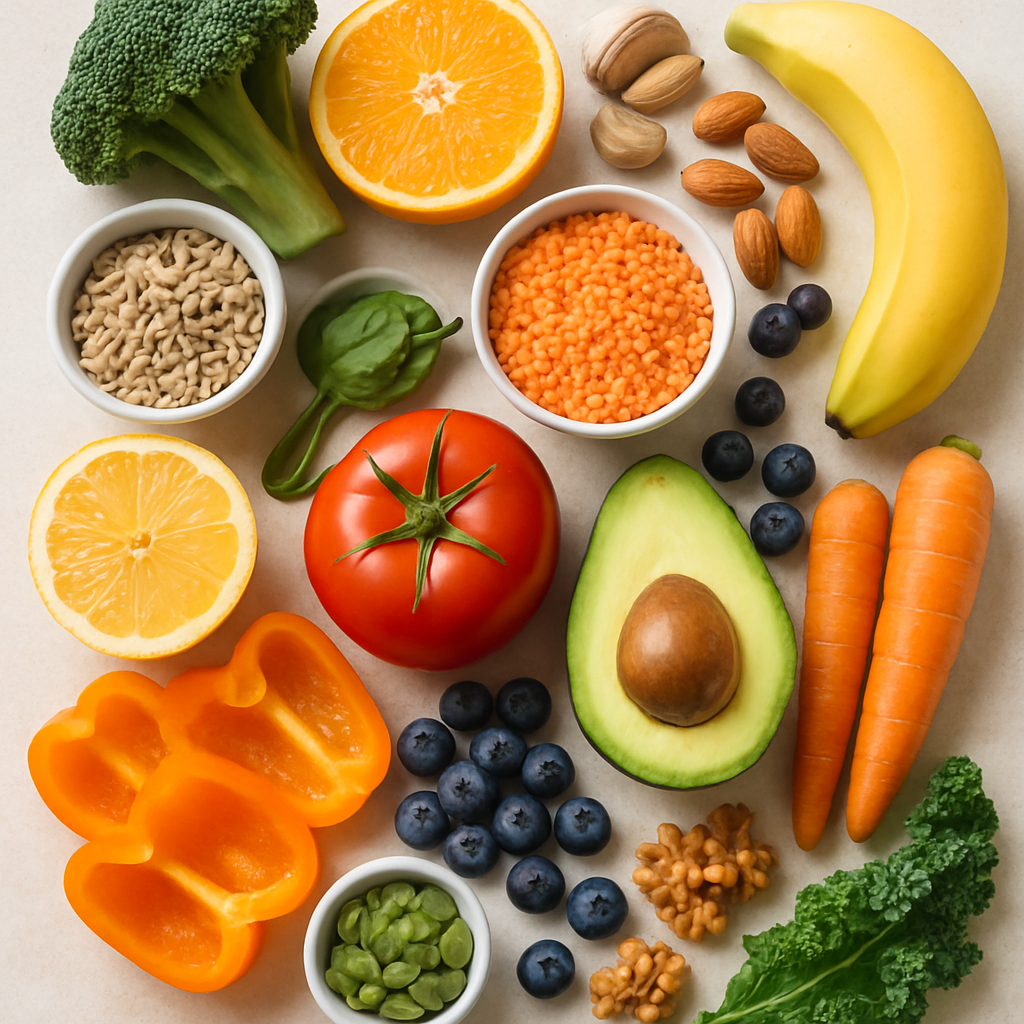
Colour is a practical shortcut here. Different coloured vegetables and fruits broadly reflect different families of micronutrients — orange and yellow foods tend to be rich in beta-carotene, dark leafy greens in folate and iron, red fruits in vitamin C, and so on. Eating a range of colours over the course of a week is a decent real-world proxy for micronutrient variety.
Building a weekly plan that intentionally includes different protein sources (eggs, fish, chicken, legumes, red meat in moderation), a variety of vegetables, and whole grains rather than always white refined versions goes a long way without requiring any detailed tracking.
Practical takeaways
Here are some specific, low-friction things worth considering:
- Supplement vitamin D from October to March — 10 micrograms (400 IU) daily is the NHS recommendation for adults in the UK
- If you eat little to no animal products, check your B12 status and consider a supplement; it's one deficiency where food sources alone reliably fall short for vegans
- Eat leafy greens a few times a week — spinach, kale, and rocket are good sources of folate, iron, vitamin K, and magnesium
- Include a source of vitamin C alongside plant-based iron sources (like spinach or lentils) — it significantly improves absorption of non-haem iron
- Vary your grains — swapping white rice or pasta for whole grain versions, quinoa, or oats occasionally increases your magnesium and B vitamin intake with minimal effort
- Add seeds to your diet — pumpkin seeds in particular are one of the best dietary sources of zinc and magnesium and are easy to throw into porridge, salads, or yoghurt
- If you're regularly tired, losing hair, or getting ill frequently, it may be worth asking your GP for a blood test to check iron, ferritin, and vitamin D levels
If you want your meals to cover your micronutrient bases as well as your macros, Macrology generates macro-perfect meal plans in seconds — [https://macrology.app/signin](https://macrology.app/signin)
Macros are a great starting point. But nutrition runs deeper than three numbers on an app — and understanding what else your body needs is one of the most practical things you can do for your long-term health and energy.
Want meals like this planned to your exact macros?
Macrology generates a personalised meal plan in seconds — breakfast, lunch, dinner and snacks, all hitting your daily targets.
Start your free 14-day trial