The Role of Manganese in the Body and Where to Find It in Food
# The Role of Manganese in the Body and Where to Find It in Food
Most people can rattle off why they need iron or calcium, but ask about manganese and you'll likely get a blank stare. It's one of those nutrients that quietly does a remarkable amount of work — yet rarely makes it onto anyone's radar.
What Is Manganese?
Manganese is an essential trace mineral, meaning your body needs it in small amounts but can't make it on its own — so it has to come from food. It's stored primarily in the bones, liver, kidneys, and pancreas, and it plays a supporting role in dozens of biological processes.
It's worth being clear from the start: manganese is not the same as magnesium. They're often confused, but they're entirely different minerals with different functions. Manganese (Mn) is a trace element; magnesium (Mg) is needed in much larger quantities. Easy to mix up, especially given the similar names.
In the UK, there's no official recommended daily intake for manganese, but the European Food Safety Authority suggests 3mg per day as an adequate intake for adults. Most people eating a varied diet hit this without really trying.
What Does Manganese Actually Do in the Body?
This is where it gets interesting. Manganese has several roles that make it genuinely important to everyday health.
It's a key component of antioxidant defence. Manganese is essential for an enzyme called manganese superoxide dismutase (MnSOD), which lives inside your cells' mitochondria and neutralises harmful free radicals. This is one of your body's primary lines of defence against oxidative stress — the kind of cellular damage linked to ageing and chronic disease.
It helps your body process nutrients. Manganese is involved in the metabolism of carbohydrates, amino acids, and cholesterol. It acts as a cofactor — essentially a helper — for various enzymes that break down these molecules and convert them into usable energy.
It supports bone formation. Manganese contributes to the production of cartilage and bone by helping synthesise proteoglycans — structural proteins found in connective tissue. It works alongside other minerals like calcium, zinc, and copper in this process.
It plays a role in blood sugar regulation. Manganese is involved in the function of enzymes related to insulin production and glucose metabolism. Some research suggests that people with type 2 diabetes tend to have lower blood manganese levels, though it's not yet clear whether this is a cause or consequence.
It's involved in wound healing and blood clotting. Manganese supports the production of prothrombin, a protein essential for normal blood clotting.
What the Evidence Shows
The research on manganese is genuinely interesting, though it's worth noting that much of the clinical work has been done on animals or in observational studies rather than large-scale human trials.
A 2018 review published in Nutrients found that MnSOD — the manganese-dependent antioxidant enzyme — plays a significant protective role against oxidative stress-related conditions, including certain cancers, cardiovascular disease, and neurodegenerative disorders. Deficiency in this enzyme's activity has been associated with increased disease risk, though supplementation research in humans is still in early stages.
On bone health, a small number of studies have found that women with osteoporosis tend to have lower blood manganese levels than those without the condition. Again, causality is tricky to establish here, but the association is consistent enough to be notable.
The research on manganese and blood sugar is perhaps the most nuanced. Manganese deficiency has been shown to impair insulin secretion in animal models, but the picture in humans is more complicated. Some studies show lower manganese levels in people with type 2 diabetes; others show higher levels. The relationship likely depends on a range of factors including diet, genetics, and gut health.
One important caveat: too much manganese can be harmful. Chronic overexposure — primarily seen in industrial settings through inhalation rather than diet — can affect the nervous system. From food alone, it's extremely unlikely to reach toxic levels.
Who Might Be at Risk of Deficiency?
True manganese deficiency from diet alone is considered rare. However, certain groups may have lower levels or increased needs.
People with digestive conditions such as Crohn's disease or inflammatory bowel disease may absorb manganese less efficiently. Those eating a diet heavily dominated by ultra-processed foods — which tend to be low in wholegrains, legumes, and nuts — may also fall short over time.
High intakes of calcium, iron, and phosphorus can inhibit manganese absorption, so someone taking large amounts of these minerals as supplements might inadvertently reduce how much manganese they absorb. It's one of the reasons a food-first approach to nutrition tends to work better than stacking individual supplements.
Interestingly, tea is a significant source of manganese in the UK diet — which means the average British tea drinker may be getting a meaningful contribution from their daily brew without knowing it.
Where to Find Manganese in Food
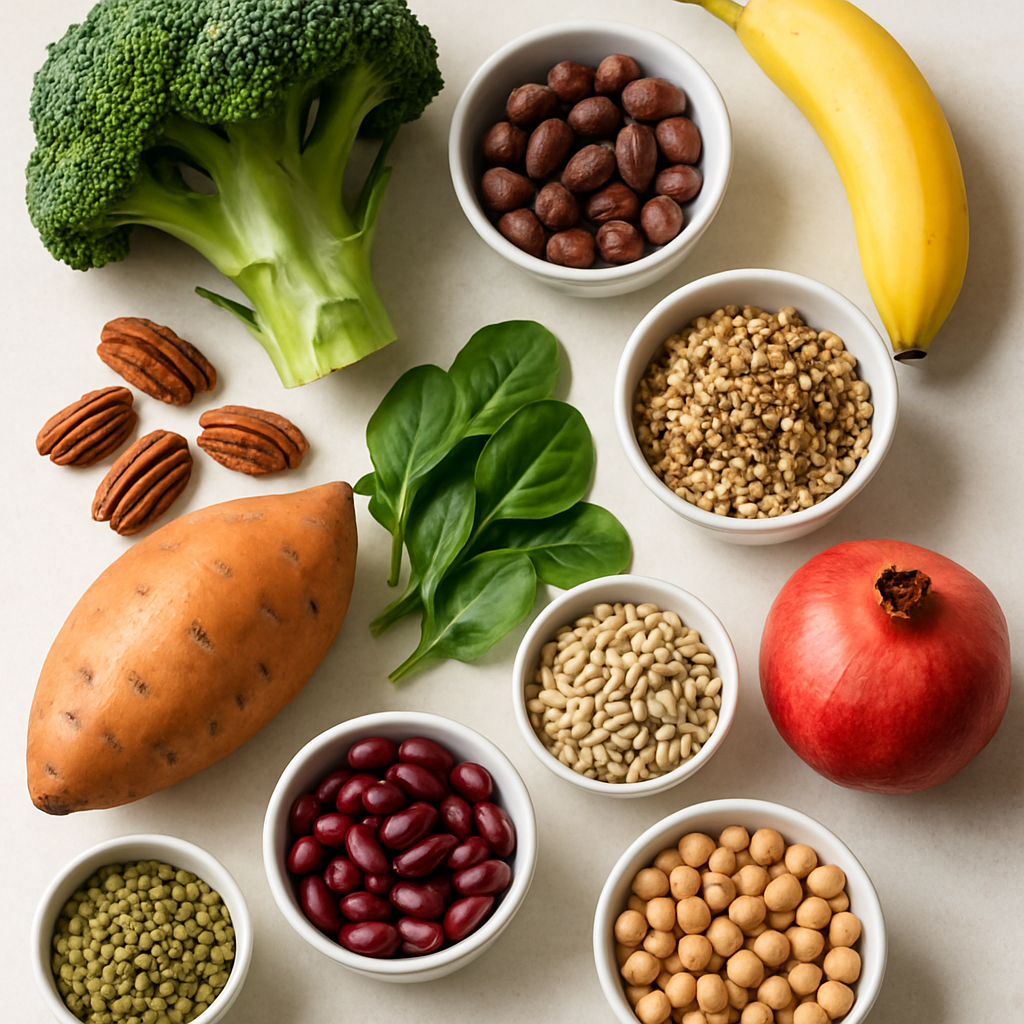
The good news is that manganese is found in a wide range of everyday foods, particularly plant-based ones. Here's where it shows up most reliably:
- Wholegrains — oats, brown rice, wholemeal bread, and wholewheat pasta are among the best sources. A bowl of porridge provides roughly 1.3mg of manganese.
- Nuts and seeds — hazelnuts, pecans, pine nuts, and pumpkin seeds are all excellent sources. A small handful of hazelnuts delivers around 1.6mg.
- Legumes — chickpeas, lentils, kidney beans, and soybeans all contain meaningful amounts. Lentils in particular are a reliable source at roughly 1mg per cooked serving.
- Leafy greens — spinach, kale, and Swiss chard contain manganese, though in smaller amounts than the above.
- Tea — black tea is one of the richest sources per serving in the British diet. A standard mug can contribute around 0.5–1mg.
- Pineapple — one of the more notable fruit sources, with around 1.5mg per cup of fresh pineapple.
- Spices — cloves, cinnamon, and black pepper are particularly high in manganese per gram, though you'd typically eat them in small quantities.
It's worth noting that wholegrains are far richer in manganese than refined grains. White rice has significantly less than brown rice; white bread delivers far less than wholemeal. Processing strips away much of the mineral content along with the bran and germ.
Manganese and Vegetarian or Plant-Based Diets
Interestingly, people following vegetarian or plant-based diets often have higher manganese intakes than meat-eaters, simply because they tend to eat more of the foods listed above — wholegrains, legumes, nuts, and vegetables.
The caveat here is phytic acid. Many plant foods that are high in manganese are also high in phytates, which can reduce mineral absorption. Soaking, sprouting, and fermenting legumes and grains can help reduce phytate content and improve manganese bioavailability.
This doesn't mean plant-based diets are deficient in manganese — the absorption reduction is modest, and plant-based eaters typically consume enough total manganese to compensate — but it's a useful thing to be aware of.
Practical Takeaways
You don't need to overhaul your diet to ensure adequate manganese intake. A few straightforward habits cover most of the bases:
- Swap refined grains for wholegrains where it's easy to do so — porridge instead of sugary cereal, brown rice instead of white, wholemeal bread instead of white.
- Eat legumes regularly — lentils, chickpeas, and beans are some of the most nutritionally dense, budget-friendly foods available. Aim for a couple of servings a week if you're not already there.
- Include a small handful of nuts or seeds — hazelnuts, pecans, or pumpkin seeds added to porridge, salads, or eaten as a snack.
- Enjoy your tea — if you're already a tea drinker, you're likely getting a decent contribution from that alone.
- If you take mineral supplements, be aware that high-dose calcium or iron supplements taken with meals can reduce manganese absorption. Taking them at a different time of day from your main meals can help.
If you want to hit your macro and micronutrient targets without spending hours tracking everything manually, Macrology generates macro-perfect meal plans in seconds — [https://macrology.app/signin](https://macrology.app/signin)
Manganese might not be the most glamorous nutrient in the lineup, but it's doing real, important work behind the scenes — and it turns out that eating well for manganese looks a lot like eating well in general.
Want meals like this planned to your exact macros?
Macrology generates a personalised meal plan in seconds — breakfast, lunch, dinner and snacks, all hitting your daily targets.
Start your free 14-day trial