The Difference Between Soluble and Insoluble Fibre — and Why You Need Both
# The Difference Between Soluble and Insoluble Fibre — and Why You Need Both
Most people know fibre is good for them. Far fewer know that "fibre" is actually an umbrella term for two very different things — and that eating plenty of one while neglecting the other can leave some real gaps in your health.
Understanding the distinction takes about five minutes, and it genuinely changes the way you think about building a meal.
What Is Dietary Fibre, Actually?
Fibre is the part of plant foods that your body can't fully digest. Unlike proteins, fats, and carbohydrates, fibre passes through most of your digestive system largely intact — but that doesn't mean it's doing nothing. Quite the opposite.
The two main categories — soluble and insoluble — behave completely differently once they're inside your gut, and they each deliver distinct benefits. Thinking of them as interchangeable is a bit like thinking a raincoat and an umbrella are the same thing because both keep you dry.
Both matter. But they work in entirely different ways.
Soluble Fibre: The One That Dissolves
Soluble fibre dissolves in water to form a thick, gel-like substance in your digestive tract. That might not sound glamorous, but this gel does some genuinely useful things.
As it moves through your small intestine, it slows the absorption of glucose — which helps keep blood sugar levels more stable after meals. It also binds to cholesterol particles and carries them out of the body before they can be absorbed, which is why soluble fibre is consistently linked to lower LDL (the so-called "bad") cholesterol in research.
Beyond that, soluble fibre is fermentable — meaning the bacteria in your large intestine feed on it and produce short-chain fatty acids as a byproduct. These fatty acids, particularly butyrate, are a primary fuel source for the cells lining your colon and play a role in reducing inflammation.
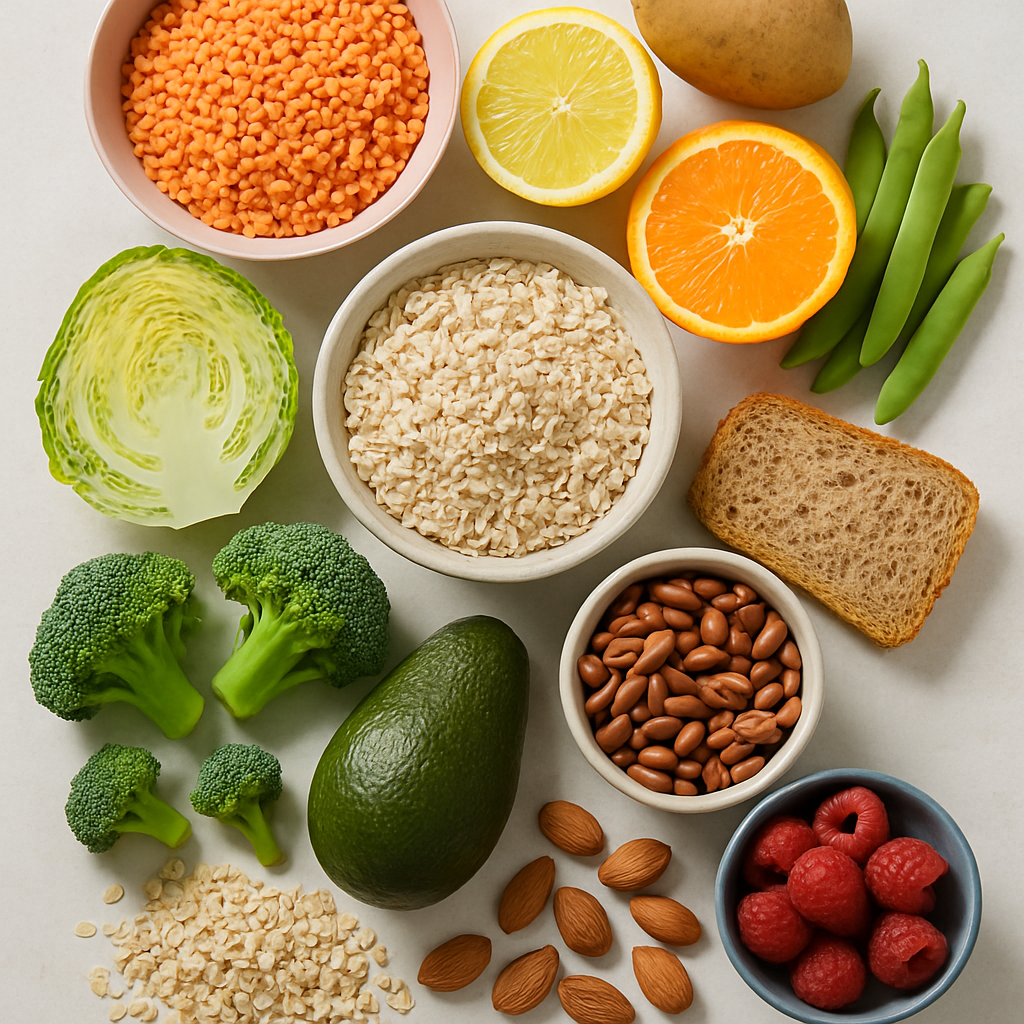
Good sources of soluble fibre include: - Oats and oat bran - Lentils and beans - Apples, pears, and citrus fruit - Carrots and sweet potatoes - Flaxseeds - Barley
Insoluble Fibre: The One That Doesn't
Insoluble fibre doesn't dissolve in water. Instead of forming a gel, it stays largely intact and adds bulk to your stool — which is a polite way of saying it keeps things moving through your digestive system efficiently.
This bulk-forming effect speeds up the transit of waste through your intestines, which reduces the amount of time potentially harmful substances spend in contact with your gut lining. That's one of the reasons a high-fibre diet is consistently associated with a lower risk of colorectal cancer in large population studies.
Insoluble fibre also helps prevent constipation — not by acting as a laxative, but by retaining water and making stools easier to pass. If you've ever noticed that eating more wholegrains or vegetables sorts out sluggish digestion, insoluble fibre deserves much of the credit.
Good sources of insoluble fibre include: - Wholegrain bread and pasta - Brown rice - Wheat bran - Nuts and seeds - The skins of fruits and vegetables - Cauliflower, courgette, and green beans
What the Evidence Shows
The research on fibre is some of the most consistent in nutrition science — which is a field not exactly known for consistent findings.
A landmark 2019 meta-analysis published in The Lancet, commissioned by the World Health Organisation, analysed data from 185 prospective studies and 58 clinical trials. It found that people with the highest fibre intakes had a 15–30% lower risk of dying from cardiovascular disease, stroke, type 2 diabetes, and colorectal cancer compared to those with the lowest intakes. The benefits were dose-dependent — meaning more fibre meant more protection, up to around 25–29g per day.
Separate research has strengthened the case for soluble fibre specifically. A meta-analysis in the American Journal of Clinical Nutrition found that for every 1g per day increase in soluble fibre intake, LDL cholesterol dropped by approximately 2.2 mg/dL. That's a meaningful reduction achieved through food alone.
Insoluble fibre has its own evidence base, particularly around gut transit time and colorectal health. The European Prospective Investigation into Cancer and Nutrition (EPIC) study — one of the largest dietary studies ever conducted — found that total fibre intake, and particularly cereal fibre (which is predominantly insoluble), was inversely associated with colorectal cancer risk.
It's worth noting that most studies measure total fibre intake rather than separating soluble from insoluble neatly, partly because many whole foods contain both. The key message from the evidence isn't "prioritise one type" — it's that most people aren't getting enough of either.
The UK's Fibre Gap
The recommended daily intake for adults in the UK is 30g of fibre per day, as set by the Scientific Advisory Committee on Nutrition (SACN). The average adult in Britain currently gets around 18g — barely half of what's recommended.
That gap isn't really surprising when you look at how many processed foods have had their fibre stripped out during manufacturing. White bread, white pasta, processed snacks, and convenience meals tend to be low in both types of fibre. Even people who consider themselves relatively healthy eaters often fall short simply because fibre-rich foods haven't been built into the structure of their meals.
Children's fibre intakes are even lower relative to their targets, which matters because healthy eating patterns established early tend to persist. But that's a separate conversation.
Why You Need Both — Not Just More of One
Here's where the "just eat more fibre" advice falls a little short. Someone who eats a lot of oats and beans but rarely eats wholegrains or vegetables with the skin on might be getting plenty of soluble fibre while under-eating insoluble fibre. The reverse is equally possible.
The two types aren't competing — they're complementary. Soluble fibre supports your cardiovascular system and feeds your gut microbiome. Insoluble fibre keeps your digestive system physically moving and reduces your risk of gut-related disease. You need the gel-forming effect and the bulk.
Fortunately, eating a varied diet naturally provides both. Most high-fibre plant foods contain a mix — oats, for example, are famous for their soluble fibre content (beta-glucan specifically), but they also contain insoluble fibre. Legumes are similar. The practical implication is that variety across different plant food groups does more for your fibre balance than doubling down on a single source.
Practical Takeaways
Hitting 30g of fibre a day sounds like a lot until you start building it deliberately into your meals. Here are some specific ways to get there across both types:
For soluble fibre: - Swap your usual breakfast cereal for porridge — one large bowl of oats gives you around 4g of beta-glucan alone - Add a portion of lentils or chickpeas to soups, stews, or salads several times a week - Keep the skin on apples, pears, and potatoes rather than peeling them - Use flaxseed — a tablespoon stirred into yoghurt or added to smoothies adds around 2g of soluble fibre
For insoluble fibre: - Switch white bread, pasta, and rice for wholegrain versions — the difference in fibre content is substantial - Add a side of roasted or steamed vegetables to your main meals rather than treating them as optional - Snack on unsalted nuts and seeds rather than crisps or crackers
General principles: - Increase fibre intake gradually — going from 15g to 30g overnight can cause bloating and discomfort as your gut adjusts - Drink more water alongside the increase, since fibre absorbs water and needs it to work properly - Aim for variety rather than perfection — five or six different plant foods a day is a useful rough target
If you want a meal plan that naturally hits your fibre targets without having to think about it, Macrology generates macro-perfect meal plans in seconds — https://macrology.app/signin
Want meals like this planned to your exact macros?
Macrology generates a personalised meal plan in seconds — breakfast, lunch, dinner and snacks, all hitting your daily targets.
Start your free 14-day trial