Phosphorus, Potassium and Chloride: The Electrolytes Most People Never Think About
# Phosphorus, Potassium and Chloride: The Electrolytes Most People Never Think About
Everyone's heard of electrolytes — usually in the context of sports drinks and sweaty gym sessions. But the conversation almost always stops at sodium and maybe magnesium, leaving three of the most biologically active minerals on the planet almost entirely unmentioned.
Phosphorus, potassium, and chloride are doing extraordinary things inside your body right now. And most people couldn't tell you where to find them, what they do, or whether they're getting enough.
---
What even are electrolytes?
The word "electrolyte" sounds more like a chemistry lesson than something relevant to what you had for breakfast, but the concept is simple. Electrolytes are minerals that carry an electrical charge when dissolved in fluid — and that charge is what allows your nerves to fire, your muscles to contract, and your cells to maintain their shape and function.
Your body runs on electrical signals. Every heartbeat, every thought, every time you reach for your cup of tea — all of it depends on electrolytes moving in and out of cells at precisely the right moments.
The reason sodium gets so much attention is partly because it's in almost everything we eat, and partly because high intake is linked to raised blood pressure. But sodium doesn't work in isolation. It's part of a system, and that system includes potassium, chloride, and phosphorus — all playing their own irreplaceable roles.
---
Potassium: sodium's essential counterpart
If sodium is the mineral everyone worries about having too much of, potassium is arguably the one most people are quietly under-consuming. UK dietary surveys consistently show that average potassium intakes fall below the recommended 3,500mg per day, particularly among adults eating a diet heavy in processed food.
Potassium sits predominantly inside your cells, while sodium sits outside them. The movement between these two — driven by something called the sodium-potassium pump — generates the electrical gradients that make nerve and muscle function possible. Without adequate potassium, this balance shifts, and the effects can range from muscle weakness and fatigue to irregular heart rhythms in more serious cases.
Beyond its electrical role, potassium helps to blunt the blood pressure-raising effects of sodium. Research published in the British Medical Journal found that higher dietary potassium intake was associated with lower blood pressure, independent of sodium consumption. This doesn't mean potassium cancels out a high-salt diet, but it does suggest the ratio between the two minerals matters more than sodium alone.
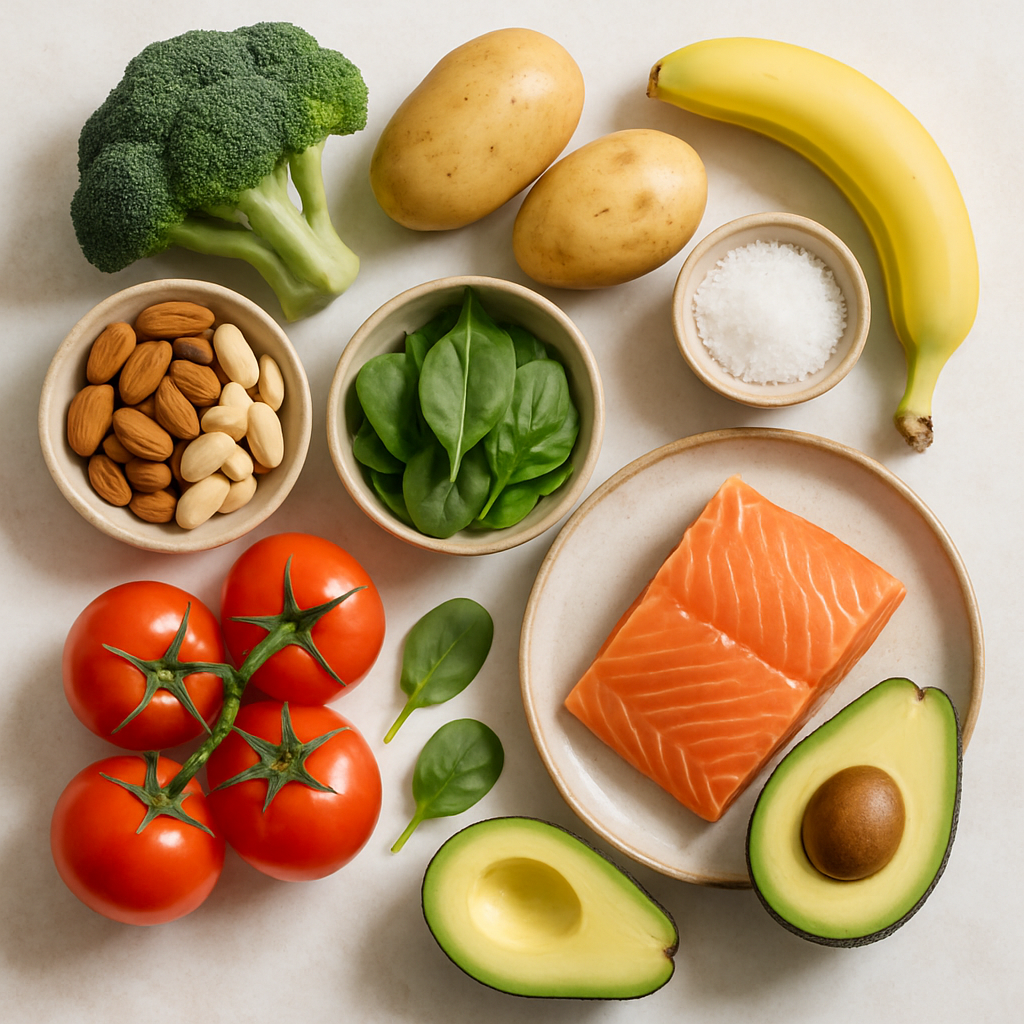
The best sources aren't the exotic ones you might expect. Bananas get the glory, but potatoes (particularly with the skin), beans, lentils, spinach, and even yoghurt are all excellent sources that fit easily into everyday eating.
---
What the evidence shows
The research on these three minerals is more nuanced than headlines tend to suggest, so it's worth unpacking what we actually know.
On potassium, the evidence is fairly consistent: most people in the UK aren't getting enough, and higher intakes are linked to better cardiovascular outcomes and lower stroke risk. A meta-analysis in the Journal of the American College of Cardiology found that increasing potassium intake was associated with a 24% reduction in stroke risk.
On phosphorus, the picture is more complicated. Deficiency is rare in people eating a varied diet — phosphorus is in almost everything — but there's growing interest in whether the form of phosphorus we eat matters. Phosphorus from animal sources and additives (used heavily in processed foods) is absorbed at a much higher rate than phosphorus from plant sources. Some research suggests chronically elevated phosphate levels may be linked to cardiovascular risk, though this evidence is largely drawn from people with kidney disease and shouldn't be extrapolated too broadly.
On chloride, it's the least-studied of the three, largely because it's so tightly bound to sodium in our diet. Most chloride comes from table salt (sodium chloride), meaning that anyone eating a typical Western diet is almost certainly getting enough. The more interesting question is whether chloride plays independent roles beyond maintaining fluid balance — and early research suggests it may be involved in immune function and digestion, though this area is still developing.
---
Phosphorus: the unsung structural mineral
Phosphorus doesn't tend to come up in nutrition conversations unless you have a kidney condition, but it deserves more mainstream attention. Around 85% of the body's phosphorus is stored in bones and teeth, where it works alongside calcium to maintain structural integrity. The remaining 15% is doing some of the most important biochemical work in your body.
Phosphorus is a core component of ATP — adenosine triphosphate — which is essentially the body's energy currency. Every time a cell needs energy, it draws on ATP. Phosphorus is also part of DNA and RNA, meaning it's fundamental to cell repair and replication.
Deficiency is genuinely uncommon in healthy adults, because phosphorus is found in meat, fish, dairy, eggs, nuts, seeds, and wholegrains. But there are specific groups at higher risk: people with certain malabsorption conditions, those on very restrictive diets, and people taking medications such as antacids that bind to phosphorus in the gut can all end up with lower-than-optimal levels.
The more practical consideration for most people is ensuring the overall diet is varied enough to support bone health — not just focusing on calcium in isolation, but getting the full range of minerals that bone tissue actually requires.
---
Chloride: the mineral hiding in plain sight
Chloride is one of those nutrients that almost never appears on a food label unless it's in the context of salt. Yet it's the most abundant negatively charged electrolyte in the body, and it does far more than simply pair up with sodium.
In the stomach, chloride is used to produce hydrochloric acid — the acid that breaks down protein and activates digestive enzymes. Without adequate chloride, digestion would be significantly compromised. Chloride also plays a key role in maintaining the electrical neutrality of cells and is involved in the transport of carbon dioxide from tissues to the lungs.
Because chloride is so closely tied to sodium intake, genuine deficiency is extremely rare in people eating a normal diet. The more relevant issue is whether people who are significantly reducing their sodium intake for medical reasons are monitoring their chloride levels, though this is typically managed in a clinical context.
For most people, the practical takeaway is simple: chloride looks after itself, as long as the overall diet isn't severely restricted.
---
Who might need to pay closer attention
For the majority of healthy adults, these three electrolytes balance out naturally across a varied diet. But there are situations where it's worth being more mindful.
People with kidney disease need to carefully manage phosphorus and potassium, as impaired kidneys struggle to excrete excess amounts, leading to potentially dangerous accumulations. This is a clinical matter that requires professional guidance, not something to self-manage.
Athletes training at high intensity — particularly in hot conditions — lose significant amounts of potassium and chloride through sweat. If recovery nutrition is built around highly processed sports products rather than real food, it's possible to replenish sodium while still falling short on potassium.
People eating very low-calorie or highly restrictive diets may also fall short on phosphorus and potassium simply due to inadequate overall food intake. This is one of the less-discussed consequences of very aggressive calorie restriction.
Older adults often have lower potassium intakes due to reduced appetite or limited food variety, and this can compound the cardiovascular and bone health challenges that come with ageing.
---
Practical takeaways
The good news is that eating to support these three electrolytes doesn't require a specialist diet or any supplements for most people. It mostly comes down to food variety.
- To support potassium: eat plenty of vegetables (especially potatoes, spinach, and squash), legumes, dairy, and fruit. These foods make potassium easy to hit without counting anything.
- To support phosphorus: a diet that includes animal protein, dairy, or plant-based alternatives like tofu, seeds, and wholegrains will cover your needs without any effort.
- To support chloride: as long as you're eating a broadly normal diet, you're almost certainly fine. No special action needed.
The one thing worth remembering across all three is that variety is doing most of the work. A diet that relies heavily on ultra-processed food may technically contain phosphorus and chloride (often in additive form), but it's likely to fall short on potassium — the one electrolyte most people in the UK are actually under-consuming.
If you want to build a diet that naturally hits your electrolyte and macro targets without needing to track every mineral manually, Macrology generates macro-perfect meal plans in seconds — https://macrology.app/signin
Want meals like this planned to your exact macros?
Macrology generates a personalised meal plan in seconds — breakfast, lunch, dinner and snacks, all hitting your daily targets.
Start your free 14-day trial