The Role of Leucine in Muscle Protein Synthesis: What You Need to Know
# The Role of Leucine in Muscle Protein Synthesis: What You Need to Know
You eat enough protein, you train consistently, and yet something still feels off about your progress. The issue might not be how much protein you're eating — it might be which amino acid is doing the heavy lifting.
Leucine is the amino acid that acts as the trigger for muscle building, and understanding how it works can genuinely change the way you think about your nutrition.
What Is Leucine and Why Does It Stand Out?
Protein is made up of 20 amino acids, nine of which are essential — meaning your body can't make them and you need to get them from food. Leucine is one of three branched-chain amino acids (BCAAs), alongside isoleucine and valine.
What makes leucine different from the other eight essential amino acids is its unique ability to directly activate a pathway called mTORC1 (mechanistic target of rapamycin complex 1). This is the primary molecular switch that tells your muscle cells to start building new protein. No other amino acid does this as powerfully or as consistently.
Think of leucine less like a building block and more like a foreman on a building site — it's the signal that gets construction started, even if the other materials (amino acids) do the actual building.
How Leucine Triggers Muscle Protein Synthesis
When you eat protein, your body breaks it down into individual amino acids and absorbs them into the bloodstream. Once leucine levels in the blood rise above a certain threshold, it activates mTORC1, which then switches on the machinery responsible for muscle protein synthesis (MPS) — the process of building new muscle tissue.
This is sometimes called the leucine threshold. Research suggests that hitting roughly 2–3 grams of leucine per meal is enough to maximally stimulate this response in most healthy adults. Below that threshold, the anabolic signal is blunted, even if you've eaten a decent amount of total protein.
This explains why not all proteins are created equal. Two meals could contain identical amounts of protein in grams, but if one delivers more leucine, it will trigger a stronger muscle-building response.
What the Evidence Shows
The research on leucine is unusually consistent for a nutrition topic. A landmark study by Norton and Layman (2006) established that leucine plays a regulatory role in MPS that goes beyond its contribution as a building block — it's actively signalling the process to begin.
More recent work, including research published in the Journal of Nutrition, has confirmed that leucine-rich proteins produce a greater MPS response than leucine-poor proteins, even when total protein intake is matched. This has been demonstrated in both younger adults and older populations, where the leucine threshold appears to be even more important because ageing blunts the anabolic sensitivity of muscle tissue.
A study by Wall et al. (2013) found that enriching a lower-quality protein source with extra leucine brought its MPS response closer to that of whey — suggesting leucine content, not just total protein, is the key variable.
There's also evidence that the timing and distribution of leucine across meals matters. Rather than loading all your protein into one or two sittings, spreading leucine-containing meals throughout the day appears to support a more consistent anabolic signal.
Which Foods Are High in Leucine?
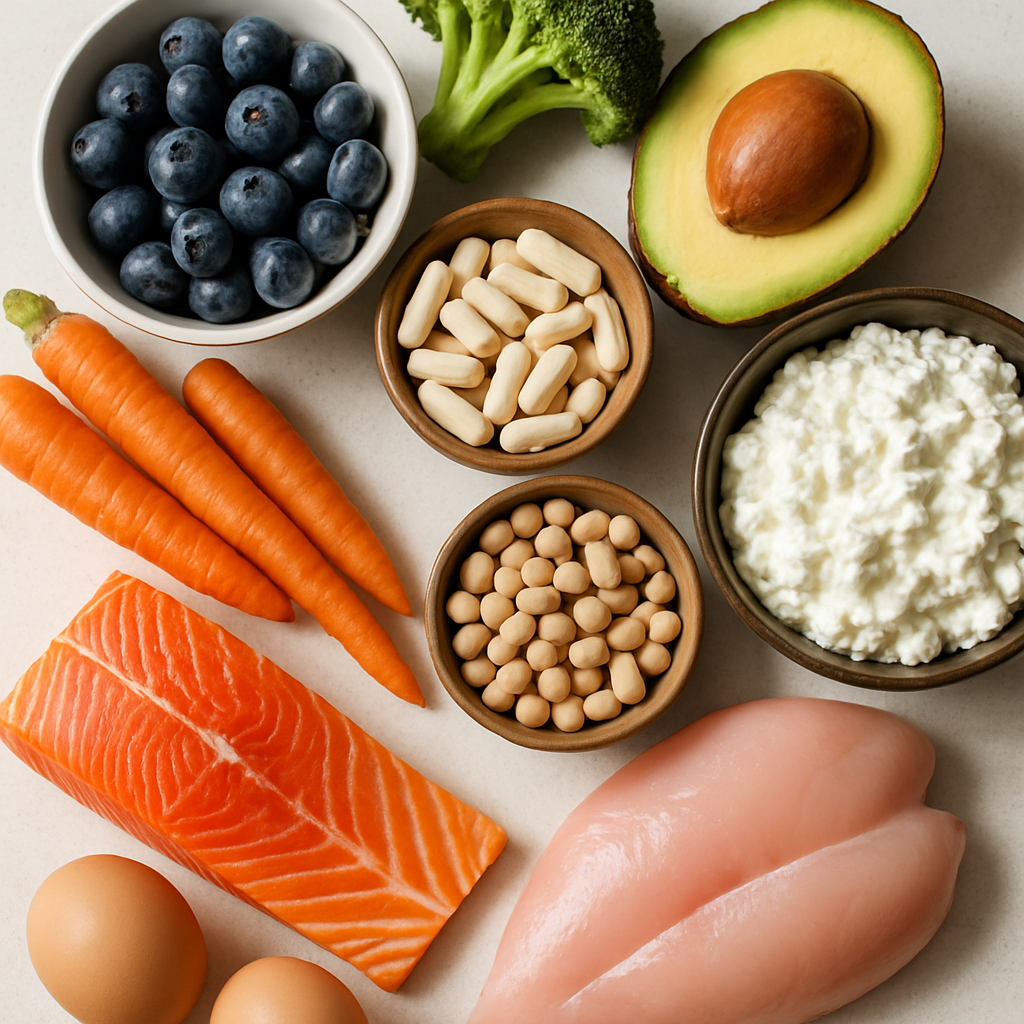
Not all protein foods deliver leucine in the same quantities. Animal-based proteins tend to be the richest sources, which is one reason they've consistently outperformed plant proteins in MPS studies — though this gap can be closed with smart food choices.
High-leucine animal sources include: - Whey protein (roughly 10–11% leucine by weight — the highest of any common protein source) - Chicken breast (around 7–8% leucine) - Eggs (around 8–9% leucine) - Beef and pork (around 7–8% leucine) - Salmon and tuna (around 7% leucine)
Plant-based sources with respectable leucine content: - Soy protein isolate (around 7–8% leucine — the standout plant option) - Lentils and chickpeas (lower overall, but still contribute meaningfully) - Tofu and tempeh (solid choices, especially tempeh) - Pumpkin seeds and hemp seeds (useful additions to a plant-based diet)
For plant-based eaters, hitting the leucine threshold per meal typically requires slightly larger portions of protein or combining multiple sources. A meal of lentils and rice, for example, can absolutely hit the threshold — it just requires attention to portion size.
The Leucine Threshold in Practice
So what does 2–3 grams of leucine actually look like on a plate? It's less daunting than it sounds.
A 150g chicken breast delivers around 3.5 grams of leucine. Three medium eggs provide roughly 2 grams. A 30g serving of whey protein powder typically contains around 3 grams. A 200g portion of firm tofu sits at around 2 grams.
The practical implication is that most people eating adequate total protein across regular meals are already hitting this threshold — but it's worth checking if you're eating smaller, low-protein meals and wondering why your results have stalled.
For older adults in particular, aiming for at least 3 grams of leucine per meal is a genuinely useful target, because ageing muscle becomes less responsive to lower leucine doses. This is sometimes called anabolic resistance, and it's one reason protein needs increase with age.
Common Misconceptions Worth Addressing
"More leucine is always better." Not quite. Once you've hit the threshold needed to maximally stimulate MPS, additional leucine in the same meal doesn't produce a proportionally greater response. The signal is either triggered or it isn't. This is why leucine supplements on their own, taken without sufficient other amino acids, are unlikely to produce meaningful muscle gains.
"BCAAs are the same as leucine." BCAA supplements typically contain leucine, isoleucine, and valine in a 2:1:1 ratio. Leucine is doing most of the work, but BCAAs without a complete amino acid profile (i.e., without food or a complete protein source) don't provide the building blocks needed to actually construct muscle tissue. The signal without the materials doesn't get very far.
"Plant proteins can't build muscle effectively." The evidence suggests the leucine content and overall amino acid profile matter more than the source itself. Soy, in particular, performs strongly. The key for plant-based eaters is hitting adequate leucine per meal and total protein per day — both of which are absolutely achievable.
Practical Takeaways
Here's what's actually worth acting on:
- Aim for 2–3 grams of leucine per meal rather than fixating solely on total daily protein. For most people eating adequate protein, this happens naturally — but it's worth being aware of if you eat smaller or more snack-based meals.
- Distribute protein across 3–4 meals per day rather than front- or back-loading it. This gives your muscles multiple anabolic signals throughout the day rather than one large one.
- Prioritise leucine-rich protein sources at each meal — eggs, chicken, fish, dairy, or soy-based options for plant-based eaters. If you're eating lower-leucine foods, increase the portion size accordingly.
- Older adults — aim for the higher end of the leucine range (closer to 3–4g per meal) to counteract anabolic resistance.
- Don't overthink supplementation. If you're already eating enough whole food protein across the day, leucine supplements are unlikely to add much. Focus on food first.
If you want to make sure every meal hits the right leucine and macro targets without obsessing over the numbers yourself, Macrology generates macro-perfect meal plans in seconds — https://macrology.app/signin
---
Getting the detail right on something like leucine is exactly the kind of thing that separates steady, consistent progress from spinning your wheels. It's not complicated once you know what to look for — and now you do.
Want meals like this planned to your exact macros?
Macrology generates a personalised meal plan in seconds — breakfast, lunch, dinner and snacks, all hitting your daily targets.
Start your free 14-day trial