How to eat fresh food for less than junk food
# How to Eat Fresh Food for Less Than Junk Food
There's a persistent idea that eating well costs more — that fresh food is a luxury and processed food is the budget option. It's an idea so widely believed that most people never question it. But when you actually run the numbers, it doesn't hold up nearly as well as you'd think.
The Myth of the Cheap Takeaway
The comparison people make is usually unfair from the start. A £1 bag of crisps or a £5 fast food meal feels cheap in the moment because you're paying for one item, once. But nobody lives on a single transaction. When you zoom out and look at the weekly cost of relying on processed or convenience food, the numbers shift considerably.
A 2021 analysis by the Food Foundation found that the least healthy foods in the UK cost, on average, less per calorie than healthier options — but this comparison falls apart when you measure by nutritional value rather than raw energy. You can buy a lot of empty calories cheaply. Buying satisfaction, protein, and fibre cheaply takes a bit more thought, but it's absolutely possible.
The real cost of fresh food is often inflated in people's minds by a few high-profile examples — organic berries, artisan sourdough, fancy Greek yoghurt. These aren't the benchmark. They're the exception.
What the Evidence Shows
Research from the Harvard T.H. Chan School of Public Health found that eating a nutritious diet costs, on average, about $1.50 more per day than a less nutritious one — roughly £1.20 at current exchange rates. That's the much-cited figure that gets used to argue healthy eating is expensive.
But that study measured the cost difference at the individual serving level. It didn't account for food waste, the fact that fresh ingredients often serve multiple meals, or the compounding cost of relying heavily on packaged convenience food across a full week.
More recent UK-specific research, including work by the Waste & Resources Action Programme (WRAP), found that the average UK household throws away around £730 worth of food per year — most of it fresh produce bought without a plan. The problem, in other words, isn't that fresh food is expensive. It's that fresh food bought without a plan often goes to waste. Fix the planning problem and the cost problem largely takes care of itself.
The Planning Advantage
This is where the gap between "fresh food is expensive" and "fresh food feels expensive" becomes clear. When you buy fresh ingredients with a specific plan for how they'll be used across the week, almost nothing gets wasted. When you buy them on impulse or out of vague good intentions, you're paying for food you'll throw away.
A simple weekly structure makes a significant difference. If you know Monday's dinner uses half a bag of spinach and Thursday's lunch uses the other half, you haven't wasted anything. If you buy the spinach on Monday hoping you'll use it eventually, there's a reasonable chance it's a bin liner by the weekend.
Batch cooking is the other side of this. Cooking a large portion of something like lentil soup, a rice and bean dish, or a roasted vegetable tray takes roughly the same time and energy as cooking a small portion — but the cost per meal drops dramatically. A £2 bag of red lentils can form the base of four to six portions of a genuinely filling, protein-rich meal.
The Ingredients That Punch Above Their Weight
Not all fresh or whole food is expensive. There's a core group of ingredients that consistently deliver excellent nutritional value at low cost, and building meals around these makes the whole enterprise far more affordable.
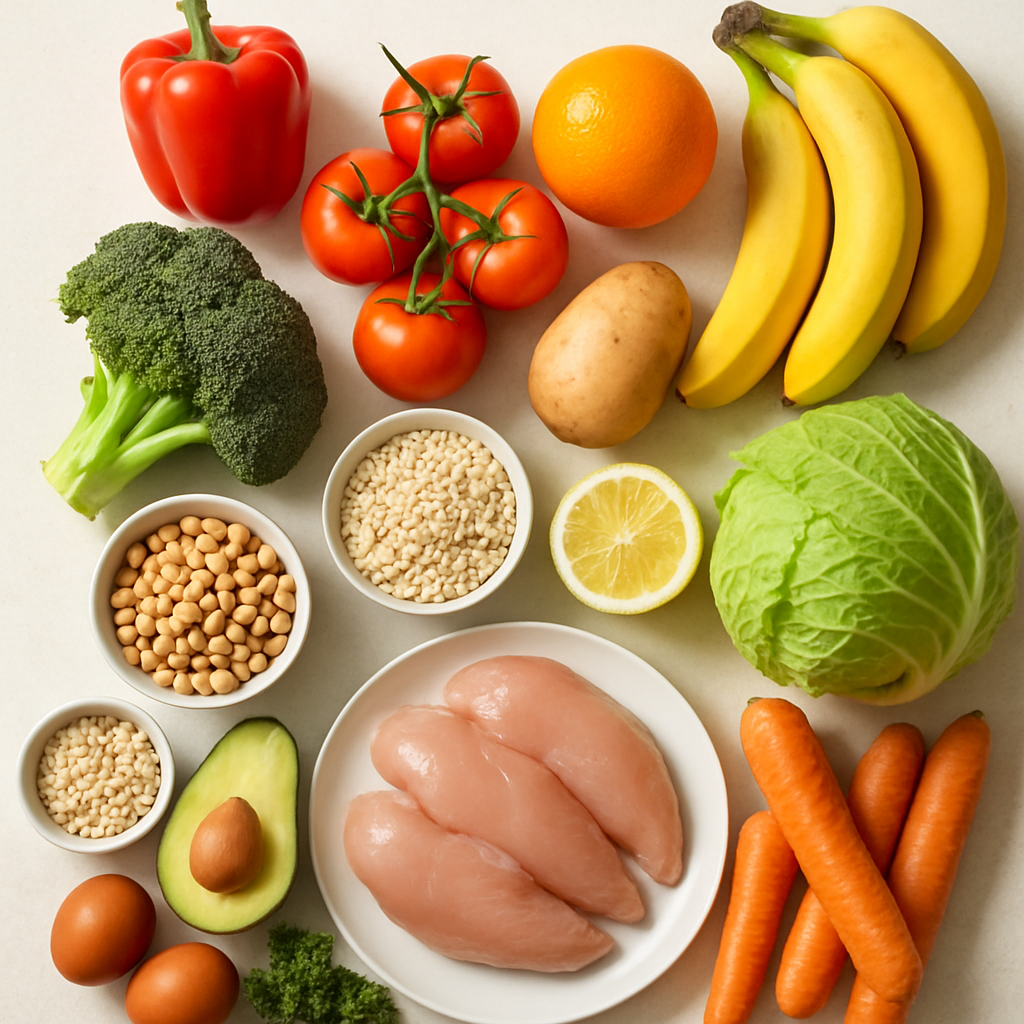
Eggs remain one of the best-value protein sources available — around £2–£3 for a dozen, providing roughly 6–7g of high-quality protein each. Tinned fish (sardines, mackerel, tuna) offers omega-3 fats, protein, and micronutrients for under £1 a tin. Frozen vegetables are nutritionally comparable to fresh — sometimes superior, because they're frozen at peak ripeness — and cost a fraction of the price. Dried pulses and legumes (lentils, chickpeas, black beans) are arguably the most cost-effective food on the planet per gram of protein and fibre.
On the produce side, bananas, carrots, onions, cabbage, and sweet potatoes are reliably cheap year-round. These aren't boring consolation prizes — they're genuinely versatile, flavourful foundations for dozens of different meals.
Why Junk Food Isn't Actually Cheap
The "junk food is cheaper" argument tends to ignore a few things that don't show up on the receipt.
First, satiety. Highly processed foods are often engineered to be palatable without being filling — a feature, not a bug, from a manufacturer's perspective. You eat more, buy more, spend more. A meal built around protein, fibre, and whole food ingredients tends to keep you full considerably longer, meaning you eat less across the day overall.
Second, portion reality. A £5 meal deal from a fast food chain provides one person with one meal. A £5 bag of chicken thighs, a £1 bag of rice, and a £1 bag of frozen broccoli provides four to six meals, depending on how you portion it. The unit economics only work in junk food's favour if you ignore how many people a fresh food purchase can feed and across how many meals.
Third, convenience isn't free. Ready meals, meal deal sandwiches, and packaged snacks all carry a significant convenience premium. You're paying for the packaging, the processing, the brand, and the shelf life. That premium is real and it adds up.
Making Fresh Food Practically Accessible
None of this works if it requires two hours of cooking every evening. The practical version of eating fresh food affordably is built on a handful of habits that don't demand much time.
Shop with a list based on a weekly plan. Even a rough plan — knowing broadly what you'll eat for dinners and lunches — cuts waste dramatically and removes the expensive habit of buying things you don't end up using.
Use your freezer properly. Bread, meat, batch-cooked meals, bananas for smoothies — the freezer is the single best tool for reducing fresh food waste. If you cook a big pot of something on Sunday, half of it can go straight into the freezer for a later week.
Prioritise cheap fresh staples over expensive aspirational ones. A diet built around eggs, oats, frozen veg, tinned fish, pulses, and cheap seasonal produce is genuinely excellent nutritionally and genuinely cheap financially. You don't need to optimise for the most impressive-sounding ingredients.
Understand your supermarket. Yellow sticker sections, own-brand products, and buying in larger quantities (for non-perishables especially) all reduce costs meaningfully. Many supermarkets also reduce fresh produce in the evenings — worth knowing if your schedule allows for it.
Practical Takeaways
Here's what this looks like in practice, this week:
- Pick three dinners you'll cook from scratch and plan the ingredients so they overlap (e.g., half a tin of chickpeas in one meal, the other half in a salad the next day)
- Buy frozen vegetables instead of fresh for anything that'll be cooked — the nutrition is equivalent and the saving is real
- Keep eggs, oats, and tinned pulses stocked as a baseline — they'll carry you through gaps when nothing else is planned
- Batch cook one thing on the weekend — a big pot of soup, a grain salad, a tray of roasted veg — and it pays off across three or four lunches
- Check the yellow sticker section at least once this week and freeze anything you find that fits your plan
The shift from feeling like fresh food is expensive to knowing it isn't doesn't happen all at once. It happens one week of actual planning at a time.
If you want to stop wasting food and start eating better without spending more, Macrology generates macro-perfect meal plans in seconds — https://macrology.app/signin
Want meals like this planned to your exact macros?
Macrology generates a personalised meal plan in seconds — breakfast, lunch, dinner and snacks, all hitting your daily targets.
Start your free 14-day trial