How to eat fresh food for less than junk food
# How to Eat Fresh Food for Less Than Junk Food
There's a persistent myth that eating well is expensive — that fresh food is a luxury and processed food is the budget option. It's a compelling story, but the numbers don't always back it up.
A bag of pasta, a tin of tomatoes, and some frozen spinach costs less than a meal deal. A pot of lentil soup made at home works out cheaper per portion than a packet of crisps and a chocolate bar. The idea that junk food wins on price is worth interrogating — because once you look at cost per meal rather than cost per item, the picture shifts considerably.
---
Why the "healthy food is expensive" myth persists
The myth has roots in real experience. Walk into a supermarket and a punnet of blueberries does cost more than a multipack of biscuits. Artisan sourdough is genuinely pricier than white sliced bread. So it's not that the observation is entirely wrong — it's that people tend to compare the most expensive versions of healthy food with the cheapest versions of processed food.
The comparison is skewed from the start. When researchers have looked at this properly — comparing foods on a cost-per-calorie or cost-per-serving basis — the results are more nuanced. A 2013 study published in the British Medical Journal found that eating a healthy diet costs, on average, about $1.50 more per day than an unhealthy one. That's real, but it's also much smaller than people assume — and crucially, it doesn't account for the cheapest healthy options.
Staples like oats, lentils, frozen vegetables, tinned fish, eggs, and dried beans are all nutritionally dense and genuinely inexpensive. The "healthy eating is expensive" narrative tends to ignore these foods entirely in favour of premium products that are health-adjacent at best.
---
What the evidence shows
Research on food cost and diet quality is more encouraging than the headlines suggest. A systematic review published in PLOS ONE analysed 27 studies across ten countries and found that the price difference between healthy and less healthy diets was modest — and in some studies, non-existent when home cooking was factored in.
The biggest driver of food cost isn't ingredient quality — it's convenience. Takeaways, meal kits, pre-cut vegetables, and individually packaged snacks all carry a significant premium. A ready meal from a supermarket can cost three to four times more per portion than the same dish made from scratch. That gap alone is often where budgets leak.
There's also the question of waste. The UK throws away roughly 6.4 million tonnes of food per year, according to WRAP (the Waste and Resources Action Programme). A significant portion of that is fresh food bought with good intentions but not used in time. Poor planning — not poor budgeting — is frequently what makes fresh food feel expensive. The lettuce that wilts at the back of the fridge isn't a failure of fresh food; it's a planning problem.
---
The foods that do the heavy lifting
Not all fresh or whole foods are created equal when it comes to cost. Some are genuinely expensive. Others are among the cheapest foods you can buy. Knowing the difference matters.
The affordable staples worth building meals around:
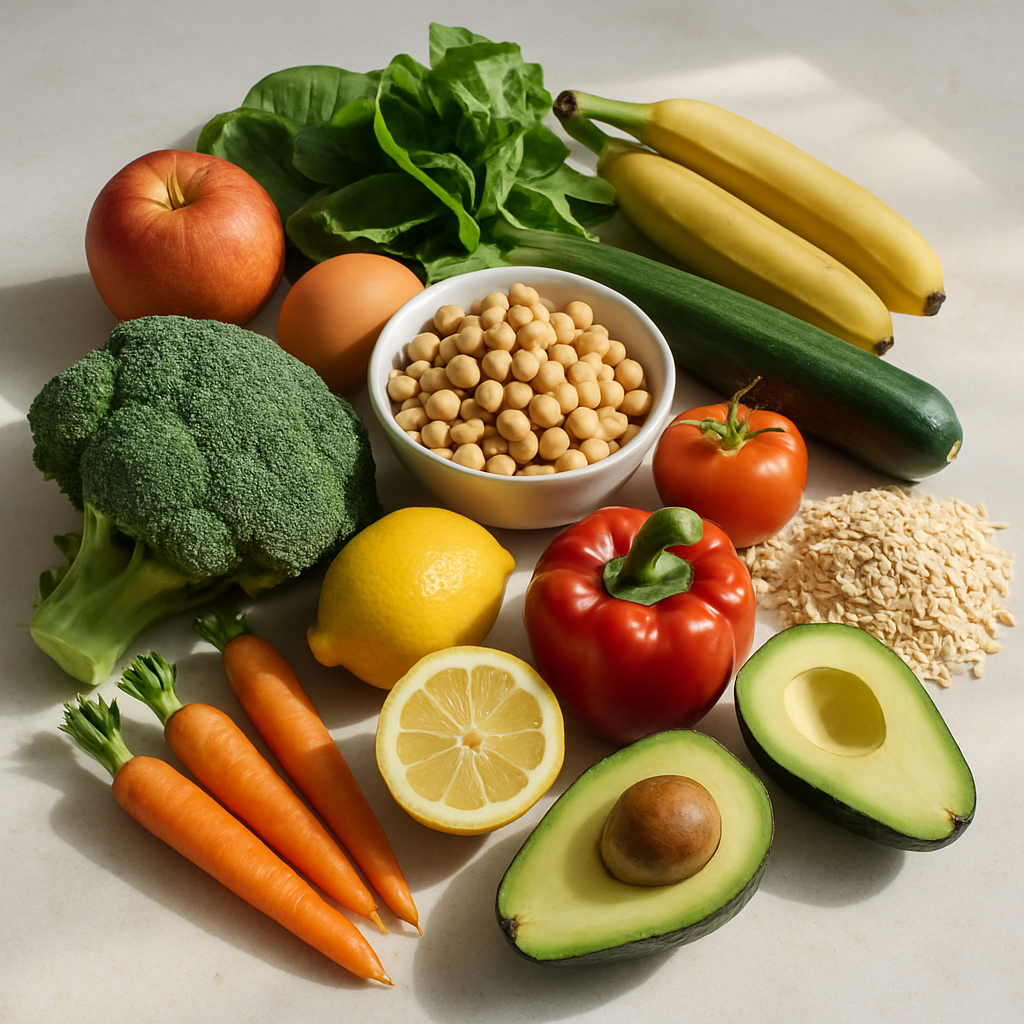
- Lentils and dried pulses — extraordinarily cheap per serving, high in protein and fibre, and they last indefinitely in a cupboard
- Tinned tomatoes, beans, and chickpeas — cheap, shelf-stable, and nutritionally solid
- Eggs — still one of the best-value complete protein sources available
- Frozen vegetables — often cheaper than fresh, nutritionally comparable (sometimes better, since they're frozen at peak ripeness), and no waste
- Oats — cheap, filling, and genuinely useful beyond breakfast
- Whole chicken or bone-in thighs — significantly cheaper than boneless breast, and more flavourful
- Seasonal vegetables — in-season produce is almost always cheaper than out-of-season, and it tends to taste better
These aren't compromise foods. A lentil dhal, a chickpea curry, an egg-fried rice with frozen peas — these are satisfying, nutritious meals that cost a fraction of a takeaway or even a supermarket ready meal.
---
Where junk food quietly costs more
It's worth looking at what processed food actually costs when you do the maths honestly. A multipack of crisps bought weekly adds up. A daily meal deal — sandwich, snack, drink — runs to around £4–£5, which is £20–£25 a week, or over £1,000 a year on lunches alone.
Junk food is also notably low in satiety. Ultra-processed foods tend to be calorie-dense but not particularly filling per calorie. They're engineered to be palatable rather than satisfying, which often means eating more. A lunch built around protein, fibre, and whole ingredients tends to keep hunger at bay for longer — which has real cost implications over time.
There's also the less-discussed issue of hidden costs. Relying heavily on ultra-processed food is associated with higher risks of several chronic conditions — cardiovascular disease, type 2 diabetes, certain cancers — according to a growing body of research including large cohort studies published in The BMJ and JAMA Internal Medicine. The long-term cost of poor diet, in terms of health outcomes and healthcare, is harder to quantify day-to-day but isn't zero.
---
The planning piece — where it all comes together
The single most effective way to eat well for less money is meal planning. It sounds obvious, but most people don't do it in any meaningful way — which is exactly why food costs more than it needs to.
Planning your meals before you shop means you buy what you'll actually use. It means you can batch cook — making a large pot of soup or a tray of roasted vegetables that stretches across multiple meals. It means you can build around cheaper staples and use up what's already in the cupboard rather than starting from scratch every time.
Research published in the International Journal of Behavioral Nutrition and Physical Activity found that meal planning was associated with better diet quality, greater food variety, and lower food expenditure. The mechanism is straightforward: planning reduces impulse purchases, reduces waste, and allows you to shop deliberately rather than reactively.
Batch cooking is particularly worth highlighting. Cooking a big pot of something — a lentil soup, a bean stew, a chicken and vegetable tray bake — on a Sunday evening takes maybe an hour and provides lunches or dinners for much of the week. The cost per portion drops significantly when you're cooking at scale.
---
Practical ways to shift your food spending today
These aren't sweeping lifestyle changes — they're small, concrete adjustments that compound over time:
Shop with a list — always. Going to the supermarket without a list is the fastest route to overspending and under-utilising what you buy. Write the list based on what you're actually going to cook.
Build at least two or three meals around pulses each week. Lentils, chickpeas, and black beans are genuinely among the cheapest foods available. A chickpea and spinach curry or a lentil bolognese costs a fraction of a meat-heavy equivalent and delivers plenty of protein and fibre.
Switch fresh veg for frozen where it makes sense. For cooked dishes — stir-fries, soups, pasta sauces — frozen vegetables work just as well as fresh and cost considerably less.
Cook once, eat twice. Any time you're cooking, make more than you need. The marginal effort is minimal; the savings add up.
Buy whole and prep yourself. A whole chicken costs less than the sum of its parts. A block of cheese costs less per gram than pre-grated bags. Pre-chopped vegetables carry a significant convenience premium — one that's easy to avoid with five minutes and a knife.
---
Making it easier with the right tools
None of this is difficult in principle, but it does require a bit of upfront thinking. The gap between knowing what to do and actually doing it consistently is where most people fall down — not because of willpower, but because the planning piece takes time and mental energy that most of us are short on.
If you want to eat well without spending more, Macrology generates macro-perfect meal plans in seconds — https://macrology.app/signin
Eating fresh, nutritious food for less than junk food is entirely achievable. The maths are on your side. It mostly comes down to building a few solid habits around planning, cooking in batches, and leaning on the staples that genuinely deliver — rather than reaching for the expensive shortcut.
Want meals like this planned to your exact macros?
Macrology generates a personalised meal plan in seconds — breakfast, lunch, dinner and snacks, all hitting your daily targets.
Start your free 14-day trial