How to eat fresh food for less than junk food
# How to Eat Fresh Food for Less Than Junk Food
There's a persistent myth that eating well costs a fortune — that fresh food is a luxury and processed food is the budget option. It's a convincing story, partly because it contains a grain of truth. But the full picture is far more interesting.
With a bit of planning and some straightforward knowledge about how supermarkets actually work, fresh food can cost the same as — or less than — the ultra-processed stuff that fills most trolleys.
The myth of the "cheap" processed meal
When people compare fresh food to junk food on price, they're usually comparing the wrong things. A frozen pizza for £2 looks cheap next to a bag of chicken thighs and vegetables. But the pizza feeds one person, maybe two at a stretch. Those chicken thighs and vegetables, cooked together, feed a family of four — and the leftovers stretch into lunch the next day.
Cost-per-meal is the metric that matters, not cost-per-item. Once you start calculating that way, fresh and whole foods start to look very different on a budget. A 1kg bag of rolled oats costs around £1.50 and delivers roughly 10 breakfasts. A box of branded cereal costs three times that for half the servings.
The processed food industry is also exceptionally good at making products feel like value — multibuys, large packaging, and familiar branding create the impression of a deal. Fresh food rarely gets that same marketing treatment, which distorts how we perceive relative cost.
What the evidence shows
Research consistently challenges the idea that healthier food is inherently more expensive. A 2021 analysis published in BMJ Open found that the healthiest dietary patterns were not significantly more expensive than less healthy ones when meal planning was factored in. The cost gap, where it existed, was largely explained by food waste and lack of planning — not the price of ingredients.
A landmark study from the Harvard School of Public Health estimated that eating a healthier diet costs, on average, around $1.50 more per day than an unhealthy one. That figure has been widely cited — but it's also been widely misunderstood. It compared the healthiest possible eating patterns with the least healthy, with no account for home cooking, batch cooking, or seasonal shopping. When those variables are controlled for, the gap narrows dramatically or disappears entirely.
The UK-specific data is telling too. Research from the Food Foundation has highlighted that while the most deprived households in the UK face genuine structural barriers to healthy eating, for households with access to a full supermarket, the barrier is far more often knowledge and planning than raw cost.
The building blocks of affordable fresh food
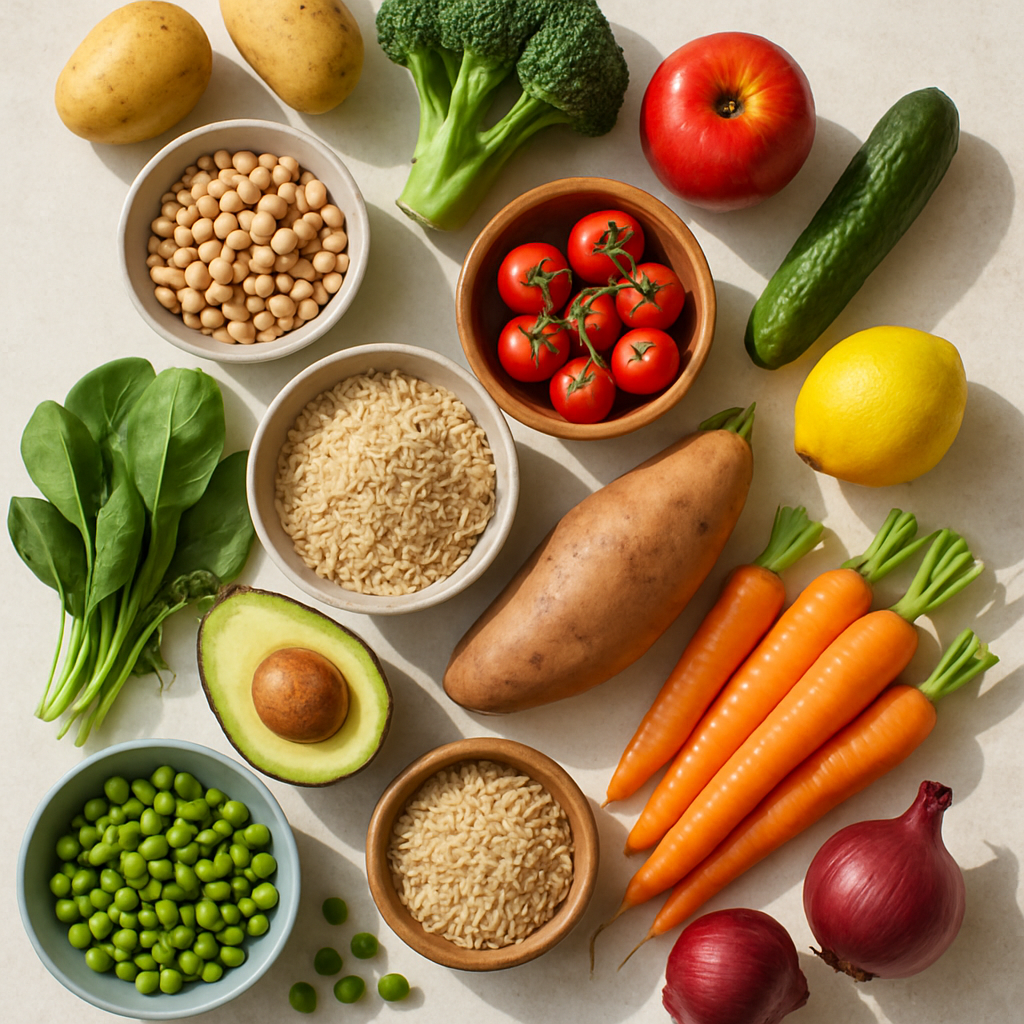
Certain categories of fresh and whole food are genuinely, reliably cheap — and they happen to be nutritionally excellent.
Eggs are one of the most affordable sources of complete protein available, delivering all nine essential amino acids for around 20p per egg. Tinned and dried pulses — lentils, chickpeas, black beans — are calorie-dense, high in protein and fibre, and cost pennies per portion. Frozen vegetables are picked and frozen at peak ripeness, nutritionally comparable to fresh, and a fraction of the price.
Oats, sweet potatoes, carrots, cabbage, bananas, full-fat yoghurt, tinned tomatoes, and whole chicken — these are all foods that sit at the nutritious and affordable end of the spectrum. None of them are exotic. All of them are in every major supermarket.
The mistake is comparing expensive fresh food (pre-washed salad bags, out-of-season berries, organic smoked salmon) against mid-range processed food. That comparison will always look unfavourable. Compare the basics against the basics, and fresh food wins.
Seasonal and frozen: two tools worth using
Eating seasonally in the UK is genuinely one of the best ways to cut costs without sacrificing quality. In summer, courgettes, tomatoes, and berries drop in price significantly. In autumn and winter, root vegetables, brassicas, and squashes are both cheaper and better. The flavour difference is noticeable too — a British tomato in August tastes nothing like the pale, watery import you'd get in January.
A rough seasonal guide for the UK:
- Spring: asparagus, spinach, new potatoes, spring onions
- Summer: courgettes, tomatoes, broad beans, strawberries, sweetcorn
- Autumn: butternut squash, pumpkin, leeks, apples, plums
- Winter: parsnips, swede, celeriac, purple sprouting broccoli, kale
Frozen food deserves its own mention here. There's still a cultural sense that frozen means inferior — it doesn't. Frozen spinach, peas, sweetcorn, edamame, and mixed vegetables are nutritionally excellent. Studies have shown frozen vegetables often retain more nutrients than their "fresh" equivalents that have spent days in transit and on shelves. Building a freezer habit is one of the single best things you can do for both budget and nutrition.
Planning is where the money is saved
The biggest cost in most people's food budgets isn't the price of ingredients — it's waste. The average UK household throws away around £700 worth of food per year, according to WRAP (Waste & Resources Action Programme). That's food that was bought, never used, and binned.
A meal plan, even a rough one, all but eliminates this. When you know what you're cooking across the week, you buy only what you need. You use up ingredients before they turn. You don't rely on expensive convenience options when you get home tired on a Tuesday and have nothing planned.
Planning also lets you build meals around what's on offer. If chicken thighs are reduced, plan two meals around them. If there's a glut of courgettes, find two ways to use them. This is how people who eat well on a budget actually do it — not through willpower or sacrifice, but through a bit of forward thinking.
Where processed food costs more than people realise
Beyond the direct financial comparison, processed food often carries costs that don't show up at the checkout. Ready meals, fast food, and snack foods tend to be lower in protein and fibre — two of the key nutrients that regulate satiety. Foods that don't keep you full lead to more frequent eating, more snacking, more spending.
There's also the long-term picture. Dietary patterns higher in ultra-processed food are consistently associated with poorer health outcomes — cardiovascular disease, type 2 diabetes, certain cancers. The NHS costs and personal costs of those conditions are very real, even if they're invisible at the point of eating. This isn't a guilt trip — it's just part of the honest cost comparison.
The upfront cost of a bag of lentils is low. The upside — satiety, nutritional density, versatility — is high. The same logic doesn't apply to most ultra-processed foods.
Practical takeaways
Here's what actually makes a difference in practice:
- Think cost-per-meal, not cost-per-item. A whole chicken is expensive until you realise it's three meals for a family.
- Stock your freezer. Frozen veg, frozen fish, frozen pulses — all legitimate, all cheaper, all nutritious.
- Eat seasonally where you can. You don't need to follow it rigidly — just know that out-of-season produce costs more and tastes worse.
- Buy staples in bulk. Oats, rice, dried lentils, tinned tomatoes — these have long shelf lives and low per-portion costs.
- Plan the week, even loosely. A five-minute plan on Sunday is the single highest-impact thing most people can do for their food budget.
- Use cheaper cuts. Chicken thighs over breasts, lamb shoulder over rack, pork shoulder over loin — more flavour, more collagen, lower cost.
- Embrace eggs, pulses, and tinned fish. Sardines, mackerel, and tuna are among the cheapest high-quality protein sources available.
If you want a meal plan that's built around your macros and your budget, Macrology generates macro-perfect meal plans in seconds — https://macrology.app/signin
The idea that eating well is a luxury has been repeated so often it feels like a fact. It isn't. With a bit of planning and some familiarity with how to shop, fresh and nutritious food is consistently competitive with processed alternatives — and often significantly cheaper. The tools are already in every supermarket. The main thing is knowing how to use them.
Want meals like this planned to your exact macros?
Macrology generates a personalised meal plan in seconds — breakfast, lunch, dinner and snacks, all hitting your daily targets.
Start your free 14-day trial