How to cut the cost of your food bill without compromising on quality
# How to Cut the Cost of Your Food Bill Without Compromising on Quality
Most of us have stood in a supermarket aisle doing quiet mental arithmetic, weighing up whether the slightly cheaper option is actually worth it. Food prices in the UK have risen significantly over the past few years, and for many households, the weekly shop now feels like a genuine budget exercise — not by choice, but by necessity.
The good news is that eating well on less money is genuinely achievable, and it has nothing to do with sacrifice or settling for less. It's mostly about strategy.
Why "Eating Cheap" Has an Unfair Reputation
There's a persistent idea that nutritious food is inherently expensive — that you need specialist ingredients, premium brands, or a certain level of disposable income to eat well. This simply isn't true, but the myth persists because it's partly based on a real pattern.
Highly processed, calorie-dense foods are often cheaper per calorie than fresh produce. Research published in PLOS ONE found that energy-dense foods cost significantly less per calorie than nutrient-dense alternatives. But cost per calorie isn't the only metric that matters — and when you measure cost per nutrient, the picture looks quite different.
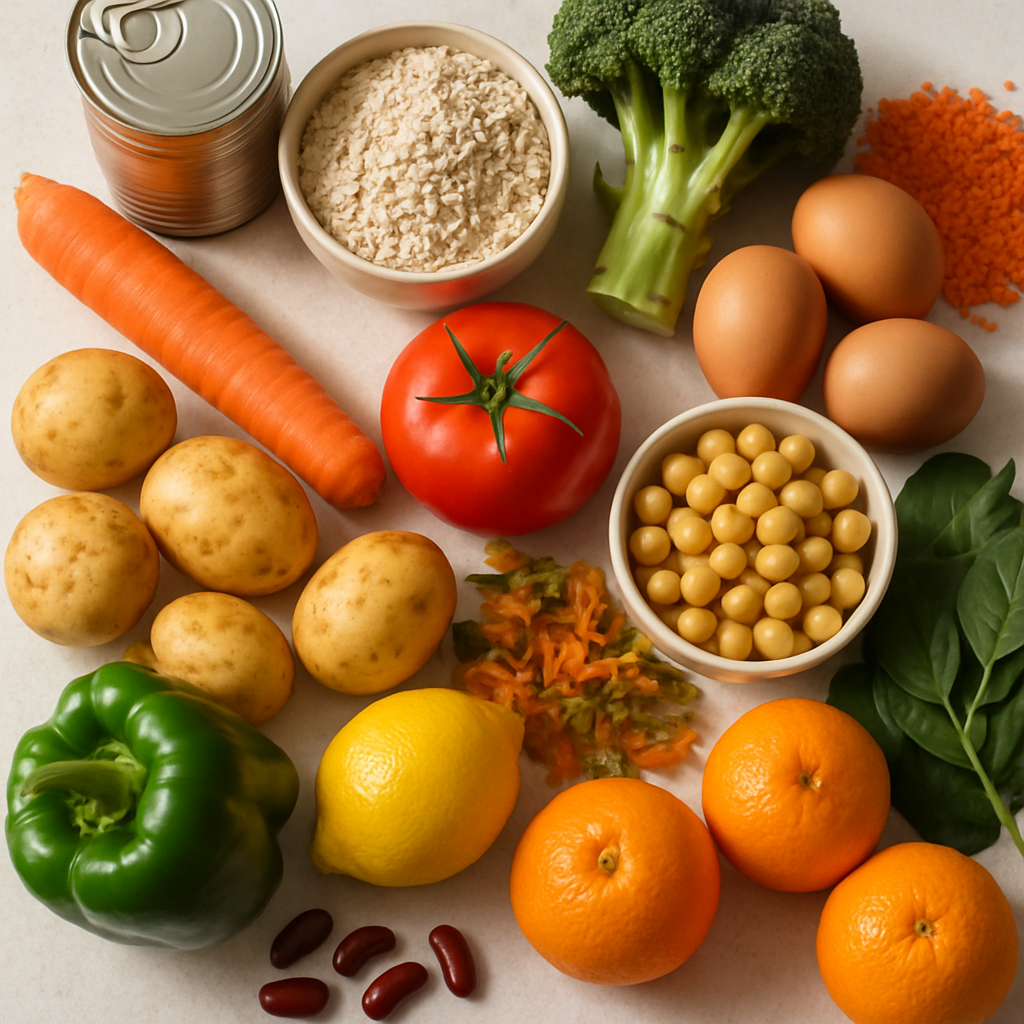
Staples like lentils, oats, eggs, tinned fish, and frozen vegetables offer an exceptional amount of nutrition per pound spent. The problem isn't that healthy food is expensive — it's that we're often not taught how to shop for it strategically.
What the Evidence Shows
Research consistently supports the idea that dietary quality and food cost don't have to move in the same direction.
A 2021 study from the University of Leeds found that nutrient-rich diets in the UK don't necessarily cost more — the difference often comes down to food choices and planning habits rather than income alone. Separately, work from the Food Foundation has highlighted that the most significant savings come from reducing food waste and buying whole ingredients rather than pre-prepared versions.
The average UK household throws away around £730 worth of food every year, according to WRAP (the Waste and Resources Action Programme). That's not a small figure. Before looking at what you buy, it's worth thinking about how much of what you currently buy actually gets eaten.
There's also evidence that meal planning specifically reduces both food spend and waste. A study in the International Journal of Behavioral Nutrition and Physical Activity found that people who planned their meals in advance had healthier diets and lower food costs — suggesting the two goals aren't in tension at all.
Build Your Meals Around Cheap, Nutrient-Dense Staples
The most reliable way to bring your food bill down without touching quality is to shift the centre of gravity in your meals. In most Western diets, an expensive protein source — chicken breast, steak, salmon fillets — anchors the plate. Everything else is built around it.
A smarter approach is to treat whole grains, legumes, and vegetables as the foundation, with animal proteins either reduced in portion or used more as a flavouring than a centrepiece.
Lentils, chickpeas, black beans, and split peas are among the cheapest foods you can buy per serving, and they're high in protein, fibre, and a range of micronutrients including iron, folate, and magnesium. A 500g bag of red lentils costs around £1–£1.50 and contains roughly 10 servings. A chicken breast costs more per serving and, nutritionally, the gap between the two isn't as dramatic as most people assume.
Other high-value staples worth keeping in your cupboard regularly: oats, tinned tomatoes, eggs, frozen spinach, frozen peas, tinned sardines and mackerel, and brown rice or wholegrain pasta.
Frozen and Tinned Isn't Second Best
One of the most persistent misconceptions in nutrition is that fresh is always best. For many foods, frozen vegetables are nutritionally comparable to — or even better than — their fresh counterparts, because they're typically frozen shortly after harvest, locking in nutrients before degradation occurs.
Fresh spinach, for example, can lose a significant portion of its folate content within a few days of being picked, while frozen spinach retains most of its nutritional value for months. The same applies to peas, broccoli, sweetcorn, and most other vegetables.
Tinned foods follow a similar pattern. Tinned tomatoes are rich in lycopene — a carotenoid associated with cardiovascular health — and their nutritional profile holds up well through the canning process. Tinned oily fish like sardines and mackerel are an excellent source of omega-3 fatty acids and are a fraction of the cost of fresh salmon.
The practical upside of frozen and tinned goods goes beyond nutrition: they don't go off, they reduce waste, and they mean you always have something to cook with. Keeping a well-stocked freezer and cupboard makes it far easier to throw together a nutritious meal even when you haven't planned ahead.
Shop Smarter, Not Just Cheaper
Switching to own-brand or supermarket-own versions of staples is one of the simplest changes you can make. In blind taste tests, own-brand tinned goods, dried pulses, oats, and frozen vegetables are consistently rated on a par with branded alternatives — but often cost 30–50% less.
Unit pricing is one of the most underused tools available to shoppers. Rather than comparing pack prices, compare the price per 100g or per litre, which is displayed on most UK supermarket shelf labels. Larger packs are frequently better value per unit, though only if you'll actually use all of it before it goes off.
A few other practical approaches that make a genuine difference:
- Write a meal plan for the week before you shop. Even a rough one significantly cuts impulse buying and reduces waste.
- Shop with a list. It sounds obvious, but research consistently shows that unplanned purchases are where most budgets slip.
- Check reduced sections. Most supermarkets mark down fresh food daily — often in the morning and again in the evening. Meat and fish that's close to its use-by date can be frozen the same day.
- Batch cook. Cooking larger quantities of lentil dahl, bean stews, soups, or grain salads takes the same effort as a single portion but gives you multiple meals for the cost of one.
Make Meat Go Further
Cutting meat out entirely is one approach, but it's not the only one — and for many people, it's not the approach they want to take. A more flexible strategy is simply to use meat more efficiently.
Buying cheaper cuts rather than premium ones is an easy win. Chicken thighs are more flavourful than breasts, cheaper per kilo, and hold up better in slow-cooked dishes. Beef mince can be stretched significantly by adding lentils, finely diced mushrooms, or grated courgette — a technique that reduces cost per portion while also increasing fibre and vegetable content. Pork shoulder, lamb neck, and beef shin are all far less expensive than their premium counterparts and genuinely reward slow cooking.
Using meat as one component of a dish rather than the star of the plate — in a stir-fry, a grain bowl, or a pasta sauce — naturally reduces the quantity you need without making the meal feel smaller or less satisfying.
Practical Takeaways You Can Use This Week
Here's what this looks like in practice:
- Do a cupboard and freezer audit before you shop. Build at least two or three meals around what you already have.
- Add one or two legume-based meals per week — a lentil soup, a chickpea curry, or a bean chilli. These cost very little and hold up well for lunches the next day.
- Swap fresh herbs for frozen or dried where the dish allows — they're cheaper and last longer.
- Try own-brand versions of three things you currently buy branded. For most staples, you won't notice the difference.
- Plan your shop around what's on offer, rather than choosing your meals first and then hunting for the ingredients.
None of these changes requires you to overhaul your entire way of eating. Small shifts in how you plan and shop tend to have a cumulative effect that adds up meaningfully over time.
If you want to take the guesswork out of eating well on a budget, Macrology generates macro-perfect meal plans in seconds — [https://macrology.app/signin](https://macrology.app/signin)
Planning what you're going to eat in advance is one of the most evidence-backed ways to reduce your food bill and improve the quality of what you're eating. Macrology does that thinking for you, so you spend less time stressing about it and more time actually enjoying your food.
Want meals like this planned to your exact macros?
Macrology generates a personalised meal plan in seconds — breakfast, lunch, dinner and snacks, all hitting your daily targets.
Start your free 14-day trial