How to Build a Balanced Plate Without Counting Calories
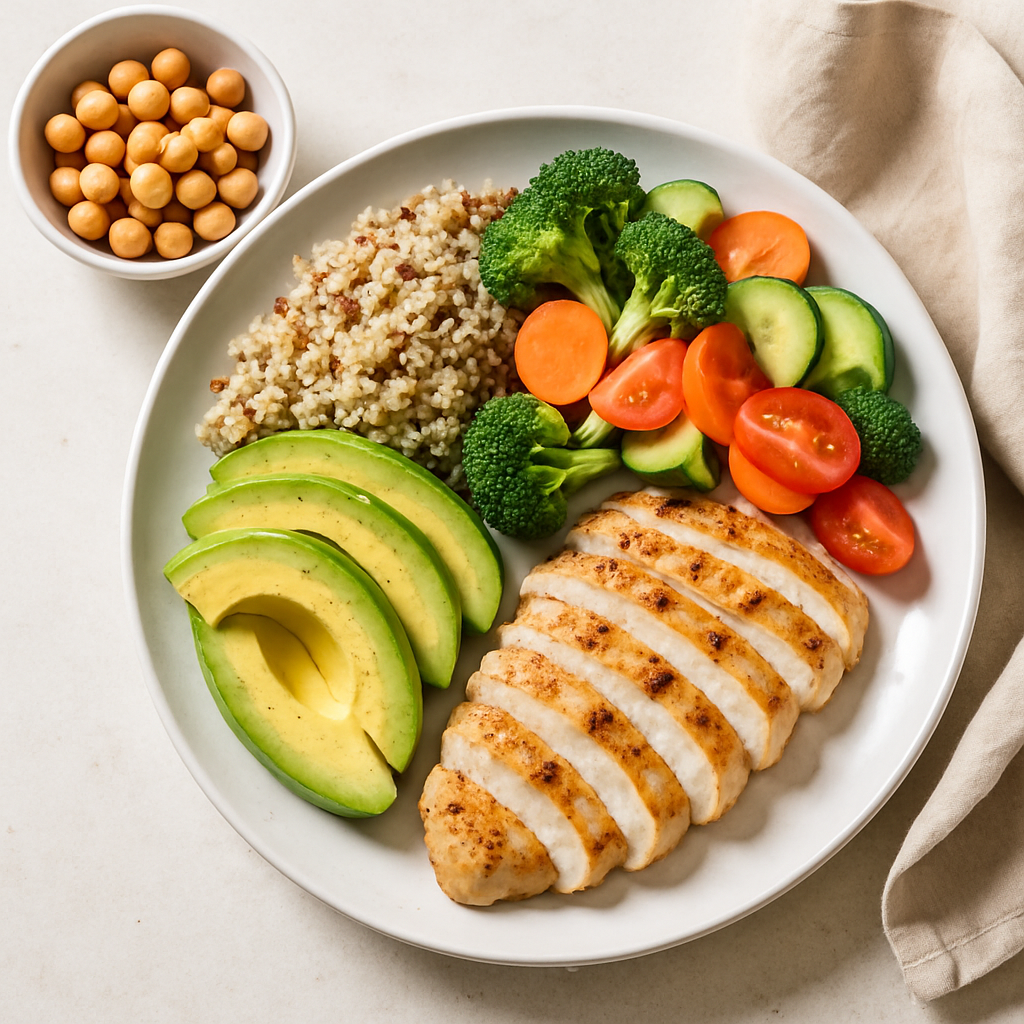
# How to Build a Balanced Plate Without Counting Calories
Most people assume that eating well requires a spreadsheet, a food scale, and an app tracking every gram. But for the vast majority of us, there's a simpler way to eat in a way that supports your health — and it doesn't involve logging a single thing.
The idea of building a balanced plate is nothing new, but the science behind why it works is more interesting than most people realise. Here's how to do it without the mental overhead.
What "balanced" actually means
The word gets thrown around constantly, but "balanced" has a pretty specific meaning in nutritional terms. A balanced plate is one that provides adequate protein to support muscle and satiety, enough carbohydrate for energy, healthy fats for hormone function and nutrient absorption, and fibre to keep your gut and blood sugar happy.
That doesn't mean hitting exact numbers every meal. It means that, across the day, you're getting a reasonable spread of all the macronutrients your body needs to function well. Most people already do this instinctively to some degree — the goal is just to make it a little more deliberate.
The plate model — and why it's more useful than it looks
You've probably seen some version of the "healthy plate" diagram before. Half vegetables, a quarter protein, a quarter carbs, with a small amount of fat included across the meal. It sounds almost too simple, and that's exactly the point.
The plate model works because it removes the need for precision while still creating structure. Rather than weighing 180g of chicken breast and calculating your macros, you're making a visual judgement about proportions. Research consistently shows that portion distortion — eating far more than we intend because we misjudge serving sizes — is one of the biggest drivers of overeating, and the plate model addresses this directly without requiring any numerical thinking.
The NHS Eatwell Guide uses a similar framework and is built on decades of population health research. It's not perfect for everyone — athletes, people with specific medical conditions, or those with higher protein needs may want to adjust — but as a starting point for most adults, it holds up well.
What the evidence shows
A 2019 study published in Cell Metabolism made headlines when it found that people eating ultra-processed foods ate, on average, around 500 more calories per day than those eating minimally processed whole foods — even when both groups had unrestricted access to food. Crucially, the whole-food group regulated their intake without counting anything. The foods themselves — higher in fibre, protein, and water content — made the difference.
This points to something important: food quality changes hunger signals. Protein and fibre are the two biggest levers here. Protein increases levels of satiety hormones like GLP-1 and peptide YY, while fibre slows digestion and stabilises blood sugar, both of which reduce the likelihood of energy crashes and subsequent overeating.
A 2020 review in Nutrients also found that people who ate in line with a plate-based model — without calorie counting — showed comparable weight outcomes over 12 months to those using calorie-tracking apps. The difference was that those using a plate model reported significantly less diet-related stress and a better relationship with food. That matters, because sustainability is the variable that determines long-term outcomes.
The three things worth getting right
Rather than thinking about every component of every meal, there are three things that tend to make the biggest difference:
1. Protein at every meal. Aim to include a decent source — chicken, fish, eggs, tofu, legumes, Greek yoghurt, cottage cheese. A portion roughly the size of your palm is a reasonable starting point. Protein keeps you full, supports muscle maintenance, and has the highest thermic effect of any macronutrient, meaning your body uses more energy to digest it.
2. Vegetables taking up real estate. Not a garnish — half the plate, or close to it. The variety matters as much as the volume. Different vegetables provide different types of fibre (soluble and insoluble) and different phytonutrients. Practically, this means mixing colours and types rather than eating the same two vegetables on repeat.
3. Carbohydrates that do a job. There's no need to avoid carbs, but the type and context matter. Wholegrains, legumes, root vegetables, and fruit come packaged with fibre that slows their impact on blood sugar. Highly refined carbs — white bread eaten alone, sugary drinks — spike blood sugar faster, which can lead to the familiar mid-afternoon slump. Pairing carbs with protein and fat buffers this effect.
Common misconceptions worth addressing
"Fat makes you fat." This has been thoroughly debunked, but it lingers. Dietary fat is essential — it supports brain function, helps absorb fat-soluble vitamins (A, D, E, K), and contributes to satiety. The concern with fat is more about type and context than the mere presence of it. Olive oil, avocado, nuts, and oily fish are all associated with positive health outcomes in large-scale research.
"Carbs are the problem." Low-carbohydrate diets work well for some people, but the evidence doesn't support the idea that carbs are inherently problematic. The issue is more often the kind of carbs and what they're eaten alongside. Populations eating high-carbohydrate diets — Japan, the Mediterranean region — consistently show excellent health outcomes when those carbs come from whole-food sources.
"A balanced plate means eating less." Not necessarily. It means eating differently. For some people, adding more protein and vegetables to their plate means they naturally eat less overall because they're more satisfied. For others — particularly active people — a balanced plate simply means better-quality fuel, not restriction.
How to actually put this into practice
This is where the theory meets the kitchen. A few practical approaches that work in real life:
Use your hand as a guide. A palm of protein, a fist of carbs, two fists of vegetables, and a thumb of fat is a rough framework used by many nutritionists because it scales to your body size and requires no equipment.
Build meals around one good protein source. Pick the protein first, then build the rest of the plate around it. This tends to shift the mental model from "what am I allowed?" to "what goes well with this?"
Don't overthink snacks. If you're genuinely hungry between meals, a snack combining protein and fibre — apple and nut butter, hummus and oatcakes, Greek yoghurt — will tide you over far better than something purely carbohydrate-based.
Batch-cook one or two things a week. Having cooked grains, roasted vegetables, or a protein already in the fridge removes the friction that leads to less considered choices when you're tired and hungry.
Eat slowly enough to notice fullness. Satiety signals take around 20 minutes to reach the brain. This isn't a mindfulness lecture — it's just biology. Eating at a reasonable pace gives your body time to send the signal before you've already overeaten.
Practical takeaways
Building a balanced plate doesn't require tracking, restriction, or giving up anything you enjoy. It comes down to a few repeatable habits:
- Fill roughly half your plate with vegetables
- Include a proper protein source at every meal
- Choose carbohydrates that come with fibre
- Add a small amount of good-quality fat
- Eat slowly enough to register fullness
- Repeat consistently rather than perfectly
The goal isn't a perfect plate every time — it's a pretty good plate most of the time. That consistency, over weeks and months, is where the real benefits accumulate.
If you want your meals planned out with the right balance of protein, carbs, and fat — without the faff of working it all out yourself — Macrology generates macro-perfect meal plans in seconds — https://macrology.app/signin
Want meals like this planned to your exact macros?
Macrology generates a personalised meal plan in seconds — breakfast, lunch, dinner and snacks, all hitting your daily targets.
Start your free 14-day trial