How Protein Affects Satiety Differently Depending on Its Source
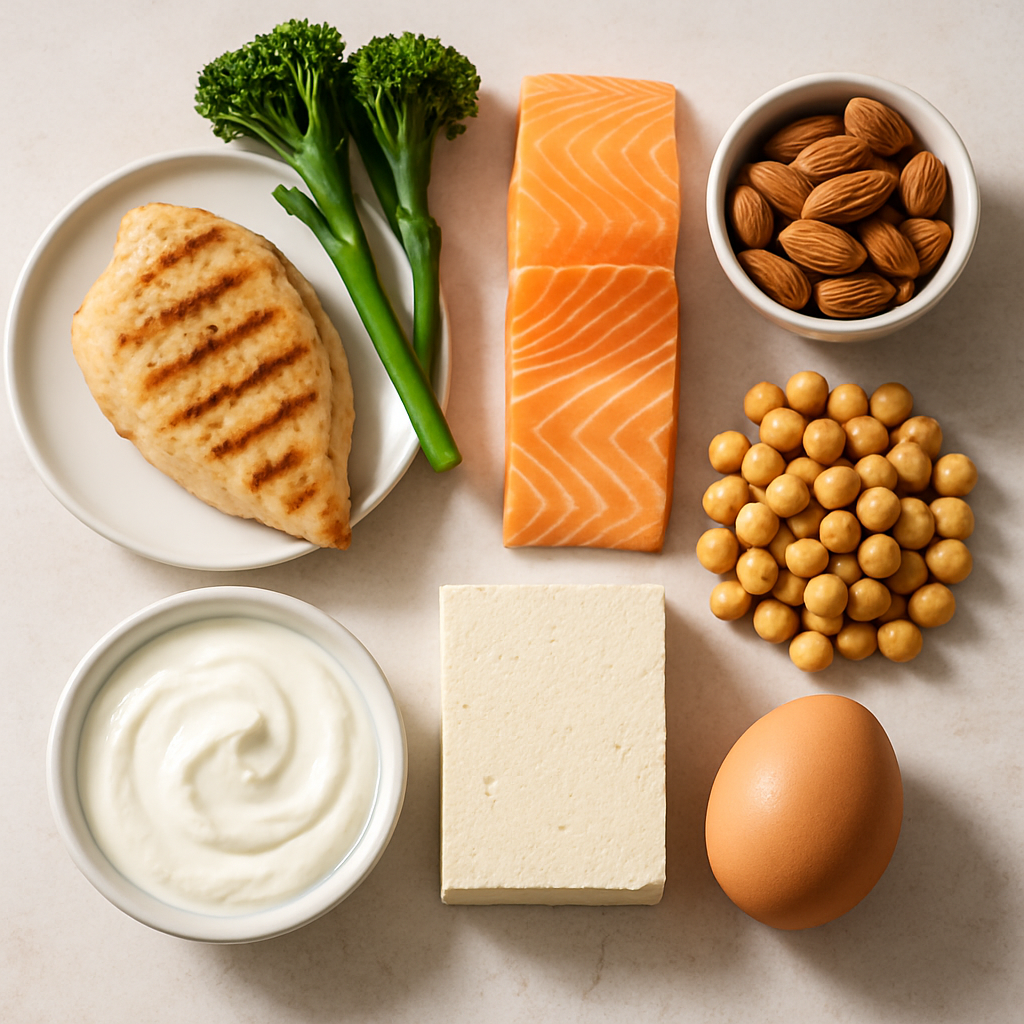
# How Protein Affects Satiety Differently Depending on Its Source
Not all protein leaves you feeling equally full — and that's not just a quirk of personal preference. The source of your protein can meaningfully change how long hunger stays away, how your gut responds, and even how much you end up eating later in the day.
It's one of those nutrition details that gets lost in the noise of "just hit your protein target", but the research behind it is genuinely interesting — and practically useful.
Why Protein Is So Good at Keeping You Full
Before diving into the differences between sources, it helps to understand why protein suppresses hunger in the first place.
Protein works through several overlapping mechanisms. It stimulates the release of satiety hormones — particularly GLP-1, peptide YY (PYY), and cholecystokinin (CCK) — that signal to your brain that you've eaten enough. At the same time, it suppresses ghrelin, the hormone most associated with hunger. These hormonal shifts are more pronounced with protein than with either carbohydrate or fat at equivalent calorie levels.
Protein also has a higher thermic effect of food — your body burns more energy digesting and processing it compared to other macronutrients. This isn't a magic weight loss trick, but it does contribute to why high-protein meals tend to feel more satisfying calorie-for-calorie.
The key point, though, is that these effects aren't uniform across all protein sources. The amino acid profile, digestion rate, and food matrix all influence how full a particular protein actually makes you.
The Difference Between Fast and Slow Proteins
One of the clearest ways protein sources differ is how quickly they're digested and absorbed — and this has a direct bearing on satiety.
Whey protein, derived from milk, is often called a "fast" protein. It's absorbed rapidly, producing a sharp spike in amino acids in the bloodstream. This is useful for muscle protein synthesis after training, but the satiety effect may be shorter-lived compared to slower-digesting proteins.
Casein, also from milk, behaves quite differently. It forms a gel in the stomach and releases amino acids gradually over several hours. Studies have found that casein produces greater feelings of fullness over time than whey at equivalent doses — making it potentially more useful as part of an evening meal if you find yourself hungry before bed.
Plant proteins generally digest more slowly than whey and often arrive packaged with fibre, which adds another layer of satiety. Legumes like lentils and chickpeas are a good example — the protein and the fibre work together to slow gastric emptying and extend the feeling of fullness.
What the Evidence Shows
The research on protein source and satiety is surprisingly detailed, and it doesn't all point in the same direction — which is worth acknowledging.
A 2014 study published in Nutrition Journal found that eggs produced significantly greater satiety than a calorie-matched serving of oat porridge, leading to lower calorie intake at lunch. The egg breakfast group also showed lower ghrelin levels across the morning, suggesting the hunger-suppressing effect was hormonal, not just psychological.
Research comparing animal and plant proteins has found more nuance. A 2020 review in Nutrients found that legume-based proteins were comparable to animal proteins in their satiety effects when matched for total protein content — and in some cases performed better, likely because of the fibre content that comes along for the ride.
Dairy proteins — particularly those from high-protein dairy like Greek yoghurt and cottage cheese — have consistently shown strong satiety effects in trials. A study in the British Journal of Nutrition found that a high-protein dairy snack reduced hunger and led to lower calorie intake at the next meal compared to a high-fat or high-carbohydrate snack of equal calories.
Interestingly, ultra-processed protein sources — protein bars, heavily fortified snack foods — tend to perform less well on satiety measures, even when the protein content looks good on paper. The food matrix matters: whole food protein sources tend to produce a more sustained satiety response than their processed equivalents.
Animal vs. Plant Protein: A Nuanced Comparison
The animal versus plant protein debate often gets framed in all-or-nothing terms, but the satiety picture is more layered than that.
Animal proteins — meat, fish, eggs, dairy — tend to have a complete amino acid profile and high bioavailability, meaning the body can access and use them efficiently. They also tend to have higher leucine content, the amino acid most strongly associated with triggering muscle protein synthesis and, separately, appetite regulation.
Plant proteins typically have lower bioavailability and are often lower in one or more essential amino acids. However, the fibre, water content, and bulk of plant-based protein foods can more than compensate for this when it comes to how full they leave you. A bowl of lentil soup, for instance, may produce greater fullness than an equivalent protein portion of chicken breast — not because the lentil protein is superior, but because you're also eating a significant amount of fibre and fluid.
The practical takeaway here isn't to favour one category over the other. It's to recognise that what your protein comes packaged with is just as important as the protein itself.
Why Source Matters More at Some Meals Than Others
Context matters too. Protein source has a bigger practical impact at certain times of day and in certain eating patterns.
At breakfast, where many people in the UK eat relatively little protein (think toast or cereal), switching to an egg-based meal or Greek yoghurt can have a meaningful effect on hunger throughout the morning. Several studies have found that a high-protein breakfast reduces overall daily calorie intake — not through willpower, but through sustained hormonal suppression of hunger.
At lunch and dinner, the food matrix effect becomes more relevant. A protein source that arrives with fibre — beans, lentils, tofu in a vegetable stir-fry — will generally produce a longer satiety window than the same grams of protein from a processed source.
For snacks, dairy proteins like cottage cheese and Greek yoghurt appear to be particularly effective at bridging gaps between meals without triggering a subsequent rebound in hunger.
Common Misconceptions Worth Clearing Up
One persistent idea is that liquid protein sources — shakes, smoothies — are just as filling as solid ones. The evidence suggests otherwise. Chewing and the physical bulk of solid food trigger satiety signals that liquid calories largely bypass. Drinking your protein is convenient, but it tends to be less satiating than eating it whole.
Another misconception is that more protein always means more fullness. Beyond a certain threshold — broadly, once you're getting adequate protein at a meal — adding more doesn't produce proportionally greater satiety. Protein quality and source matter more than simply stacking more grams onto a meal.
Finally, it's worth mentioning that individual variation is real. Gut microbiome composition, eating speed, stress levels, and sleep quality all influence how full a meal leaves you. The research gives us useful averages, but your own experience over time is valuable data too.
Practical Takeaways
Here's what you can actually do with all of this:
- Prioritise whole food protein sources over processed ones — eggs, dairy, meat, fish, legumes, and tofu will generally leave you fuller than protein bars or fortified snack foods with equivalent protein content.
- If you regularly feel hungry mid-morning, try shifting your breakfast towards eggs, Greek yoghurt, or cottage cheese and notice whether your appetite through to lunch changes.
- Don't overlook plant-based protein foods purely because of lower bioavailability — the fibre and bulk they bring can make them highly effective at managing hunger across the day.
- Pair protein with fibre wherever possible — this combination consistently outperforms protein alone on satiety measures.
- Treat liquid protein as a supplement, not a replacement for whole food protein if satiety is your goal.
- Experiment with casein-rich foods in the evening — Greek yoghurt, cottage cheese, or a milk-based dish — if late-night hunger is a pattern for you.
If you want to hit your protein targets without having to overthink every meal, Macrology generates macro-perfect meal plans in seconds — [https://macrology.app/signin](https://macrology.app/signin)
Want meals like this planned to your exact macros?
Macrology generates a personalised meal plan in seconds — breakfast, lunch, dinner and snacks, all hitting your daily targets.
Start your free 14-day trial