How Dehydration Affects Hunger, Energy and Food Choices Throughout the Day
# How Dehydration Affects Hunger, Energy and Food Choices Throughout the Day
Most people know they're supposed to drink more water. What fewer people realise is how dramatically even mild dehydration can quietly reshape the decisions they make about food, without them ever noticing it's happening.
The connection between hydration and appetite is one of the more underappreciated areas of nutrition science — and understanding it can make a genuine difference to how you feel and eat day to day.
Why Your Brain Confuses Thirst With Hunger
The hypothalamus — the part of the brain that regulates both hunger and thirst — processes these two signals in close proximity. When hydration levels drop slightly, the signals can overlap in a way that makes thirst feel like hunger.
This isn't a design flaw, exactly. For most of human evolutionary history, water came largely from food — fruits, vegetables, cooked grains — so the hunger response and the drive to drink were closely linked. The problem is that in a modern diet, much of what we eat is relatively low in water content, so the old wiring doesn't serve us quite as well.
The practical upshot is straightforward: if you're reaching for a snack an hour after eating a full meal, there's a reasonable chance your body is actually signalling for fluid rather than food. It's not always the case, but it's worth being aware of.
What the Evidence Shows
Research consistently supports the idea that hydration status affects appetite and calorie intake. A well-cited study published in Obesity found that adults who drank 500ml of water before each main meal lost significantly more weight over 12 weeks than those who didn't — without making any other changes to their diet.
The mechanism isn't just psychological. Water takes up physical space in the stomach, which activates stretch receptors that contribute to feelings of fullness. It also appears to influence levels of ghrelin, one of the body's key hunger hormones, though the relationship is still being studied.
A 2016 systematic review in the European Journal of Nutrition found that even mild dehydration of 1–2% of body weight — the kind you can reach simply by spending a morning indoors without drinking much — was associated with impaired mood, increased feelings of fatigue, and reduced ability to concentrate. None of those things are great for making thoughtful food choices.
The Energy Slump You're Blaming on Something Else
The mid-afternoon energy dip is almost universally blamed on lunch or on poor sleep the night before. And those things do matter. But dehydration is a significant and frequently overlooked contributor.
Blood is roughly 90% water. When you're even mildly dehydrated, blood becomes slightly more viscous, meaning the heart has to work harder to circulate it. Oxygen and nutrients reach the muscles and brain a little less efficiently. The result is a feeling of sluggishness that's easy to misread as needing caffeine, a sugary snack, or a lie-down.
Research from Loughborough University found that dehydration equivalent to just 1% of body weight was enough to impair cognitive performance and mood in healthy adults. For a 70kg person, that's less than a litre of fluid deficit — entirely achievable by mid-morning on a busy day.
The important nuance here is that rehydrating doesn't instantly solve everything. If you're already in a dehydrated state and feeling flat, drinking a glass of water will help — but it takes time. The more effective approach is consistent fluid intake throughout the day rather than trying to catch up in the afternoon.
How Dehydration Changes What You Reach For
This is where things get particularly interesting. Dehydration doesn't just make you feel hungry — it appears to influence what you feel hungry for.
A study published in Physiology & Behavior found that participants who were mildly dehydrated showed a stronger preference for foods that were sweet and energy-dense. The hypothesis is that the body, sensing a general deficit, gravitates toward fast-release energy as a kind of compensation mechanism.
This means dehydration can quietly nudge you toward the biscuit tin or the vending machine in a way that feels like a craving but is, at least partly, a hydration signal. It's not a character flaw or a lack of willpower — it's physiology doing what it's been wired to do.
There's also the caffeine angle. Many people respond to the fatigue of dehydration by having another coffee. Moderate caffeine consumption (up to around 400mg per day) is generally fine for healthy adults, but caffeine has a mild diuretic effect, meaning excessive intake can contribute to the very fluid deficit that triggered the energy slump in the first place.
Hydration and Meal Timing
One area where hydration can make a real, practical difference is around meals. Drinking water before and during a meal — not instead of eating, but alongside it — supports digestion and helps the body process satiety signals more accurately.
Saliva and gastric juices are water-based. When you're well-hydrated, digestion tends to run more smoothly. When you're not, the digestive process can feel slower and more uncomfortable, which some people misinterpret as needing more food or a different type of food.
There's also a timing element that's easy to miss. Thirst perception naturally declines with age — older adults often don't feel thirsty even when they're meaningfully dehydrated. If you're cooking for family across different generations, it's worth building water into meals as a habit rather than waiting for thirst to prompt it.
Common Hydration Myths Worth Addressing
"You need exactly eight glasses of water a day." This is a persistent oversimplification. Fluid needs vary significantly based on body size, activity level, climate, and diet composition. People who eat plenty of fruit and vegetables get meaningful fluid from food. People who exercise heavily or work outdoors need considerably more. The eight-glasses rule isn't harmful, but treating it as a precise target can be misleading in both directions.
"Coffee and tea don't count towards hydration." This one isn't quite right either. While caffeine has a mild diuretic effect, the fluid in tea and coffee still contributes to overall hydration. Studies suggest that moderate tea and coffee consumption has a net hydrating effect for regular drinkers. Plain water remains the most efficient option, but your morning tea genuinely does count.
"Dark urine definitely means you're dehydrated." This is a useful rough guide, but certain vitamins (particularly B vitamins), medications, and foods like beetroot can significantly affect urine colour independently of hydration. It's a reasonable signal to pay attention to, not a diagnostic tool.
Practical Takeaways
You don't need to overhaul your entire routine. A few consistent habits can make a meaningful difference.
Start with fluid before food. Drinking a glass of water first thing in the morning — before coffee, before breakfast — is an easy way to address the natural overnight fluid deficit and set a reasonable baseline for the day.
Build in cues. Many people find it helpful to link water intake to existing habits: a glass when you sit down at your desk, a glass before each meal, a glass with any snack. This works better than trying to monitor intake in your head throughout the day.
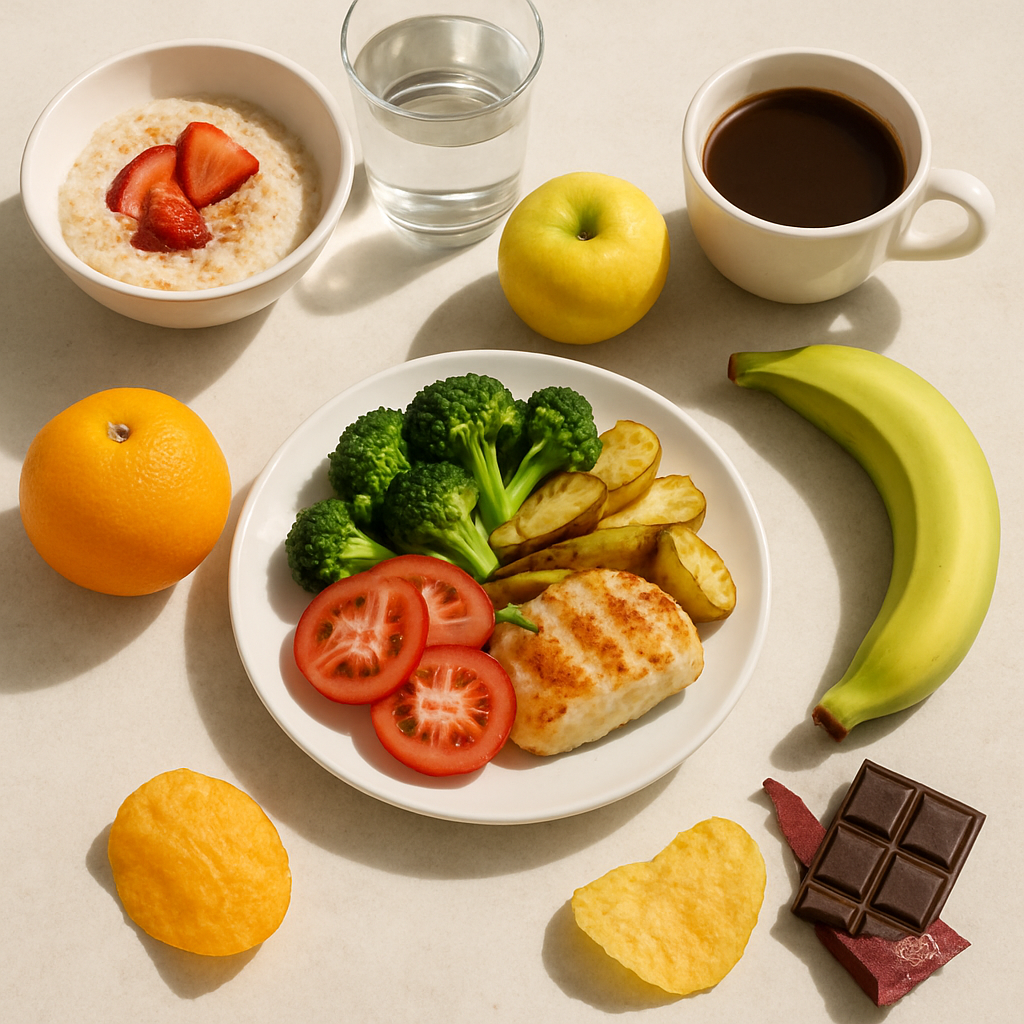
Eat water-rich foods. Cucumbers, courgettes, tomatoes, oranges, strawberries, and yoghurt all contribute meaningfully to fluid intake. A diet with plenty of vegetables and fruit supports hydration in ways that are easy to overlook.
Pause before snacking. When a craving appears between meals — particularly for something sweet or salty — having a glass of water and waiting ten minutes isn't about suppressing appetite. It's about giving your body a chance to signal more clearly what it actually needs.
Adjust for context. Hot weather, central heating, exercise, alcohol, and illness all increase fluid needs. These aren't moments to be strict about hitting a fixed number — they're moments to drink a bit more without overthinking it.
If you want to understand how your food and fluid choices interact with your energy and appetite throughout the day, Macrology generates macro-perfect meal plans in seconds — https://macrology.app/signin
Want meals like this planned to your exact macros?
Macrology generates a personalised meal plan in seconds — breakfast, lunch, dinner and snacks, all hitting your daily targets.
Start your free 14-day trial