How Cooking Methods Affect the Nutritional Value of Your Food
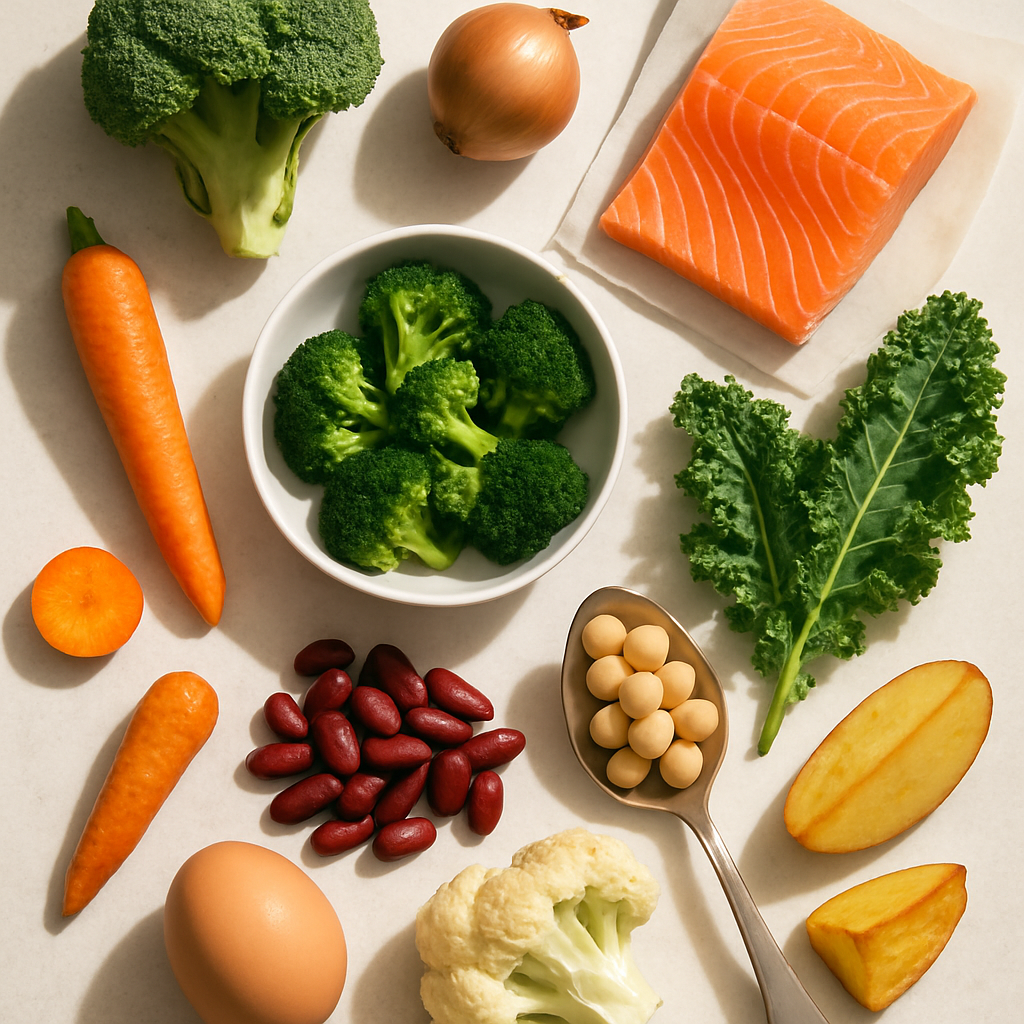
# How Cooking Methods Affect the Nutritional Value of Your Food
Ever wondered why steamed broccoli tastes a bit different from boiled broccoli — and whether it actually matters nutritionally? The cooking method you choose can meaningfully change what ends up on your fork, sometimes boosting nutrients, sometimes reducing them, and occasionally doing both at once.
Why Heat Changes Food at a Molecular Level
Cooking isn't just about making food safe and palatable. It's a series of chemical reactions that alter the structure of proteins, fats, carbohydrates, and micronutrients in ways that genuinely affect what your body absorbs.
Some vitamins are heat-sensitive and break down when exposed to high temperatures. Others are bound inside plant cell walls that only cooking can unlock. Fat-soluble vitamins behave completely differently to water-soluble ones. And then there's the question of what happens when food is submerged in liquid versus exposed to dry heat — both routes have their own nutritional consequences.
Understanding a few basic principles here doesn't mean you need to cook everything differently. It just helps you make more informed choices when it counts.
What the Evidence Shows
The research on cooking and nutrient retention is more nuanced than most headlines suggest. A 2009 study published in the Journal of Food Science found that boiling vegetables like courgette, carrots, and broccoli caused significant losses of water-soluble vitamins — particularly vitamin C and several B vitamins — compared to steaming or microwaving.
However, the same research noted that cooking increases the bioavailability of certain nutrients. Lycopene in tomatoes, for instance, becomes significantly more absorbable after cooking, which is why a slow-cooked tomato sauce may actually deliver more usable lycopene than a raw tomato salad. Beta-carotene in carrots follows a similar pattern — lightly cooking them with a small amount of fat increases how much your body can absorb.
A 2019 review in Food Chemistry also highlighted that dry heat methods like roasting and grilling can reduce antioxidant content in some vegetables, while simultaneously creating new beneficial compounds through the Maillard reaction. So the picture is rarely black and white.
Boiling: The Vitamin Thief (With Caveats)
Boiling is the cooking method most consistently associated with nutrient loss — but context matters enormously here.
Water-soluble vitamins (vitamin C, folate, and B vitamins) leach into the cooking water during boiling. Studies suggest that boiling broccoli can reduce its vitamin C content by up to 50%. If you're pouring that water down the drain, those nutrients are gone.
That said, boiling isn't nutritionally worthless. It's excellent at breaking down tough plant fibres, making food easier to digest. It also gelatinises starches in ways that can reduce the glycaemic impact of foods like potatoes when eaten cold — a process linked to resistant starch formation.
If you do boil vegetables regularly, using the cooking water in soups or gravies is a straightforward way to recapture some of what's lost.
Steaming: The Gentler Option
Steaming consistently performs well in nutrient-retention studies, and it's not hard to see why. Because the food never contacts the water directly, water-soluble vitamins have nowhere to escape to.
A study comparing cooking methods for broccoli found that steaming retained significantly more glucosinolates — the sulphur-containing compounds associated with cancer-protective effects — than boiling or microwaving. The difference wasn't trivial; boiling caused losses of around 77% of glucosinolates compared to raw, while steaming kept losses to roughly 11%.
Steaming is also relatively quick, which limits heat exposure time — another factor that affects nutrient degradation. It's a particularly good option for green vegetables, fish, and anything delicate that would fall apart under high heat.
Roasting and Grilling: The Flavour-Nutrient Trade-Off
Roasting and grilling produce some of the most satisfying flavours in cooking — the caramelisation of sugars and the Maillard reaction create compounds that simply can't be replicated by gentler methods. But these same high temperatures can be harder on certain nutrients.
Vitamin C is particularly vulnerable to high heat and prolonged cooking times. Folate, found in abundance in leafy greens, also degrades quickly above certain temperatures. This is worth bearing in mind if leafy greens make up a large part of your diet — a quick wilt in a pan is often less damaging than a long roast.
On the other hand, fat-soluble vitamins (A, D, E, and K) are considerably more stable under heat than their water-soluble counterparts. Roasting carrots or sweet potato in a little oil doesn't significantly deplete their vitamin A precursors and actually aids absorption by providing the fat needed for uptake.
Grilling meat and fish introduces a different consideration. Very high temperatures applied directly to protein and fat can produce compounds called heterocyclic amines (HCAs) and polycyclic aromatic hydrocarbons (PAHs). The evidence on these is worth taking seriously — they've been classified as probable carcinogens by the WHO — but the key word is moderation and method. Marinating meat before grilling, keeping temperatures moderate, and avoiding charring can substantially reduce their formation.
Microwaving: Better Than Its Reputation
Microwaving has an image problem that the science doesn't really support. Because microwave cooking is typically fast and uses little or no water, it can actually preserve water-soluble vitamins better than boiling.
A frequently cited Spanish study found that microwaving broccoli retained more antioxidant capacity than most other cooking methods tested. More recent research has broadly supported this — shorter cooking times mean less total heat exposure, which is generally kinder to heat-sensitive compounds.
The main caveat is that adding water before microwaving vegetables recreates the same leaching problem as boiling. Microwaving with minimal added liquid, or simply covering the food to trap steam, keeps nutrient losses low.
Raw vs Cooked: It's Not a Competition
There's a persistent idea that raw food is inherently more nutritious than cooked food, but the evidence doesn't back this up as a blanket rule.
Some nutrients are genuinely better preserved raw — vitamin C is the clearest example. But for many plant foods, cooking is actually the more nutritious option in terms of what your body can actually use. Spinach, for instance, contains oxalic acid that binds to calcium and iron, reducing absorption. Briefly cooking spinach partially breaks down the oxalic acid, making those minerals more accessible.
Starchy vegetables also become far more digestible after cooking. Raw potato starch is largely indigestible, whereas cooked potato starch is efficiently broken down into glucose. Some advocates of raw diets report digestive discomfort for exactly this reason — the gut isn't well set up to handle large amounts of raw starch or certain raw legumes.
Eating a variety of foods both raw and cooked is the most practical and well-supported approach, giving you the benefits of both states rather than optimising unnecessarily for one.
Practical Takeaways
Rather than overhauling your cooking habits entirely, a few targeted tweaks can make a genuine difference:
- Steam or microwave green vegetables when nutrient retention is the priority — broccoli, courgette, spinach, and peas all respond well.
- Use the boiling water from vegetables in soups, stocks, or sauces rather than discarding it.
- Pair fat-soluble vegetables with a little healthy fat — roasted carrots with olive oil, or a salad dressing on raw leafy greens — to improve absorption of vitamins A, D, E, and K.
- Don't fear cooking tomatoes — the increase in absorbable lycopene from cooked tomatoes is well established and worth making use of.
- Marinate before grilling and avoid charring meat to reduce HCA and PAH formation without giving up the flavour you enjoy.
- Cook and cool starchy foods like potatoes and rice if you're eating them cold — the resistant starch that forms has well-documented benefits for gut health.
The broader principle is that no single cooking method is universally superior. The best approach is one that gives you meals you actually want to eat, with enough variety that you're not consistently over-relying on any one technique.
If you want to hit your nutritional targets without the mental load of tracking every cooking decision yourself, Macrology generates macro-perfect meal plans in seconds — https://macrology.app/signin
Want meals like this planned to your exact macros?
Macrology generates a personalised meal plan in seconds — breakfast, lunch, dinner and snacks, all hitting your daily targets.
Start your free 14-day trial