How Cooking from Scratch Affects Your Macro Awareness Over Time
# How Cooking from Scratch Affects Your Macro Awareness Over Time
Most people who start tracking macros begin with an app and a food scale. But something quieter — and arguably more useful — tends to happen the longer you cook your own meals: you start knowing things without having to look them up.
That intuitive sense of what's in your food doesn't arrive overnight. It builds gradually, through repetition, attention, and the simple act of handling ingredients with your own hands.
What "Macro Awareness" Actually Means
Before diving in, it's worth being clear about what we're talking about. Macro awareness isn't about being able to recite the protein content of every food from memory. It's a broader, more practical skill — the ability to look at a plate of food and have a reasonable sense of what it contains, to build meals that broadly serve your goals without obsessing over every gram, and to adapt on the fly when you're eating somewhere unfamiliar.
Think of it like financial literacy. You don't need to know your bank balance to the penny to manage money well — but you do need a working sense of what things cost and how much you're spending. Macro awareness works the same way.
This kind of nutritional intuition is genuinely useful, and cooking from scratch is one of the most reliable ways to develop it.
Why Scratch Cooking Builds Nutritional Intuition
When you cook from scratch, you're physically interacting with ingredients in a way that processed food simply doesn't allow. You weigh out 150g of chicken breast. You measure two tablespoons of olive oil. You watch lentils double in size as they absorb water. These aren't abstract numbers on a nutrition label — they're physical experiences that stick.
Research in embodied cognition suggests that learning is deeper when it involves physical action. The hands-on nature of cooking means you're encoding nutritional information through multiple senses simultaneously — sight, touch, and even smell. Over time, that 150g of chicken starts to look familiar. You stop needing to weigh it every single time.
There's also something to be said for ingredient repetition. Most home cooks rotate through a fairly limited repertoire of ingredients — eggs, chicken, rice, oats, lentils, Greek yogurt. The more often you handle the same foods, the more accurately you build a mental model of what they contain and what they do for a meal.
What the Evidence Shows
A body of research supports the idea that cooking at home is associated with better diet quality overall. A 2017 study published in Public Health Nutrition found that people who cooked at home more frequently consumed fewer calories, less sugar, and less fat than those who relied on ready meals and takeaways — even on days when they weren't actively trying to eat more healthily.
Importantly, the benefit wasn't just about avoiding poor-quality ingredients. It was also about portion awareness. People who cook regularly tend to have a more calibrated sense of serving sizes, because they've built those portions themselves hundreds of times.
There's also evidence that food literacy — the practical knowledge of ingredients, cooking methods, and nutrition — is a meaningful predictor of diet quality independent of education level or income. A 2020 review in Nutrients found that higher food literacy was consistently associated with greater vegetable and protein intake, and lower reliance on ultra-processed foods. Cooking from scratch is one of the most direct routes to developing that literacy.
It's worth addressing a common counterargument here: that cooking from scratch is time-consuming and therefore impractical for most people. This is partly true, and it's worth acknowledging. But the investment is front-loaded. As your skills and intuition develop, cooking becomes faster — and the nutritional knowledge you accumulate doesn't require any ongoing effort to maintain.
The Role of Repetition and Pattern Recognition
Here's where it gets interesting from a habit and learning perspective. The brain is extraordinarily good at pattern recognition, and nutrition is no exception. Every time you build a meal — a base of grains, a protein source, some vegetables, a fat — you're reinforcing a structural template.
Over time, that template becomes automatic. You stop thinking "I need 40g of protein at dinner" and start instinctively reaching for a sizeable piece of fish or a generous portion of legumes. You stop measuring olive oil every time and start having a feel for when you've used enough.
This is sometimes called nutritional automaticity in the research literature — the point at which healthy eating behaviours become habitual rather than deliberate. And the evidence suggests that once habits are sufficiently automated, they're far more durable than conscious dietary rules, which tend to erode under stress or time pressure.
Cooking from scratch accelerates this process because it gives you repeated, contextualised exposure to the building blocks of nutrition. You're not just reading about macros — you're living them.
Where Scratch Cooking Has Its Limits
It would be misleading to suggest that cooking from scratch is a nutritional cure-all, or that it automatically produces macro-balanced meals. It doesn't.
Plenty of scratch-cooked meals are high in saturated fat, low in protein, or light on vegetables — depending on what's being cooked and how. A homemade pasta bake can easily end up heavier than expected; a vegetable curry might be surprisingly short on protein if you're not thinking about it. Scratch cooking gives you the raw material for better decisions, but it doesn't make those decisions for you.
There's also a learning curve. In the early stages, cooking from scratch without any nutritional framework can feel a bit like navigating without a map — you're moving, but you're not sure where you're heading. This is where combining scratch cooking with some degree of macro tracking, at least temporarily, can be genuinely useful. Not as a permanent system, but as a calibration tool.
Tracking what you cook helps you connect the physical experience of cooking with the numerical reality of nutrition. After a few months of doing both, many people find they can step back from detailed tracking and rely more heavily on the intuition they've built.
How This Changes Over Time
The progression tends to look something like this. In the early weeks, scratch cooking feels effortful, and nutritional decisions are still largely conscious and deliberate. By the three to six month mark, most people have a reliable repertoire of meals they can prepare without much thought, and a reasonable intuitive sense of what those meals contain.
Beyond six months, the real compounding begins. Your ingredient vocabulary expands. You start experimenting with new protein sources, different grains, varied cooking methods. Each new ingredient you master adds another data point to your internal nutritional model. You become increasingly capable of building a macro-appropriate meal from whatever happens to be in the fridge.
This is a fundamentally different relationship with food than one built entirely on calorie apps and meal plan templates — though those tools absolutely have their place, particularly in the beginning.
Practical Takeaways
Here's what this looks like in practice, if you want to start building genuine macro awareness through cooking:
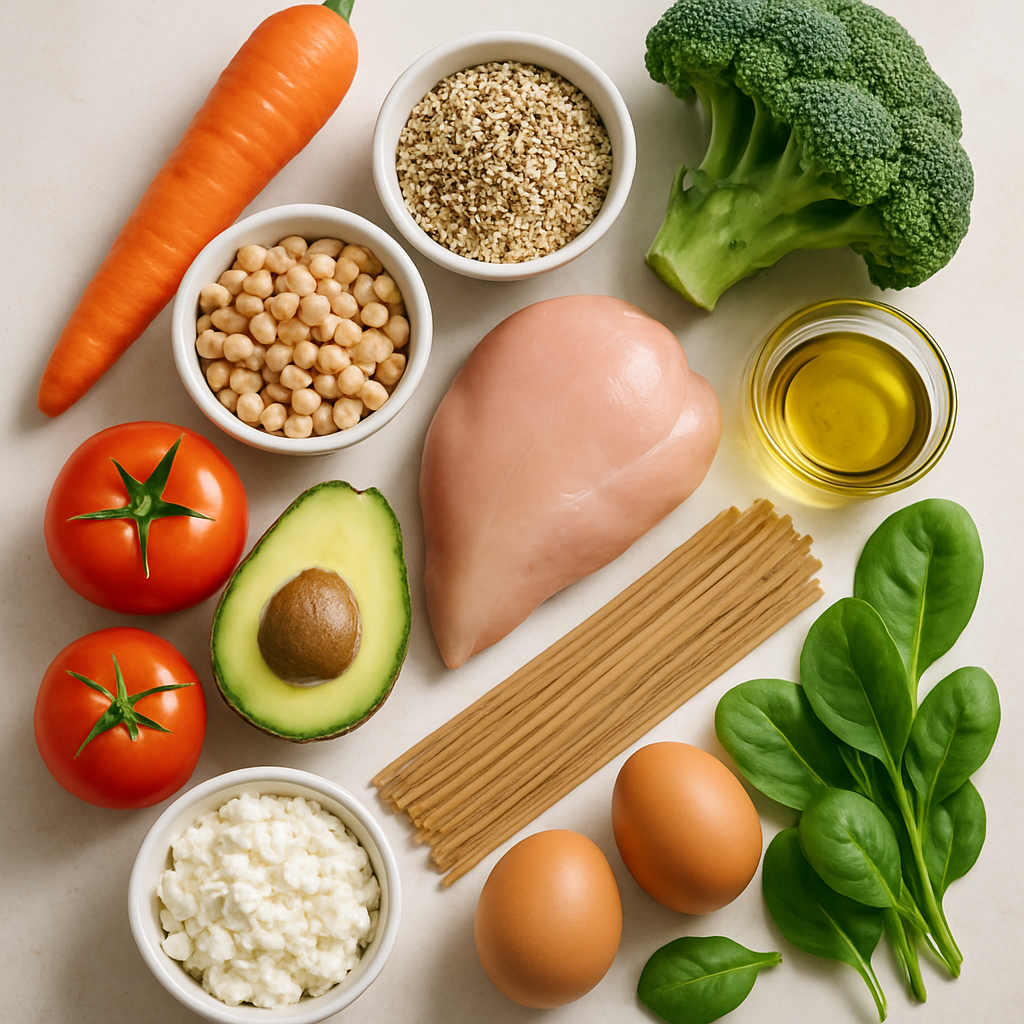
Start with anchor ingredients. Pick five or six high-protein staples — chicken thighs, eggs, tinned salmon, lentils, Greek yogurt, cottage cheese — and cook with them regularly. The repetition is the point.
Weigh things early on, then test your eye. Use a food scale when you're learning, but periodically try to estimate first, then check. The gap between your estimate and reality will shrink faster than you'd expect.
Build meals with a structure. Protein + carbohydrate + vegetable + fat. It's simple, but running that template repeatedly is how you internalise balanced eating without having to think hard about it.
Cook in batches. Batch cooking reduces friction and keeps you in contact with your ingredients more frequently, which speeds up the pattern recognition process.
Don't worry about perfection. A meal that's roughly right, made from scratch, is more useful to your long-term awareness than a perfectly tracked ready meal. The process of cooking matters as much as the outcome.
If you want the structure of a macro-balanced meal plan without losing the benefits of cooking yourself, Macrology generates macro-perfect meal plans in seconds — [https://macrology.app/signin](https://macrology.app/signin)
The goal, ultimately, is to need the numbers less and less — not because tracking isn't useful, but because the knowledge has become part of how you cook.
Want meals like this planned to your exact macros?
Macrology generates a personalised meal plan in seconds — breakfast, lunch, dinner and snacks, all hitting your daily targets.
Start your free 14-day trial