How Much of Your Daily Nutrition Comes from Fortified Foods Without You Realising
# How Much of Your Daily Nutrition Comes from Fortified Foods Without You Realising
Most people assume their vitamin and mineral intake comes from the "healthy" parts of their diet — the fruit, the veg, the whole grains. But a surprising chunk of it quietly arrives via foods you probably never think of as nutritional heavy-hitters.
Fortified foods are everywhere, and for many people in the UK, they're filling nutritional gaps that would otherwise be quite significant.
What Does "Fortified" Actually Mean?
Fortification is the process of adding nutrients to a food that either didn't contain them naturally, or contained them in amounts too small to make a meaningful difference. It's not new — the UK has been adding vitamin D and calcium to margarine since the 1940s, and iodine has been present in dairy for decades as a result of farming practices.
The nutrients added aren't synthetic in any harmful sense. They're chemically identical to the versions found in whole foods, and your body processes them in exactly the same way.
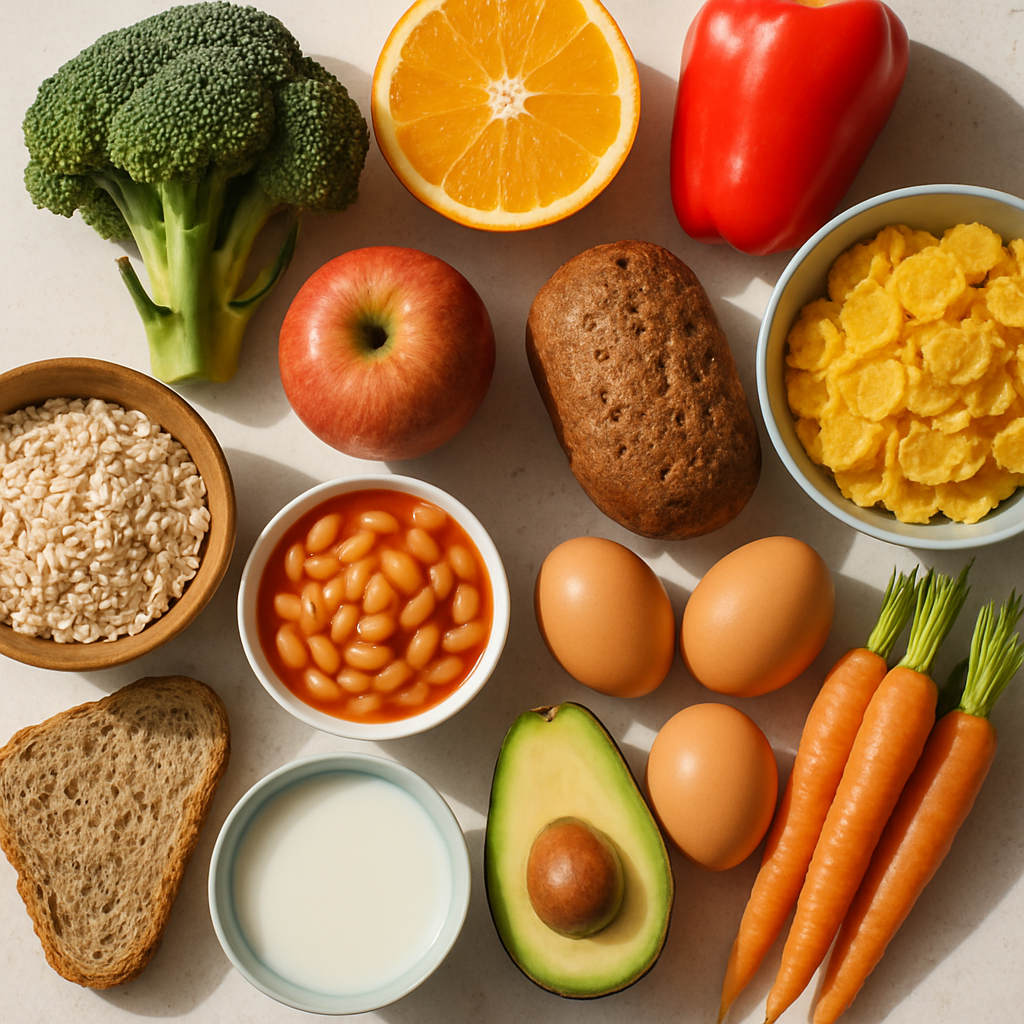
The most commonly fortified foods in the UK include:
- Breakfast cereals (iron, B vitamins, vitamin D, folic acid)
- Plant-based milks (calcium, vitamin D, vitamin B12)
- Bread and flour (calcium, iron, thiamine, niacin — required by law in white and brown flour)
- Spreads and margarines (vitamins A and D)
- Some orange juices (vitamin C, calcium, vitamin D)
It's worth noting that white flour fortification in the UK isn't optional — it's a legal requirement under the Bread and Flour Regulations 1998. Every loaf of white or brown bread you buy from a supermarket contains added calcium, iron, and B vitamins whether it says so on the packet or not.
How Significant Is the Contribution?
More than most people realise. A 2020 analysis published in the British Journal of Nutrition found that fortified breakfast cereals alone contribute meaningfully to intakes of iron, folate, and several B vitamins across the UK population — particularly in children and young adults who might otherwise fall well short.
For people following plant-based diets, fortified foods often aren't optional extras — they're foundational. Vitamin B12, for example, isn't reliably available from any unfortified plant food. For someone not taking a supplement, a fortified oat milk or a B12-enriched nutritional yeast might be the only dietary source they have.
The same applies to iodine. The UK has quietly had an iodine problem for years — particularly among young women and those avoiding dairy. A 2020 British Dietetic Association position statement flagged iodine as a nutrient of concern, and for people who don't eat dairy or fish, fortified plant milks are often the main dietary route to adequate intake.
The Gap Fortification Is Plugging
The UK's National Diet and Nutrition Survey (NDNS) — the most comprehensive ongoing assessment of what people in Britain actually eat — consistently shows that large portions of the population fall short on several key nutrients. These include:
- Vitamin D — the majority of UK adults have low or insufficient levels, particularly in winter
- Iron — particularly among women of reproductive age
- Calcium — intakes have declined as dairy consumption has fallen
- Iodine — especially among those who avoid fish and dairy
- Folate — suboptimal in many groups outside of pregnancy, where supplementation is advised
Fortified foods quietly help close these gaps without requiring anyone to dramatically change their eating habits. That's genuinely useful — especially when you consider that public health campaigns alone have a fairly limited track record of shifting population-level nutrient intake.
What the Evidence Shows
The research on fortification is largely positive, though it comes with some important nuance.
A landmark study in The Lancet (2021) modelling global food fortification found it to be one of the most cost-effective public health interventions available — capable of preventing significant rates of deficiency-related disease at population level. Iodine fortification of salt in many countries has virtually eliminated iodine deficiency disorders that were once widespread.
In the UK context, mandatory folic acid fortification of flour — which was finally confirmed in 2022 after years of debate — is estimated to prevent around 200 neural tube defects per year. That's a meaningful impact from a single policy.
There's a reasonable counterargument worth addressing: could people just eat more nutrient-dense whole foods instead? Yes, in theory. But the evidence consistently shows that dietary advice alone doesn't reliably move the needle at population level, particularly for people with lower incomes, food access challenges, or high nutritional needs. Fortification reaches people who aren't reached by nutrition campaigns.
The one area where genuine caution applies is with fat-soluble vitamins — particularly vitamins A and D — where excessive intake from multiple fortified sources could theoretically accumulate over time. In practice, this is rarely a concern from food sources alone, but it's a reason why food scientists set fortification levels conservatively.
The Plant-Based Diet Case Study
The rise of plant-based eating has made the fortification conversation significantly more relevant. Someone moving away from dairy and meat isn't just changing their flavour preferences — they're potentially shifting the source of several critical nutrients.
Calcium is the obvious one. Dairy is the dominant dietary source of calcium for most UK adults. A fortified oat or soy milk with 120mg of calcium per 100ml is broadly comparable to cow's milk, making it a practical like-for-like swap — but only if the person is buying a fortified version. Unfortified versions, including many barista-style products, often contain very little.
Vitamin B12 is non-negotiable for anyone eating a fully plant-based diet. The body doesn't store it indefinitely, and deficiency can cause serious neurological damage over time. Fortified foods — cereals, plant milks, nutritional yeast — can contribute meaningfully, but most nutrition professionals recommend a supplement as a reliable backup regardless.
Vitamin D is tricky for everyone in the UK regardless of diet, but it's worth knowing that most plant-based vitamin D3 now comes from lichen rather than lanolin (sheep's wool), making it suitable for vegans.
Are You Getting More Than You Think?
Probably. Run through a typical day: a bowl of fortified cereal with fortified oat milk for breakfast, a couple of slices of white or wholemeal bread at lunch, a glass of fortified orange juice. You've already picked up a meaningful contribution to your daily iron, calcium, B vitamins, and possibly vitamin D — without making any particular effort.
This isn't a reason to stop paying attention to what you eat. But it is a useful corrective to the idea that nutrition is all about "superfoods" and deliberate choices. A lot of it is infrastructure — built quietly into the food supply by regulations and food manufacturers responding to public health guidance.
The practical implication is that switching away from fortified foods — particularly cereals, dairy alternatives, or white bread — without accounting for the nutrients they provide is a common and underappreciated nutritional risk. It's worth knowing what you're swapping out.
Practical Takeaways
Here's what's actually useful to take from all of this:
Check your plant milks. If you use a dairy alternative, check the label for calcium, vitamin D, and B12. Look for at least 120mg calcium per 100ml. Many oat milks — including popular barista versions — are unfortified, so it's worth comparing brands.
Don't assume "wholegrain" means "more fortified." Wholegrain bread isn't required to be fortified by law the way white and brown bread are. Some brands do fortify it voluntarily, but not all.
Consider vitamin D regardless of diet. The NHS recommends everyone in the UK consider a vitamin D supplement from October to March. Fortified foods help, but they're unlikely to be sufficient alone during winter.
Look at your breakfast cereal. If you eat one regularly, it's almost certainly contributing meaningfully to your B vitamin, iron, and potentially vitamin D intake. That's worth factoring in when you're thinking about the rest of your day.
Don't rely solely on fortified foods for B12 if you're vegan. Treat it as a helpful addition, not a guarantee — and consider a supplement alongside.
If you want a clearer picture of exactly where your nutrients are coming from day to day, Macrology generates macro-perfect meal plans in seconds — https://macrology.app/signin
Want meals like this planned to your exact macros?
Macrology generates a personalised meal plan in seconds — breakfast, lunch, dinner and snacks, all hitting your daily targets.
Start your free 14-day trial