Why Cooking with Bones Adds More Than Just Flavour to Your Meals
# Why Cooking with Bones Adds More Than Just Flavour to Your Meals
There's a reason your grandmother's slow-cooked stew tasted like nothing you can recreate from a packet. The secret was probably simmering away in the pot for hours — bones, cartilage, and all. Beyond the rich, deep flavour they produce, cooking with bones has some genuinely interesting nutritional implications worth understanding.
What "Cooking with Bones" Actually Means
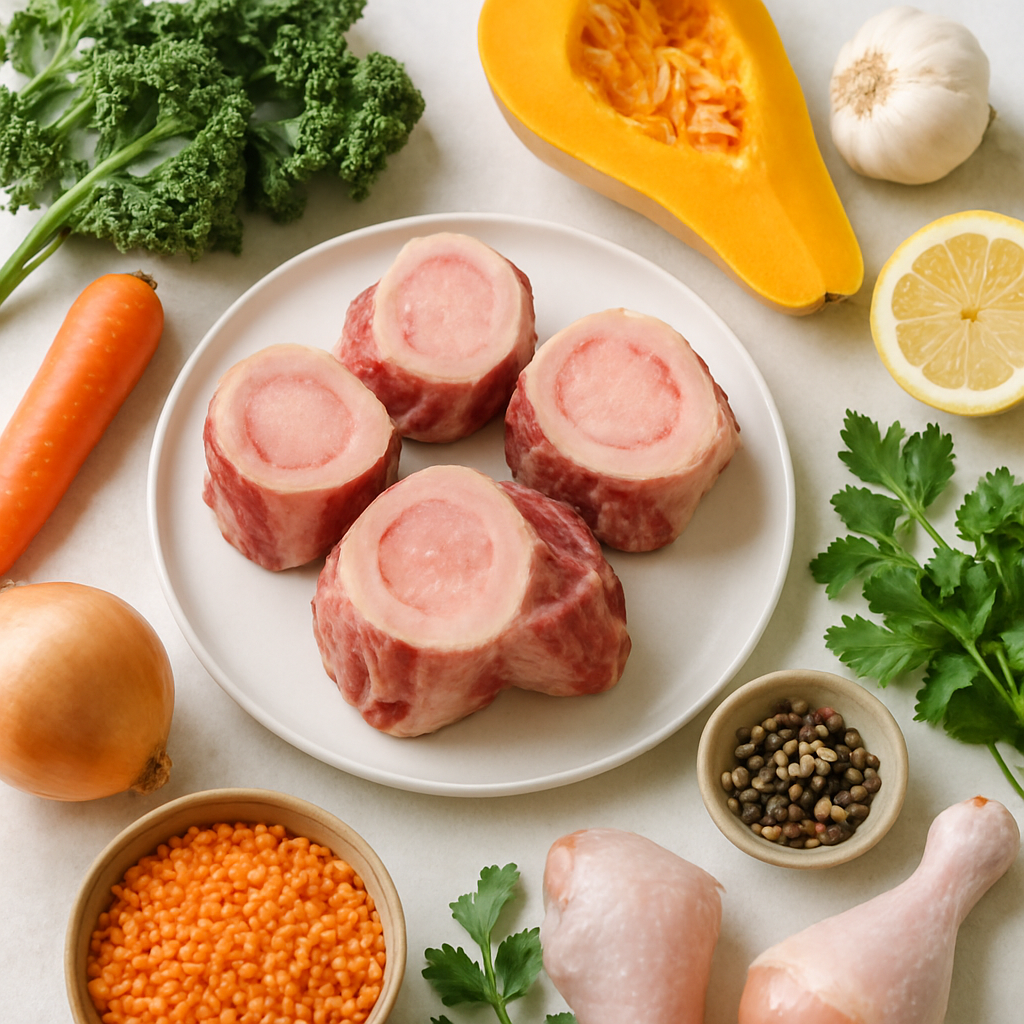
This isn't just about bone broth, though that's the most talked-about example. Cooking with bones covers a broad range of techniques: simmering a chicken carcass into stock, braising lamb shanks until the meat falls away, slow-cooking oxtail, or roasting marrow bones and spreading the contents on toast.
The common thread is time and low heat. Bones contain a complex matrix of collagen, minerals, and fat — and it takes a long, slow cook to draw those compounds into the liquid or surrounding food.
It's also worth noting that many traditional cuisines have never stopped doing this. From Vietnamese phở to Italian ossobuco to Jamaican oxtail stew, bone-in, slow-cooked dishes are a cornerstone of food cultures around the world. The recent "trend" in the UK is really just a rediscovery of something older generations took for granted.
What's Actually Inside a Bone
Before getting into what cooking does, it helps to understand what you're working with. Bones aren't inert — they're living tissue packed with biologically active compounds.
Collagen is the big one. It makes up roughly 30% of bone by dry weight and is the most abundant protein in the animal body. When you apply heat and water over time, collagen breaks down into gelatin — that's what makes a good stock set like jelly in the fridge. Gelatin is made up of amino acids, particularly glycine, proline, and hydroxyproline.
Bone marrow, found in the hollow centre of long bones, is rich in fat, protein, and contains compounds including adiponectin, which plays a role in regulating insulin sensitivity. Marrow also contains small amounts of iron and B vitamins.
The bone matrix itself contains calcium, phosphorus, and magnesium — minerals that leach into cooking liquid, especially when the environment is slightly acidic. This is why adding a splash of vinegar to stock is a genuinely useful tip, not just an old wives' tale.
What the Evidence Shows
The nutrition science around bone broth and bone-in cooking is interesting, but it's worth being honest about where the evidence is strong and where it's still emerging.
The collagen and joint health connection is probably the most researched area. A 2018 study published in the British Journal of Sports Medicine found that collagen supplementation combined with exercise showed benefits for joint pain in athletes. The amino acids derived from collagen — particularly glycine — also play roles in gut lining integrity, sleep quality, and inflammation regulation, though much of this research is still in early stages.
What's more clearly established is the mineral content of bone broth. A 2017 analysis published in the Journal of Renal Nutrition found that bone broth contains meaningful quantities of calcium and phosphorus, though the amounts vary considerably depending on the bones used, cooking time, and whether acid was added.
The glycine angle is worth a closer look. Glycine is a conditionally essential amino acid — meaning our bodies can make some, but may not produce enough under certain conditions. Research suggests glycine has anti-inflammatory properties and may support sleep quality. Most people's diets are relatively low in glycine because it's concentrated in connective tissue and skin, parts of the animal that most modern eating patterns exclude.
It's fair to say that bone broth isn't a miracle cure for anything. But it's also not nutritional theatre. There are real compounds present, and a growing body of evidence that some of them are biologically meaningful.
Common Misconceptions Worth Clearing Up
"The collagen you eat goes straight to your joints." This isn't how it works. Dietary protein — including collagen — is broken down into amino acids during digestion. Those amino acids are then used by the body wherever they're needed, not automatically directed to cartilage. That said, the specific amino acid profile of collagen (high glycine and proline) may still be relevant for tissue repair and other functions.
"Bone broth is high in protein." Often overstated. Most homemade bone broths contain around 6–10g of protein per 240ml serving — useful, but not a primary protein source. The nutritional value is more about the specific amino acid profile and mineral content than sheer protein quantity.
"It's only worth it if you make it from scratch." Shop-bought stock and bone broth vary enormously in quality, but some are genuinely good. Look for products with a short ingredients list, no added MSG or excessive salt, and ideally one that gels when chilled — that's a sign of real collagen content.
The Practical Flavour Argument (Which Is Also Nutritional)
Let's not overlook the most immediate reason to cook with bones: the food tastes significantly better.
A stock made from a roasted chicken carcass creates a depth of flavour that no stock cube can replicate. That flavour comes largely from glutamates — naturally occurring compounds in connective tissue and bone marrow that produce what we call umami. Interestingly, glutamate isn't just flavour chemistry; it's also an amino acid involved in brain function and gut health.
Better-tasting food also tends to be more satisfying, which has practical implications for how much you eat and how content you feel after a meal. This isn't a small thing.
How to Actually Get Started
You don't need a special recipe or fancy equipment. A slow cooker, a large pot, and some bones are all that's required.
The simplest starting point is saving your chicken carcasses. After a roast, throw the carcass into a pot or slow cooker, cover with cold water, add a halved onion, a few peppercorns, a bay leaf, and a splash of apple cider vinegar. Simmer on low for 8–12 hours (or all day in a slow cooker on low). Strain, cool, and use as the base for soups, risottos, stews, or anything that calls for stock.
If you want to explore further, beef marrow bones from a butcher are inexpensive and excellent roasted in the oven at 200°C for 15–20 minutes. Serve with crusty bread and a little parsley salad. It's one of those things that feels far more indulgent than it is.
For a bigger hit of collagen, use cuts that contain a lot of cartilage — chicken feet (genuinely effective and very cheap), pig's trotters, or oxtail. These produce broths that gel firmly, indicating a high gelatin content.
Practical Takeaways
- Save your carcasses. A roast chicken carcass is essentially free stock. Keep a bag in the freezer and make broth when you've got three or four saved up.
- Add a small amount of acid — a tablespoon of apple cider vinegar or a squeeze of lemon — when making stock. It helps minerals leach from the bone into the liquid.
- Don't rush it. Low and slow is the key. A few hours produces a decent stock; 12–24 hours produces something genuinely different.
- Use it as a base, not just a drink. The most practical way to incorporate bone broth is as the liquid in soups, stews, curries, and grains rather than drinking it straight.
- Buy bone-in cuts. Cooking chicken thighs on the bone, braising lamb shoulder, or slow-cooking pork ribs means you're getting the benefits of bone-in cooking without any extra effort.
- Ask your butcher. Bones are often very cheap or free from a butcher. Marrow bones, chicken feet, and carcasses are frequently sold for next to nothing because demand is lower than it used to be.
If you want to build meals that hit your protein and macro targets while making the most of ingredients like these, Macrology generates macro-perfect meal plans in seconds — https://macrology.app/signin
The food your grandparents made wasn't a trend. It was just practical, flavourful cooking that happened to make good nutritional sense. Bringing a bit of that back into the kitchen doesn't require any special commitment — just a pot, some patience, and bones you'd otherwise throw away.
Want meals like this planned to your exact macros?
Macrology generates a personalised meal plan in seconds — breakfast, lunch, dinner and snacks, all hitting your daily targets.
Start your free 14-day trial