Why Eating More Colour Variety Actually Matters for Your Micronutrient Intake
# Why Eating More Colour Variety Actually Matters for Your Micronutrient Intake
Most of us have heard the advice to "eat the rainbow" so many times it's become background noise. But there's a reason it keeps coming up — and it's more interesting than you might think.
The colours in your food aren't just decorative. They're doing something specific inside your body, and variety genuinely matters in a way that goes well beyond hitting your five-a-day.
What Food Colour Actually Represents
When a blueberry is purple or a carrot is orange, that's not coincidence. The pigments that give plants their colour are called phytonutrients (also known as phytochemicals), and they exist primarily as the plant's own defence system — protecting it from UV damage, pests, and disease.
When you eat those plants, many of those same protective compounds get to work in your body. They act as antioxidants, support immune function, help regulate inflammation, and interact with your gut microbiome in ways researchers are still uncovering.
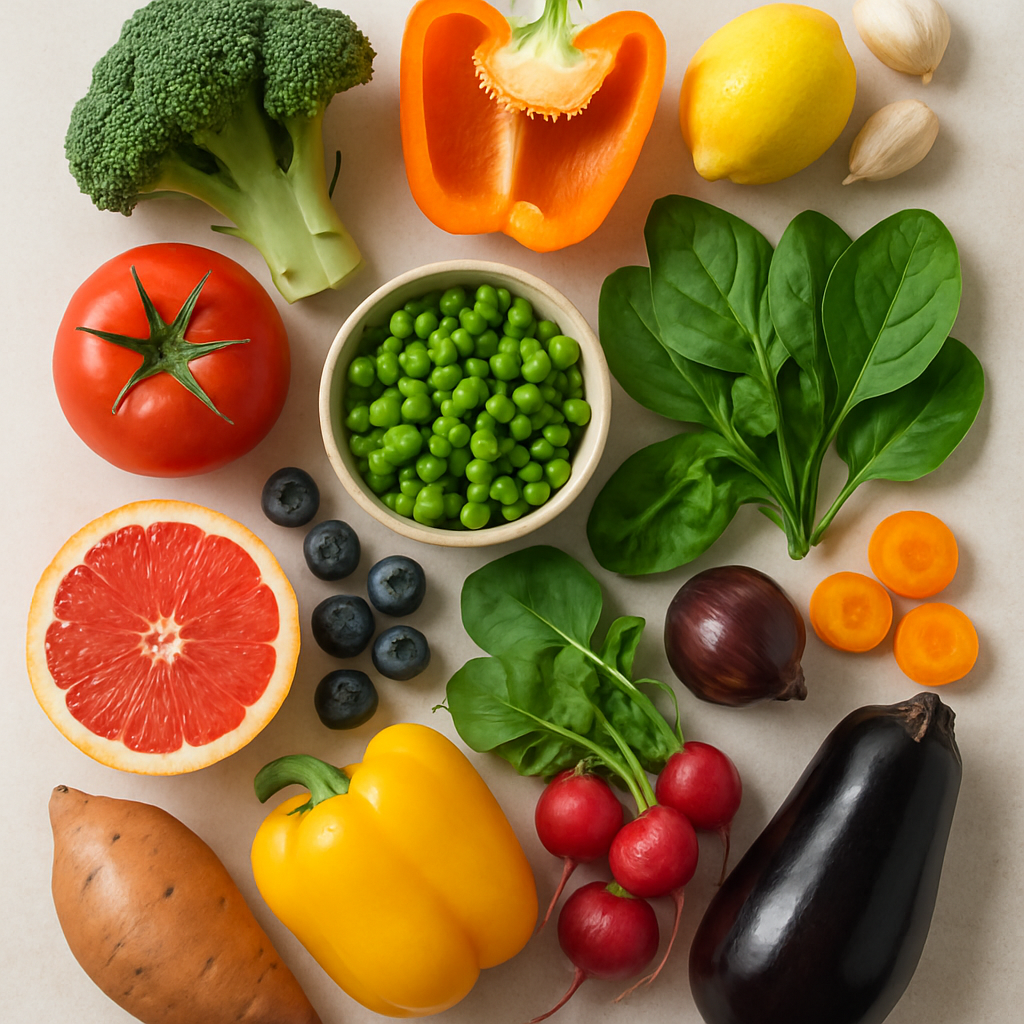
The critical point is this: different colours signal different compounds. Red tomatoes get their colour from lycopene. Dark leafy greens contain lutein and zeaxanthin. Purple foods are rich in anthocyanins. Orange and yellow produce tends to be high in beta-carotene and other carotenoids. No single colour covers the full spectrum of these compounds — which is exactly why variety matters.
The Micronutrient Gap Most People Don't Know They Have
You can eat plenty of food and still be under-nourished in specific micronutrients. This is sometimes called hidden hunger, and it's more common in the UK than most people realise.
Data from the National Diet and Nutrition Survey (NDNS) consistently shows that a significant proportion of UK adults fall short on key micronutrients — including vitamin D, magnesium, potassium, folate, and selenium. These aren't dramatic deficiencies that show up immediately; they're low-level shortfalls that quietly affect energy, mood, immunity, and long-term health.
The tricky thing is that calories don't tell you anything about micronutrient density. Someone eating 2,000 calories of beige, processed food and someone eating 2,000 calories of varied whole foods might look identical on a calorie tracker, but their micronutrient intake could be completely different.
What the Evidence Shows
The research on dietary variety and health outcomes is genuinely compelling. A large 2021 analysis published in The Lancet found that low intake of vegetables, fruits, and legumes was among the leading dietary risk factors for disease burden globally. But it's not just about quantity — diversity appears to matter independently.
Studies on the gut microbiome have been particularly illuminating. Research from the American Gut Project, one of the largest citizen science studies of its kind, found that people who ate 30 or more different plant foods per week had significantly more diverse gut microbiomes than those who ate fewer than 10. Gut microbiome diversity is increasingly linked to better immune function, mental health, and reduced risk of chronic disease.
A 2022 review in Nutrients specifically examined the role of dietary colour diversity and found associations between greater phytonutrient variety and lower markers of oxidative stress and inflammation. The mechanism isn't fully understood, but the hypothesis is that different phytonutrients work synergistically — meaning the effect of eating multiple types together is greater than eating just one in large amounts.
This is sometimes called the "food matrix effect" — whole foods deliver nutrients in combinations and contexts that can't easily be replicated by taking a handful of supplements.
Why Sticking to the Same "Healthy" Foods Can Backfire
Here's a common scenario: someone decides to eat healthier and builds a routine around a few reliable staples — spinach, broccoli, chicken, blueberries, oats. That's a genuinely solid foundation. But if those five or six foods make up the vast majority of their diet week in, week out, they're likely missing out on a wide range of phytonutrients and micronutrients that those particular foods simply don't contain.
Spinach is excellent — rich in iron, magnesium, vitamin K, and lutein. But it won't give you the lycopene from tomatoes, the sulforaphane from red cabbage, or the anthocyanins from blackcurrants.
There's also a practical reason to vary your intake: different preparation methods affect nutrient availability differently. Lycopene in tomatoes, for example, becomes more bioavailable when cooked with a small amount of fat. Beta-carotene in carrots is more available when lightly cooked than raw. Knowing this isn't essential, but it does reinforce that eating a wider variety — prepared in different ways — increases the likelihood you're absorbing a broader range of nutrients.
Colour by Colour: What You're Actually Getting
It helps to think about this concretely. Here's a rough breakdown of what each colour group tends to offer:
Red and pink (tomatoes, watermelon, pink grapefruit): lycopene, which has been associated with reduced risk of certain cancers and cardiovascular disease.
Orange and yellow (carrots, sweet potato, mango, squash): beta-carotene (a precursor to vitamin A), vitamin C, and other carotenoids that support eye health and immune function.
Green (spinach, kale, broccoli, courgette, peas): lutein, zeaxanthin, folate, vitamin K, and cruciferous compounds like sulforaphane with potential cancer-protective properties.
Blue and purple (blueberries, blackberries, red cabbage, aubergine): anthocyanins, which have been linked to improved cognitive function, cardiovascular health, and anti-inflammatory effects.
White and brown (garlic, onions, leeks, mushrooms): allicin and quercetin (in alliums), plus ergothioneine in mushrooms — a compound that some researchers are increasingly excited about for its antioxidant properties.
No single colour group is "best." They each bring something distinct to the table.
Common Misconceptions Worth Addressing
"I take a multivitamin, so I'm covered." Multivitamins can help fill specific gaps — particularly for vitamin D in the UK — but they don't replicate the complexity of whole food phytonutrients. Most phytochemicals aren't even in multivitamins because there are thousands of them and they're difficult to isolate and standardise. Supplements are a supplement to food, not a replacement.
"Frozen and tinned produce doesn't count." It absolutely does. Frozen vegetables are typically frozen within hours of harvest, locking in their nutrient content. Tinned tomatoes often have higher lycopene levels than fresh ones because the cooking process involved in canning increases bioavailability. Using these options makes eating colourfully far more affordable and convenient.
"Eating colourfully is expensive." It doesn't have to be. Frozen spinach, tinned mixed beans, carrots, cabbage, and bananas are all budget-friendly. The goal is variety across the week, not perfection at every meal.
Practical Takeaways
Eating more colour variety doesn't require overhauling everything at once. Here are some specific ways to build more range into your week:
- Count colours at dinner, not just calories. Aim for three different coloured plant foods on your plate. It's a useful shorthand that naturally encourages variety.
- Rotate your staples. If you always buy spinach, try swapping it for kale or rocket one week. If you usually buy broccoli, pick up some purple sprouting or pak choi. Small rotations add up over time.
- Use frozen and tinned produce freely. A bag of frozen mixed berries or a tin of chickpeas is a genuinely nutritious and affordable way to add variety without waste.
- Think about variety across the week, not every meal. You don't need to eat 30 plant foods every day. Spreading variety across seven days is entirely manageable and still delivers the microbiome benefits the research points to.
- Add rather than replace. Throw a handful of frozen peas into pasta, stir some tinned tomatoes into a curry, or add a handful of berries to porridge. These are low-effort ways to increase range without rethinking your whole diet.
The goal isn't a perfect multicoloured plate every time you eat. It's a wider variety across the week — which, over time, is likely to quietly improve your micronutrient intake without you needing to count a single vitamin.
If you want a meal plan that naturally builds colour variety and hits your macro targets without any of the manual work, Macrology generates macro-perfect meal plans in seconds — https://macrology.app/signin
Want meals like this planned to your exact macros?
Macrology generates a personalised meal plan in seconds — breakfast, lunch, dinner and snacks, all hitting your daily targets.
Start your free 14-day trial