How Chilling and Reheating Starchy Foods Changes Their Nutritional Profile
# How Chilling and Reheating Starchy Foods Changes Their Nutritional Profile
Most people think of cooking as a one-way street — you apply heat, food changes, end of story. But with starchy foods like rice, potatoes, and pasta, what happens after cooking turns out to be just as interesting as the cooking itself.
What Is Resistant Starch and Why Does It Matter?
To understand why chilling and reheating changes things, it helps to know a little about how starch works in the body.
When you cook starchy foods, the starch granules absorb water and swell in a process called gelatinisation. This makes them soft, digestible, and quick to break down in your gut. Most of that starch — called rapidly digestible starch — gets broken down into glucose and absorbed in the small intestine fairly quickly.
Resistant starch is different. As the name suggests, it resists digestion in the small intestine and passes through to the large intestine, where it acts more like dietary fibre. There it feeds beneficial gut bacteria, producing short-chain fatty acids like butyrate, which are associated with gut health, reduced inflammation, and potentially a lower risk of colorectal cancer.
The key point: not all starch behaves the same way, and cooking methods — including cooling and reheating — can shift the balance between digestible and resistant starch in meaningful ways.
What Happens When You Cool Cooked Starch
When cooked starchy foods are cooled, the gelatinised starch undergoes a process called retrogradation. Essentially, the starch molecules begin to reorganise themselves into tighter, more crystalline structures. This new structure is harder for digestive enzymes to break down.
The result is a measurable increase in resistant starch content. A 2015 study published in the Asia Pacific Journal of Clinical Nutrition found that cooling cooked white rice overnight in the fridge significantly increased its resistant starch content compared to freshly cooked rice. Similar effects have been observed with potatoes and pasta.
This isn't a dramatic transformation — we're not talking about turning chips into celery. But the shift is real and reproducible, and it has a knock-on effect on how quickly the food raises blood glucose levels after eating.
What the Evidence Shows
The relationship between resistant starch and blood glucose response has been reasonably well studied. Resistant starch has a lower glycaemic impact than rapidly digestible starch — because it doesn't get broken down into glucose in the small intestine, it contributes less to the post-meal blood glucose spike.
A study in the British Journal of Nutrition found that consuming resistant starch was associated with improved insulin sensitivity in healthy adults. Other research has suggested benefits for satiety — resistant starch may help people feel fuller for longer, potentially by influencing gut hormones like GLP-1 and peptide YY.
It's worth being clear about what this evidence does and doesn't say. These are associations and mechanistic studies, not proof that eating cold pasta will transform your health. The absolute differences in resistant starch content between freshly cooked and cooled foods are real but modest. And individual responses to resistant starch vary — people with gut sensitivities, for example, may find high-resistant-starch foods cause bloating or discomfort.
The takeaway from the evidence is that cooling starchy foods is a simple, no-effort way to nudge their nutritional profile in a direction that most people's guts would welcome — not a miracle cure, but a genuinely useful tool.
Does Reheating Undo the Effect?
This is where things get particularly interesting. Logic might suggest that reheating would simply reverse the cooling process — melt those crystalline starch structures back down and return everything to square one. The reality is more nuanced.
Research suggests that reheating doesn't fully undo retrogradation. While some of the resistant starch does convert back to digestible starch when heated, a meaningful portion of the restructured starch remains intact. The 2015 rice study mentioned earlier found that reheated rice that had been previously cooled still had higher resistant starch content than freshly cooked rice.
Interestingly, some research has suggested that repeated cycles of cooling and reheating may progressively increase resistant starch content further — though this area of research is still developing and the practical differences appear to be relatively small.
The cooking method used for reheating may also matter. Gentle reheating (steaming, microwaving with a little water) appears to preserve more resistant starch than aggressive high-heat methods that fully re-gelatinise the starch. Though frankly, the differences here are unlikely to be significant enough to warrant obsessing over your microwave settings.
Which Foods Show the Biggest Changes?
Not all starchy foods respond equally. Here's how the main culprits stack up:
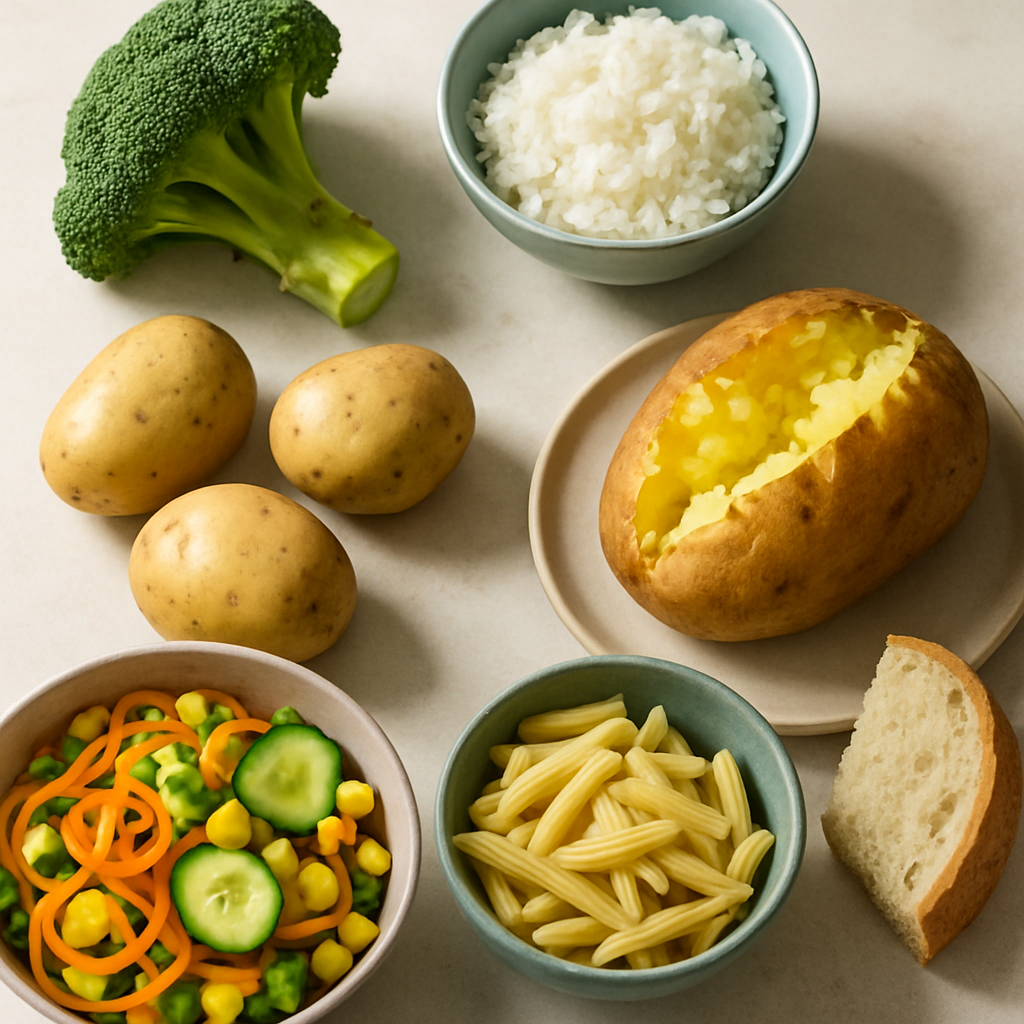
Rice tends to show one of the most pronounced increases in resistant starch after cooling. White rice — which has relatively low resistant starch when freshly cooked — can see a substantial proportional increase after overnight chilling. This is part of why the science community has taken an interest in traditional rice-eating cultures where eating cold or room-temperature rice is common.
Potatoes also show significant retrogradation when cooled. Boiled potatoes that are cooled and eaten cold (think potato salad) have measurably more resistant starch than freshly boiled and served hot. The high water content of potatoes and the nature of their starch granules make them particularly responsive to cooling.
Pasta shows a similar but somewhat less dramatic effect. Cooked and cooled pasta has more resistant starch than freshly cooked pasta, and — consistent with the research on reheating — this effect is at least partially preserved when the pasta is reheated.
Bread is a slightly different case. Staling in bread involves a form of starch retrogradation, which is why day-old bread has slightly more resistant starch than fresh bread. Toasting bread also increases resistant starch content compared to untoasted — which is a genuinely surprising finding that challenges the assumption that more cooking always means faster digestion.
Common Misconceptions Worth Clearing Up
A few things tend to get muddled when this topic comes up online.
First: cooling starchy foods does not reduce their calorie content in any meaningful way. Some social media posts have implied that eating cold rice saves you calories. This is misleading. While resistant starch is technically less metabolically available than fully digestible starch, the difference in practice is small — we're talking a few calories per serving, not a significant reduction.
Second: this isn't about making starchy foods "better" or "worse". Rice and potatoes are nutritious foods regardless of temperature. The cooling effect is simply one factor among many — fibre content, preparation method, what you eat alongside them, and your own gut biology all matter at least as much.
Third: food safety matters here. Cooling and reheating rice in particular requires care. Rice can harbour Bacillus cereus spores that survive cooking and can multiply at room temperature. The rule is straightforward: cool cooked rice quickly, refrigerate within an hour or two, store for no more than a day, and reheat thoroughly until piping hot throughout.
Practical Takeaways
Here's what this actually looks like in everyday cooking:
- Cook rice and potatoes ahead of time when meal prepping. Chilling them overnight before eating or reheating is a simple way to increase their resistant starch content with zero extra effort.
- Potato salad has more going for it than you might think — the cooling process genuinely changes the starch, not just the temperature.
- Don't stress about reheating. The resistant starch formed during cooling isn't completely lost when you reheat. Yesterday's rice, reheated properly, still has a different nutritional profile to freshly cooked rice.
- Toast your bread if you want to nudge up the resistant starch content slightly — though this is a minor effect and not a reason to avoid fresh bread if that's what you prefer.
- Prioritise food safety over optimisation. Cool cooked starchy foods quickly and store them properly.
If you want a meal plan that makes the most of smart, evidence-based nutrition without any of the complexity, Macrology generates macro-perfect meal plans in seconds — https://macrology.app/signin
Want meals like this planned to your exact macros?
Macrology generates a personalised meal plan in seconds — breakfast, lunch, dinner and snacks, all hitting your daily targets.
Start your free 14-day trial