The Case for Eating More Legumes: Protein, Fibre and Why UK Adults Fall Short
# The Case for Eating More Legumes: Protein, Fibre and Why UK Adults Fall Short
Most UK adults are eating nowhere near enough legumes — and it's one of the quietest nutritional gaps going. Not because legumes are hard to find or expensive, but because they've somehow ended up as a supporting act when they deserve a leading role.
Lentils, chickpeas, beans, split peas — this family of foods quietly delivers a combination of protein, fibre, and micronutrients that's genuinely difficult to match gram for gram. Yet national dietary surveys consistently show that most British adults eat far less than recommended. Here's why that matters, and what the science actually says.
What counts as a legume?
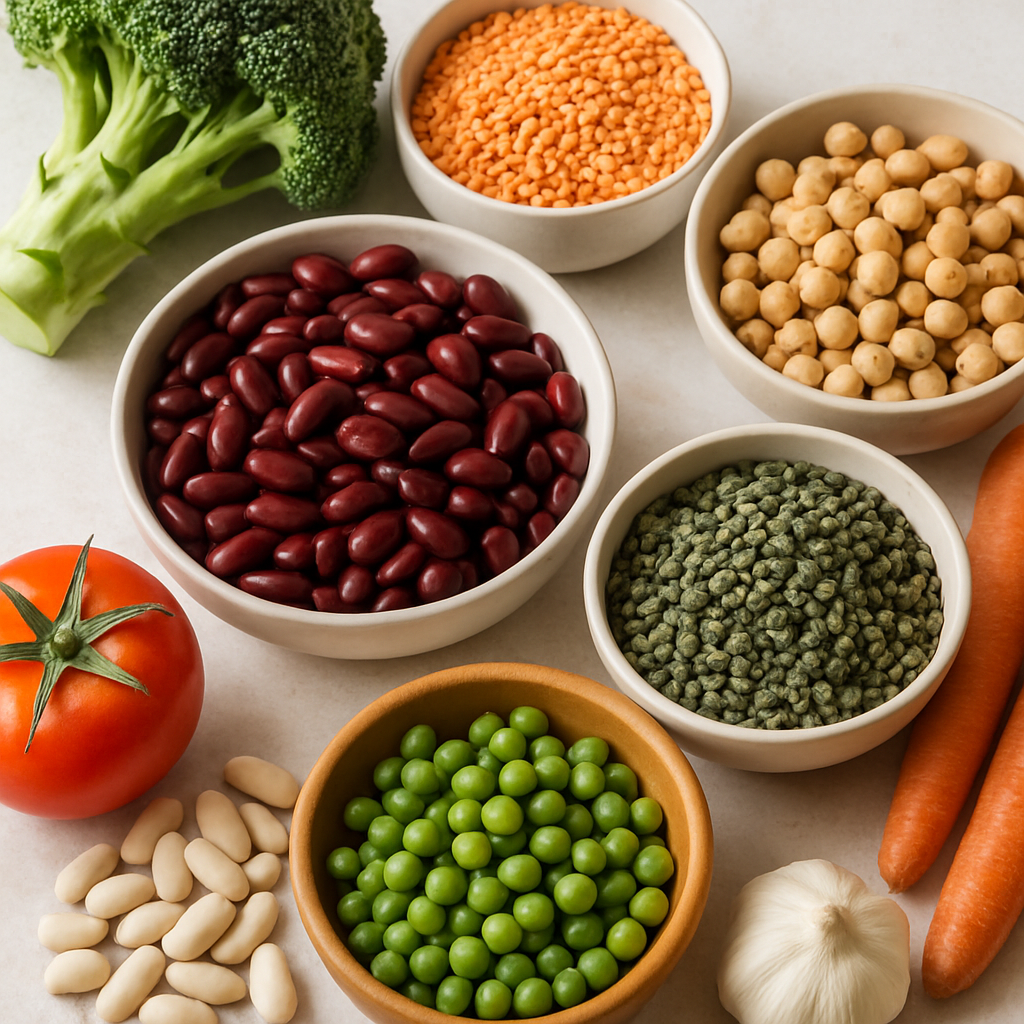
Before diving in, it's worth being clear about what we're talking about. Legumes are the edible seeds of plants in the Fabaceae family. That umbrella covers a wide range of familiar foods: kidney beans, chickpeas, lentils, black beans, butter beans, edamame, split peas, cannellini beans, and soybeans, among others.
Peanuts are technically legumes too, though most people think of them as nuts — and nutritionally they behave more like nuts, being much higher in fat. Tofu and tempeh are soy-based, so they fall loosely within the legume family as well.
The term "pulses" refers specifically to the dried seeds of legumes — so lentils and dried chickpeas are pulses, but fresh peas and edamame are not. You'll see both terms used, often interchangeably, but the distinction occasionally matters in research contexts.
Why UK adults aren't eating enough
The most recent National Diet and Nutrition Survey (NDNS) data paints a fairly clear picture: legume consumption in the UK is low. The average British adult eats roughly one portion of pulses per week — well below the three or more portions that dietary guidelines and bodies like the British Dietetic Association suggest as a reasonable target.
There are a few reasons for this. Legumes have a reputation for being time-consuming to prepare, particularly dried varieties that need soaking overnight. There's also a cultural dimension — legumes don't feature prominently in traditional British cooking the way they do in South Asian, Middle Eastern, or Latin American cuisines.
The convenience factor can't be dismissed either. Canned beans and lentils are affordable and require zero prep beyond rinsing, yet many people still default to meat-centred meals without considering legumes as a protein source. Habits are stubborn, and shopping patterns tend to replicate week after week.
What the evidence shows
The research on legume consumption is impressively consistent, which is relatively rare in nutrition science. A 2017 meta-analysis published in the American Journal of Clinical Nutrition found that replacing other protein sources with legumes was associated with modest but meaningful improvements in blood glucose control, LDL cholesterol, and blood pressure.
Legumes have a notably low glycaemic index (GI) — typically between 10 and 40 — meaning they cause a slower, more gradual rise in blood glucose compared to refined carbohydrates. This is partly due to their resistant starch content and partly due to their thick cell walls, which slow digestion.
The PREDIMED study, one of the largest and most rigorous dietary intervention trials to date, found that a Mediterranean dietary pattern emphasising legumes was associated with significantly reduced risk of cardiovascular events. Legumes were specifically identified as a key driver of the pattern's benefits, not just background noise.
On the fibre side, evidence links higher legume intake with improved gut microbiome diversity, reduced risk of colorectal cancer, and better digestive health overall. The UK average fibre intake sits at around 19g per day — notably below the recommended 30g. A single 80g serving of cooked lentils provides roughly 4–5g of fibre, making legumes one of the most efficient ways to close that gap.
The protein picture — and a common misconception
One of the most persistent myths about legumes is that their protein is inferior or "incomplete," making them unsuitable as a primary protein source. This deserves unpicking.
It's true that most legumes are lower in the amino acid methionine than animal proteins, and that soy is the only legume containing all nine essential amino acids in substantial amounts. However, the practical significance of this has been significantly overstated. As long as someone eats a varied diet over the course of a day — including other plant foods like wholegrains, nuts, or seeds — getting a full amino acid profile is straightforward. You don't need to combine specific foods in a single meal, which is an outdated idea.
Legumes are also, pound for pound, an impressive protein source. 100g of cooked lentils provides around 9g of protein. A tin of chickpeas (drained, roughly 240g) delivers around 19–20g. These are not trivial numbers, particularly when you factor in the fibre, iron, folate, and magnesium that come along for the ride — nutrients you simply don't get from a chicken breast.
For people eating less meat — whether for health, cost, or environmental reasons — legumes aren't just an acceptable substitute. They bring genuine nutritional advantages that meat doesn't offer.
The gut health angle
Legumes are one of the best-researched foods when it comes to the gut microbiome, and the news is consistently positive. Their resistant starch and soluble fibre act as prebiotics — feeding beneficial bacteria in the large intestine and supporting a more diverse microbial ecosystem.
A 2022 study from the Gut journal found that diets higher in plant diversity, with legumes as a significant contributor, were associated with greater microbiome diversity and reduced markers of gut inflammation. A diverse microbiome has been linked to everything from stronger immune function to better mental health outcomes, though the latter remains an area of active research.
The bloating and digestive discomfort that some people experience with legumes is real, and worth acknowledging. It's caused by fermentation of oligosaccharides — a type of carbohydrate that humans can't fully digest. The good news is that this tends to reduce substantially as the gut microbiome adapts, usually within a few weeks of eating legumes regularly. Starting with smaller portions and building up gradually makes a noticeable difference. Canned legumes, which have been soaked and processed, tend to cause less discomfort than dried varieties cooked from scratch.
Legumes and long-term health
Looking beyond individual nutrients, the long-term health data on legume consumption is striking. The Blue Zones research — which examined the dietary patterns of populations with unusually high rates of longevity — found that legumes were one of the few dietary features shared across all five zones. Populations in Sardinia, Okinawa, Loma Linda, Nicoya, and Ikaria all ate legumes regularly, in varying forms.
A 2004 study in the Asia Pacific Journal of Clinical Nutrition analysed dietary data across these populations and found that for every 20g increase in daily legume intake, all-cause mortality risk fell by around 7–8%. That's a striking finding, and while observational data can't prove causation, the consistency across culturally diverse populations is noteworthy.
The sustainability angle is also relevant here. Legumes are nitrogen-fixing crops, meaning they improve soil health rather than depleting it. Their environmental footprint is dramatically lower than most animal proteins. For people thinking about how their food choices connect to broader outcomes, that context matters.
Practical ways to eat more legumes
The research is compelling, but what does it actually look like in practice? A few concrete approaches worth trying:
Swap half the mince. In a bolognese, chilli, or cottage pie, replacing half the minced meat with red lentils or green lentils is nearly undetectable in terms of texture and flavour — and dramatically increases the fibre content.
Use canned beans as a base. Butter beans in a tomato sauce, chickpeas roasted with olive oil and spices, or black beans in a grain bowl require almost zero preparation time. A tin opener and five minutes is all it takes.
Add lentils to soups. Red lentils dissolve into soups and stews, thickening them naturally and adding protein without changing the overall character of the dish much at all.
Hummus counts. It's made from chickpeas. Eating it regularly with vegetables or on toast is a genuinely useful way to increase legume intake without any cooking involved.
Batch cook dried pulses. If you're open to the occasional Sunday prep session, a large batch of dried chickpeas or lentils cooked from scratch and frozen in portions is far cheaper than canned and tastes noticeably better.
The goal isn't an overnight overhaul — even adding one or two portions per week moves the needle meaningfully.
If you want to build more legumes into a balanced, macro-tracked eating plan without the guesswork, Macrology generates macro-perfect meal plans in seconds — https://macrology.app/signin
Want meals like this planned to your exact macros?
Macrology generates a personalised meal plan in seconds — breakfast, lunch, dinner and snacks, all hitting your daily targets.
Start your free 14-day trial