Why Carbohydrate Quality Matters More Than Carbohydrate Quantity
# Why Carbohydrate Quality Matters More Than Carbohydrate Quantity
Most nutrition debates love a villain. For the past few decades, carbohydrates have played that role — blamed for weight gain, energy crashes, and just about everything in between. But the real story is more interesting than that.
The question worth asking isn't "how many carbs?" — it's "which carbs?"
The War on Carbs Was Always a Bit Misguided
Low-carb diets have been around since the 1970s, and they've never really gone away. Atkins, keto, paleo — each one built on the premise that carbohydrates are the dietary enemy. And for some people, reducing carbs genuinely helps, particularly for managing blood sugar or finding a way of eating that feels sustainable.
But the blanket demonisation of carbohydrates ignores something fundamental: humans have been eating carbohydrate-rich foods for thousands of years. Populations like the Okinawans in Japan and traditional Mediterranean communities have historically eaten diets high in carbohydrates — and also show exceptionally good long-term health outcomes.
The common thread in those populations isn't low carbohydrate intake. It's the type of carbohydrates they eat.
What Do We Actually Mean by Carbohydrate Quality?
Carbohydrate quality is a way of distinguishing between foods that happen to share the same macronutrient but behave very differently in the body. The main factors that determine quality are fibre content, processing level, nutrient density, and how quickly the food raises blood glucose.
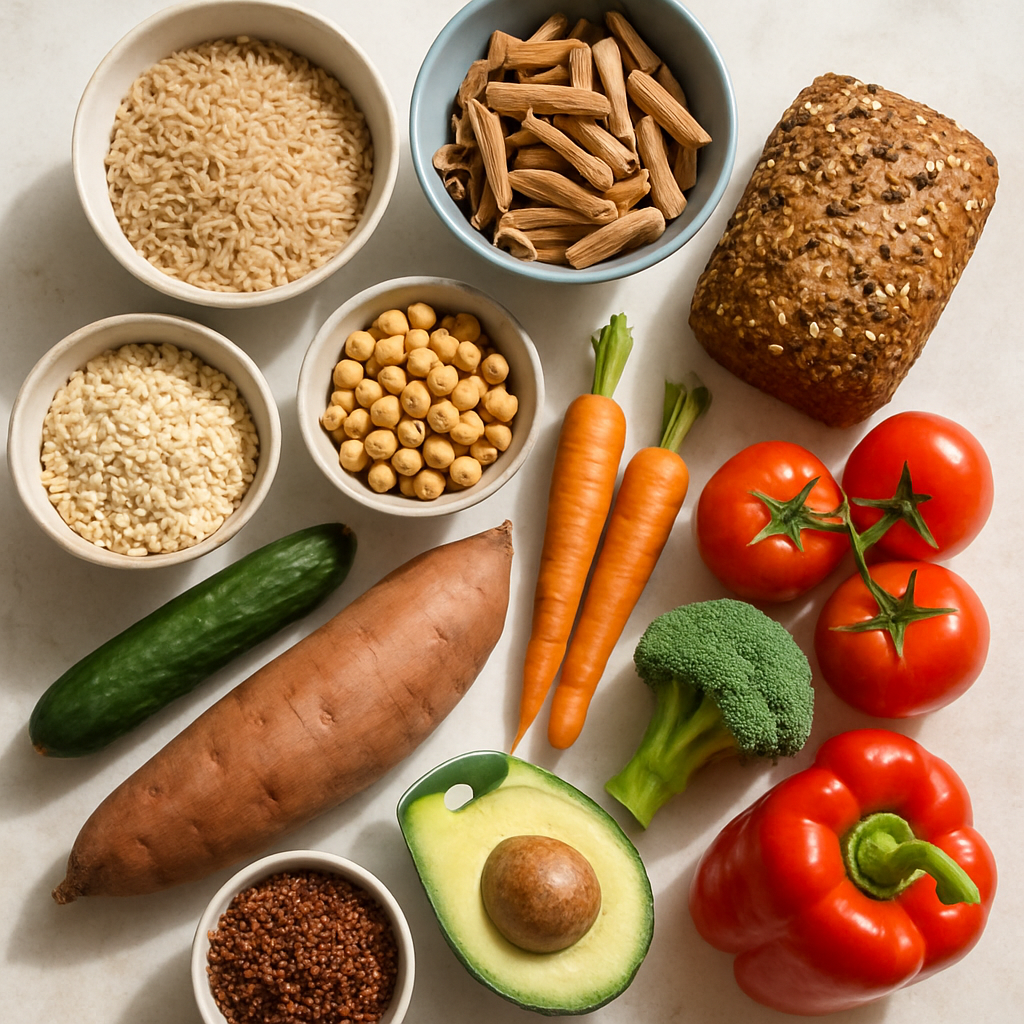
Whole grains, legumes, vegetables, and fruit are considered high-quality carbohydrates. They contain fibre, vitamins, minerals, and often phytonutrients. They digest more slowly, provide more sustained energy, and feed the beneficial bacteria in your gut.
Refined and ultra-processed carbohydrates — think white bread, sugary drinks, packaged pastries — have had much of their fibre and micronutrient content stripped away. They digest quickly, provide rapid bursts of glucose, and don't offer much nutritional value beyond the calories themselves.
It's not a moral distinction. It's a biological one.
What the Evidence Shows
The research on carbohydrate quality is now substantial enough to draw some clear conclusions.
A landmark 2019 analysis published in The Lancet, which pooled data from 185 studies and 58 clinical trials, found that people eating the most dietary fibre had a 15–30% lower risk of dying from cardiovascular disease, stroke, type 2 diabetes, and colorectal cancer compared to those eating the least. The main source of fibre in these studies? Carbohydrate-rich foods — wholegrains, legumes, fruits, and vegetables.
Separately, large cohort studies have consistently shown that ultra-processed food consumption — which is heavily dominated by refined carbohydrates — is associated with worse health outcomes, including higher rates of obesity, cardiovascular disease, and depression. The NOVA classification system, developed by researchers at the University of São Paulo, has become a widely used framework for categorising foods by level of processing, and it's now being incorporated into public health guidelines in several countries.
What's also notable is that glycaemic index alone doesn't tell the full story. A food can have a lower glycaemic index but still be highly processed and low in nutrients. Conversely, some foods with a higher glycaemic index — like watermelon or boiled potatoes — are genuinely nutritious. The overall quality of the food matters more than any single metric.
The Gut Microbiome Connection
One of the most compelling reasons to care about carbohydrate quality is what happens in your gut. Fibre is the primary fuel for your gut microbiome — the trillions of bacteria that live in your large intestine and play a role in everything from immunity to mood.
When you eat enough of the right kinds of carbohydrates, these bacteria ferment the fibre and produce short-chain fatty acids like butyrate. Butyrate is the main energy source for the cells lining your colon and has anti-inflammatory properties. A well-fed microbiome is associated with better immune function, lower systemic inflammation, and even better mental health outcomes — a connection researchers are increasingly exploring through what's called the gut-brain axis.
Refined carbohydrates, by contrast, provide very little fibre. Over time, a diet dominated by them can reduce the diversity and abundance of beneficial gut bacteria — and gut diversity is generally considered a marker of a healthy microbiome.
Common Misconceptions Worth Addressing
"Fruit has too much sugar." This one refuses to die. Yes, fruit contains fructose. But whole fruit also contains fibre, water, vitamins, and antioxidants. The fibre slows down sugar absorption, and there's no credible evidence linking whole fruit consumption to poor metabolic health. The same cannot be said for fruit juice, where the fibre has been removed and you're left with concentrated sugar.
"All white carbs are bad." Not quite. Boiled and cooled white potatoes, for instance, develop something called resistant starch — a type of fibre that feeds gut bacteria similarly to the fibre in wholegrains. White rice is also a dietary staple in some of the healthiest populations on the planet. Context matters: what else is in your diet, how active you are, and how a food is prepared all affect how your body responds to it.
"Wholegrain products are always better." Mostly true, but worth scrutinising. Some wholegrain breads are mostly refined flour with a small amount of bran added back in — the label can be misleading. Look for products where a wholegrain is listed as the first ingredient, and where you can actually see the grain structure (like seeded loaves or oat-based products).
How This Plays Out in Practice
Shifting focus from carbohydrate quantity to quality doesn't require a dietary overhaul. It's more about swapping the composition of what you already eat.
Swap refined grains for whole ones where it's easy. Oats instead of sugary cereal, wholegrain bread instead of white, brown rice or lentils as a base instead of instant rice pouches. None of these are dramatic changes, but over weeks and months they add up.
Eat more legumes. Lentils, chickpeas, kidney beans — these are arguably the most underrated carbohydrate sources in a typical British diet. They're high in fibre, high in protein, and remarkably filling. A tin of lentils costs less than £1 and can form the base of a genuinely satisfying meal.
Don't overthink fruit. Eating two or three pieces of fruit a day is a straightforward way to increase fibre and micronutrient intake without any particular effort.
Read past the marketing on packaged products. "Wholegrain," "multigrain," and "high fibre" are frequently used on products that are still highly processed. Check the actual fibre content per serving — aim for at least 3g per serving as a rough guide.
Practical Takeaways
Here's what you can actually do with this information today:
- Audit your breakfast. It's the meal most likely to be dominated by refined carbohydrates. Oats, eggs on wholegrain toast, or Greek yoghurt with fruit and seeds are all straightforward upgrades.
- Add a portion of legumes to three meals this week. They don't have to be the centrepiece — thrown into a soup, a salad, or a pasta dish, they quietly boost fibre and protein without changing the character of the meal.
- Check the fibre content on anything packaged you buy regularly. If it's under 2g per serving, it's probably not doing much for you in the fibre department.
- Don't stress about the occasional slice of white toast. Carbohydrate quality is about your overall dietary pattern, not individual meals. One low-fibre meal doesn't undo anything.
The shift in thinking — from "how much" to "what kind" — is genuinely useful because it moves the conversation away from restriction and towards something more constructive: eating foods that actually do something for you.
If you want a meal plan built around food quality rather than just hitting numbers, Macrology generates macro-perfect meal plans in seconds — https://macrology.app/signin
Want meals like this planned to your exact macros?
Macrology generates a personalised meal plan in seconds — breakfast, lunch, dinner and snacks, all hitting your daily targets.
Start your free 14-day trial