The Role of B Vitamins in Energy Metabolism and Where to Find Them in UK Foods
# The Role of B Vitamins in Energy Metabolism and Where to Find Them in UK Foods
Ever wondered why energy drink brands plaster their cans with B vitamins? There's a reason — though perhaps not the one the marketing suggests. B vitamins are genuinely central to how your body converts food into usable energy, but the story is a bit more nuanced than "drink this, feel alive."
Here's what's actually going on, and where to find these nutrients in everyday UK foods.
What Are B Vitamins, Exactly?
B vitamins aren't a single nutrient — they're a family of eight distinct water-soluble vitamins, each with its own role and found in different combinations across foods.
The eight are: B1 (thiamine), B2 (riboflavin), B3 (niacin), B5 (pantothenic acid), B6 (pyridoxine), B7 (biotin), B9 (folate), and B12 (cobalamin). You'll sometimes see them lumped together as "B complex," which is the collective name used on most supplement labels.
Because they're water-soluble, your body doesn't store most of them in large amounts — excess is excreted in urine rather than building up in tissues. That means a reasonably consistent intake from food is important, and it also means megadosing on supplements largely results in expensive wee rather than a performance boost.
How B Vitamins Actually Fuel Your Body
The link between B vitamins and energy is real, but it works at a biochemical level rather than as a direct stimulant — they don't give you energy the way caffeine does.
B vitamins act as coenzymes, which means they help enzymes do their jobs. Specifically, they're essential for the metabolic pathways that break down carbohydrates, fats, and protein into adenosine triphosphate (ATP) — the molecule your cells actually run on. Without adequate B vitamins, these pathways slow down or stall.
Thiamine (B1), riboflavin (B2), niacin (B3), and pantothenic acid (B5) are all directly involved in the citric acid cycle — the central energy-producing process in your cells. B6 is critical for protein metabolism and the production of neurotransmitters. Folate and B12 work together on DNA synthesis and red blood cell formation, which matters for oxygen delivery throughout the body.
So when someone with a B12 deficiency feels exhausted and foggy, it's not metaphorical tiredness — their cells are genuinely struggling to function efficiently.
What the Evidence Shows
The evidence is clearest at the extremes: deficiency causes measurable, serious problems, and correction of deficiency genuinely improves how people feel and function.
B12 deficiency, for example, is well-documented to cause fatigue, neurological symptoms, and megaloblastic anaemia. Folate deficiency is associated with the same type of anaemia and, critically, with neural tube defects in early pregnancy — which is why the NHS recommends 400mcg of folic acid daily before conception and through the first trimester.
A 2020 review published in Nutrients examining B vitamin status in UK adults found that a notable proportion of women of childbearing age, older adults, and people following plant-based diets had suboptimal B12 and folate status. These are real gaps, not abstract concerns.
Where the evidence gets murkier is with supplementation in people who are already replete. The research doesn't consistently support the idea that taking extra B vitamins improves energy, mood, or cognitive performance when levels are already adequate. The boost you feel from an energy drink is almost certainly the caffeine and sugar, not the 833% of your daily B12 on the label.
The UK Foods to Focus On
The good news is that the UK food supply makes it reasonably straightforward to get most B vitamins from a varied diet — with one significant exception, which we'll get to.
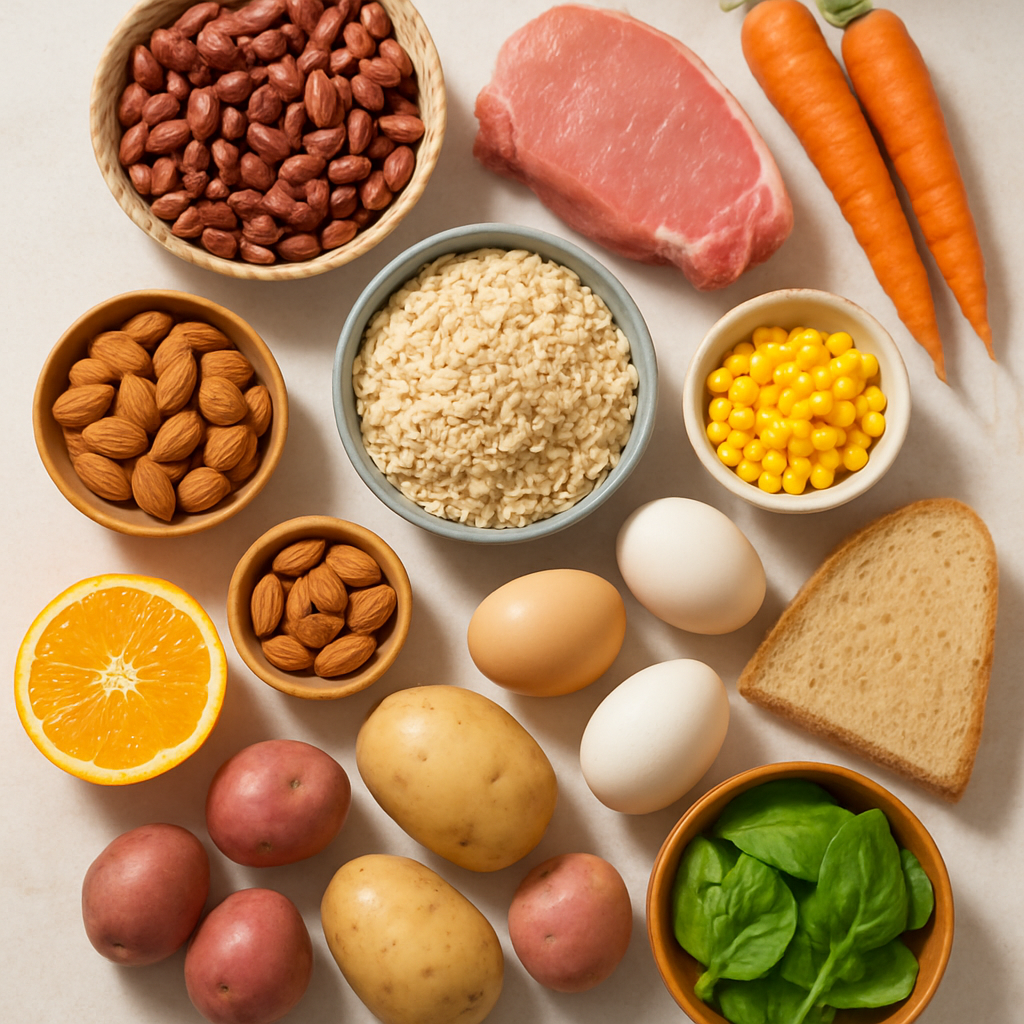
Thiamine (B1): Found in fortified breakfast cereals, wholegrain bread, pork, and legumes. A bowl of fortified cereal or a couple of slices of wholemeal toast covers a meaningful chunk of your daily needs.
Riboflavin (B2): Dairy products are a primary source for most people in the UK — milk, yoghurt, and cheese all contribute significantly. It's also found in eggs, lean meat, and fortified cereals.
Niacin (B3): Chicken, turkey, tuna, and salmon are excellent sources. Wholegrains and peanuts also contribute. Niacin can also be synthesised in the body from the amino acid tryptophan, so protein-rich diets rarely fall short.
Pantothenic acid (B5): Widespread across foods — chicken, beef, eggs, avocado, and sweet potato all contain it. Deficiency is genuinely rare.
B6 (pyridoxine): Found in chicken, fish, potatoes, bananas, and fortified cereals. Potatoes in particular are a reliable, affordable source that's easy to overlook.
Folate (B9): Dark green vegetables are the star here — broccoli, spinach, kale, Brussels sprouts, and asparagus are all solid sources. Chickpeas, lentils, and fortified bread and breakfast cereals contribute too.
Biotin (B7): Eggs (particularly the yolk), liver, salmon, and nuts. Gut bacteria also produce some biotin. Deficiency is uncommon in people eating a varied diet.
B12 (cobalamin): This is the one that deserves particular attention. B12 is found almost exclusively in animal products — meat, fish, shellfish, eggs, and dairy. For people following a vegan diet, or those eating very little animal produce, supplementation is not optional — it's necessary. Fortified foods like nutritional yeast, plant-based milks, and some breakfast cereals can help, but the amounts vary and reliable supplementation is strongly advised.
Who's Most at Risk of Falling Short?
Certain groups are worth paying closer attention to, not out of alarm, but because being aware means you can actually do something about it.
Vegans and vegetarians face the clearest risk with B12, and potentially riboflavin and iodine (not a B vitamin, but often overlooked alongside them). Fortified foods and a reliable B12 supplement address the bulk of this risk straightforwardly.
Older adults absorb B12 less efficiently because stomach acid — which helps free B12 from food — declines with age. The NHS recommends those over 50 consider monitoring their B12 status, and supplementation may be appropriate.
People who drink alcohol heavily are at elevated risk of thiamine deficiency in particular. Alcohol interferes with B vitamin absorption and increases their excretion. Thiamine deficiency is the cause of Wernicke's encephalopathy, a serious neurological condition associated with chronic heavy drinking.
Pregnant people and those planning a pregnancy have increased folate requirements, and the evidence for supplementation here is robust and unambiguous — neural tube defects like spina bifida are significantly reduced with adequate folic acid in early pregnancy.
Practical Takeaways
You don't need to overhaul your diet — a few consistent habits cover most of your B vitamin bases.
Eat a variety of whole foods. Wholegrains, legumes, eggs, dairy, meat or fish, and plenty of dark green vegetables collectively cover most of the B vitamin family without any special planning required.
If you eat mostly plant-based foods, take a B12 supplement. This isn't a fringe recommendation — it's endorsed by every major health authority. A daily supplement of 10mcg or a weekly dose of 2000mcg are both effective options.
Choose fortified foods where it makes sense. Many UK breakfast cereals, plant-based milks, and bread products are fortified with B vitamins including B12 and folate. Checking the label takes seconds and can meaningfully top up your intake.
If you're pregnant or planning to be, start folic acid now. 400mcg daily is the NHS recommendation, beginning before conception if possible. This is one of the most evidence-backed nutritional interventions in existence.
Get a blood test if something feels off. Persistent fatigue, brain fog, tingling in hands or feet, or mouth sores can all be symptoms of B vitamin deficiency. A simple blood test from your GP gives you actual data rather than guesswork.
If you want to make sure your daily meals are hitting your nutritional targets without the spreadsheet, Macrology generates macro-perfect meal plans in seconds — [https://macrology.app/signin](https://macrology.app/signin)
Want meals like this planned to your exact macros?
Macrology generates a personalised meal plan in seconds — breakfast, lunch, dinner and snacks, all hitting your daily targets.
Start your free 14-day trial